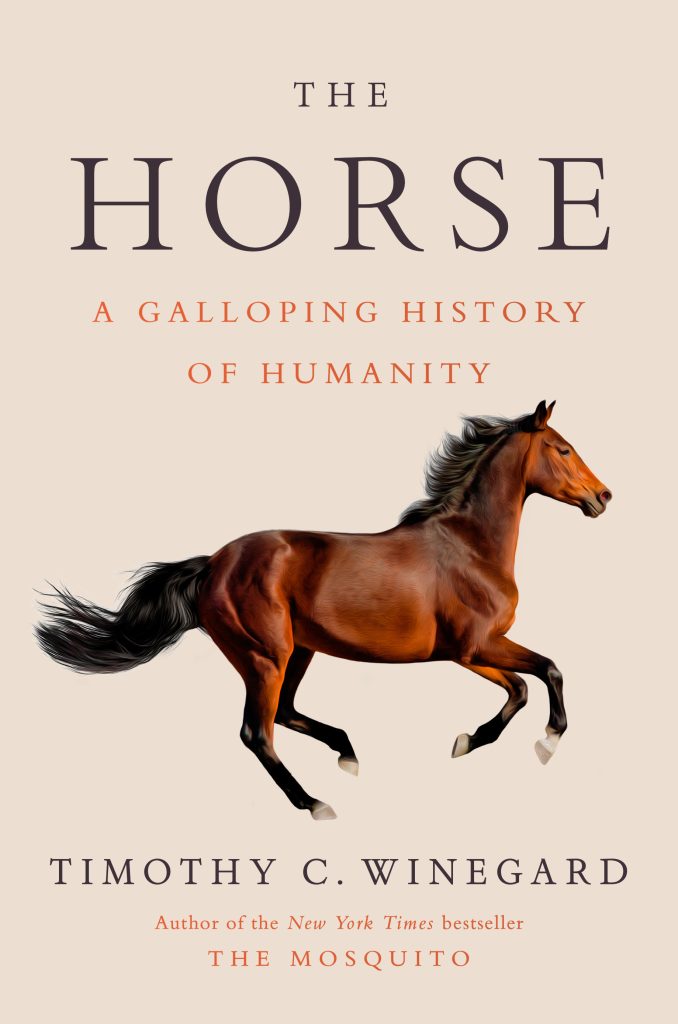
by TIMOTHY C. WINEGARD
Posted with permission from the author and publisher.
Sometimes things are so omnipresent, so obvious, that we blithely overlook their importance. In our twittering, computerized age of artificial intelligence, we have lost sight of how essential and impactful horses have been to humanity. The horse was the pinnacle instrument of profit and power. For more than five millennia, with their unrivaled operative force, they steered and dominated every part of our existence. The horse was a source of protein, milk, and a variety of secondary products. It was a war-winning weapon, a groundbreaking agricultural engine, and a high-speed vehicle for transportation, trade, and travel. The horse was the prime mover of civilizations.
With the domestication of horses, human greed and curiosity could now be fully realized. The advent of the farming package (agriculture and the domestication of barnyard animals) sowed vocational specialization, the first urban city-states, and a capitalist surplus economy. High-speed communication allowed distant, previously isolated peoples to become neighbors, allies, or enemies. Remote, exotic lands, only whispered in legend and lore, now entered expanding—and increasingly lucrative and multifarious—trading networks within a flourishing but competitive commercial environment. The chariot and mounted cavalry enhanced significantly the ability of avaricious conquerors to establish, expand, and hold vast empires. The horse was the defining factor that hauled, assembled, and secured these foundational building blocks. It single-handedly created an infinitely smaller and integrated global village.
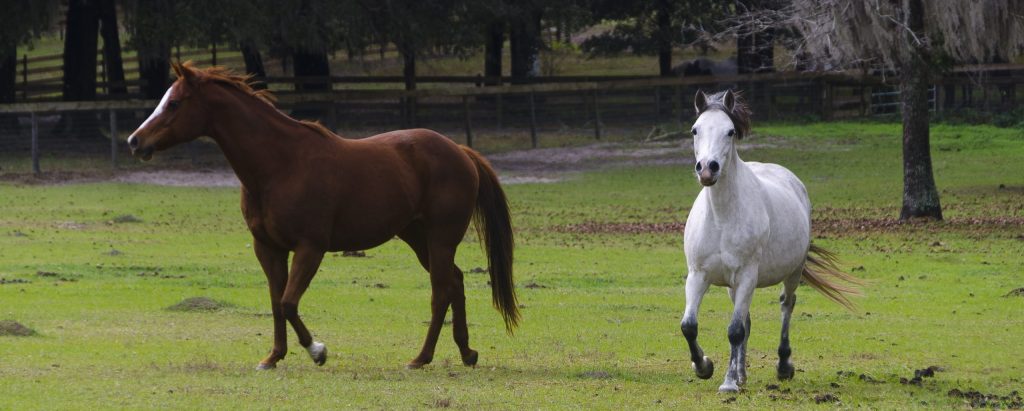
One of the reasons horses were so historically dynamic and culturally influential is that they eventually became a relatively democratic resource. For the most part, their acquisition and reproduction were outside of government control, commercial manufacturing, business monopolies, social status, and economic condition. Horses were self-reproducing, reasonably self-sufficient, and could be acquired through purchase, trade, theft, and even capture. In this sense, they leveled the playing field through their ability to gain or subvert power. Horses proffered a sense of liberty and endowed the individual with a spirit of freedom. The democracy of the horse allowed women to assume dominant political and military positions in ancient nomadic societies such as the Scythians and Massagetae, and in early dynastic China. The fabled Amazons, as it turns out, were fierce mounted female warriors of the Eurasian Steppe.
Horses transcended demographics, geography, ethnicity, gender, spirituality, class, and station. Horses pulled royal carriages and peasant carts. They conveyed humble merchants to peddling markets and gilded chariots and chivalrous knights to battlefield glory. Horses hauled plows across feudal farms and pranced in regal parades. They shuttled private coaches, hired cabs, and public transportation. Horses belonged, and belong, to all human beings.
They changed the way we hunted, traded, traveled, farmed, fought, worshipped, and interacted with one another. Horses reconfigured the global human genome and the languages we speak. They gave rise to nation-states and pulled into place modern international borders. They were a potent instrument of feudalism, land usage patterns, and European colonization during the Columbian Exchange.* Horses made vital contributions to modern medicine, lifesaving vaccines, and developments in sanitation. They even inspired recreational cannabis use, sports, invention, entertainment, architecture, furniture, and fashion. Horses are an integral part of what it means to be human.
From THE HORSE: A Galloping History of Humanity by Timothy C. Winegard, published on July 30th, 2024 by Dutton, an imprint of Penguin Publishing Group, a division of Penguin Random House LLC. Copyright (c) 2024 by Timothy C. Winegard.