Welcome to Trainer Tuesday! Each week we ask trainers a question and gather their answers for you. These trainers have a range of experience, backgrounds, and focus points of their programs, so the answers have as much variation as you would expect and also probably much more similarity.
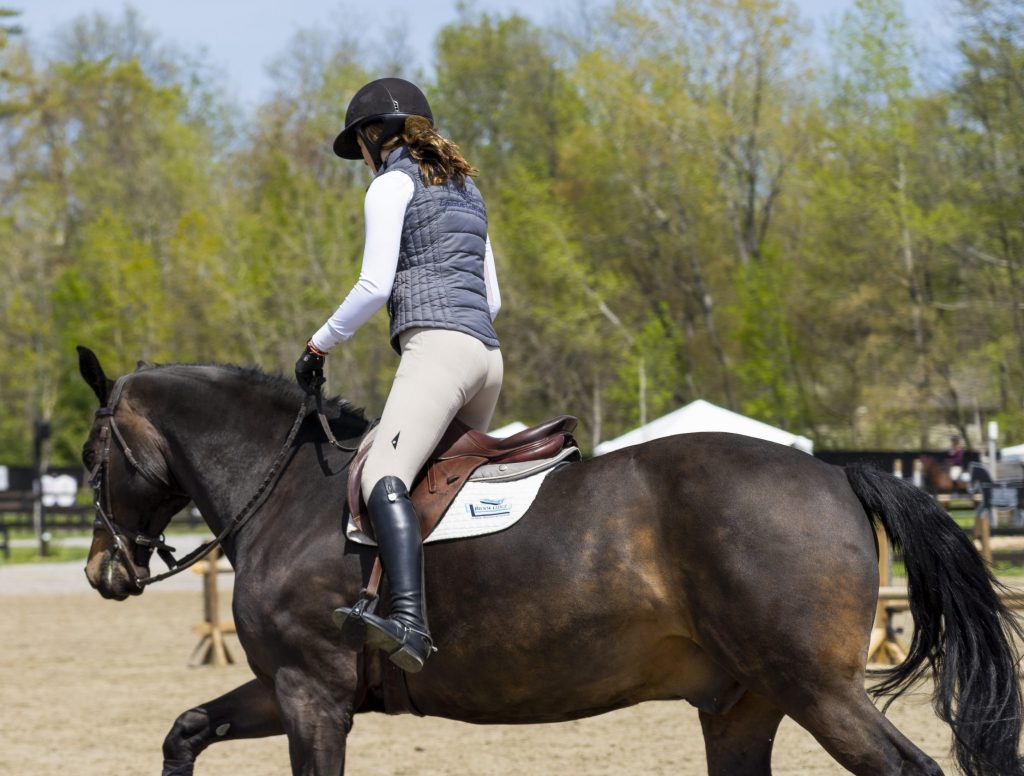
This week’s question posed is: How would you train a rider who unconsciously shoves with their seat while riding to sit more quietly?
Here are their answers:
“The natural aids are hands, legs, seat, and voice. The dominant driving aid is leg, with seat being the secondary, not primary. When a rider uses their seat too much, it not only weakens their leg, but it puts a lot of pressure on the horse’s back. The best exercise is having the rider do a lot of work in the half-seat, including collecting the trot without sitting. Teaching the rider to use a half-seat strengthens the rider’s legs while lightening the seat, instead of automatically going to a full seat to send a horse forward. If the rider understands why riding with a heavy seat isn’t correct it helps them learn to ride lighter.”-Julie Winkle
“I have riders transition a lot between two-point and sitting positions through the walk and trot and canter. And then over time, I encourage them to get taller and learn to lightly touch the saddle in their half-seat in the canter as opposed to two-point. Position is a big component, so having a little bit more of an arch in the rider’s lower back helps their balance come a bit more forward and become less vertical and prevents them from sitting too far back, which automatically makes them shove.”-Cara Wheeler
Read more Trainer Tuesday responses from Cara here.
“This is a question of how to correct a rider’s seat or base. Properly developing it is the same method–the basics: improving rider balance, practicing with no stirrups, and waiting for the horse off the ground.
When I was a lesson kid myself from ages 5-10 this is what my Wednesday, Saturday, and Sunday lessons consisted of to give me a strong foundation.
On Wednesdays we did sitting trot and two-point with some cantering. We did lots of patterns, figure eights, etc. We also did pole bending which encouraged proper use of our legs and strengthened our position.
Saturday was for no stirrups, and doing so for as long as we could stay on. For those who could not canter without stirrups, they would do patterns without them. If you wanted to trot or canter, you had to stay in the middle of the horse. This strengthened our legs and gave us a seat. We also played a dollar bill game where we had to keep a dollar under our seat.
Finally, on Sundays we did gymnastics and poles on the ground until we could jump. We did pole courses without stirrups before we ever jumped small fences.
We also would ride Western, bareback, and without stirrups more than we rode with them.
To reiterate, the answer is basics. A rider shoving or pushing their hip is standing in the stirrup anticipating the horse’s jump rather than responding to the horse’s vertical jump and letting the horse jump up to them.”-Diane Carney
Read more from Diane and listen to her on the Plaidcast here.
“That’s usually a nervous habit done by students who can’t feel the stride–they mimic it to feel in control. I’d give them more exercises that require lower leg and a light seat like bounces and Cavallettis, where pumping with their seat is going to get them in trouble.
It’s also good to encourage those students to exhale before they ride through the corner and to relax their body and connect their lower leg, because usually, they start pumping before they even feel the stride they have. I encourage our students to regularly video themselves and constructively critique what they like about their ride and what they want to get stronger in.”-Nick Latina
Read more Trainer Tuesday responses from Nick here.
“As much as I dislike “posting the canter” it works well as an exercise to help a rider stop pushing with the seat unknowingly. I start with 4 steps sitting, 4 steps half seat and alternate back and forth. Then, I have the rider move to alternate position at 3 steps, at 2 steps and at one step. Meanwhile, they make the horse go forward from the leg without pushing through the seat. Then, I ask them to put intention toward keeping the seat still as they use their leg with the same feeling they had at the one step alternating position canter.”-Mary Ann Thomas
Read more from Mary Anne here.