
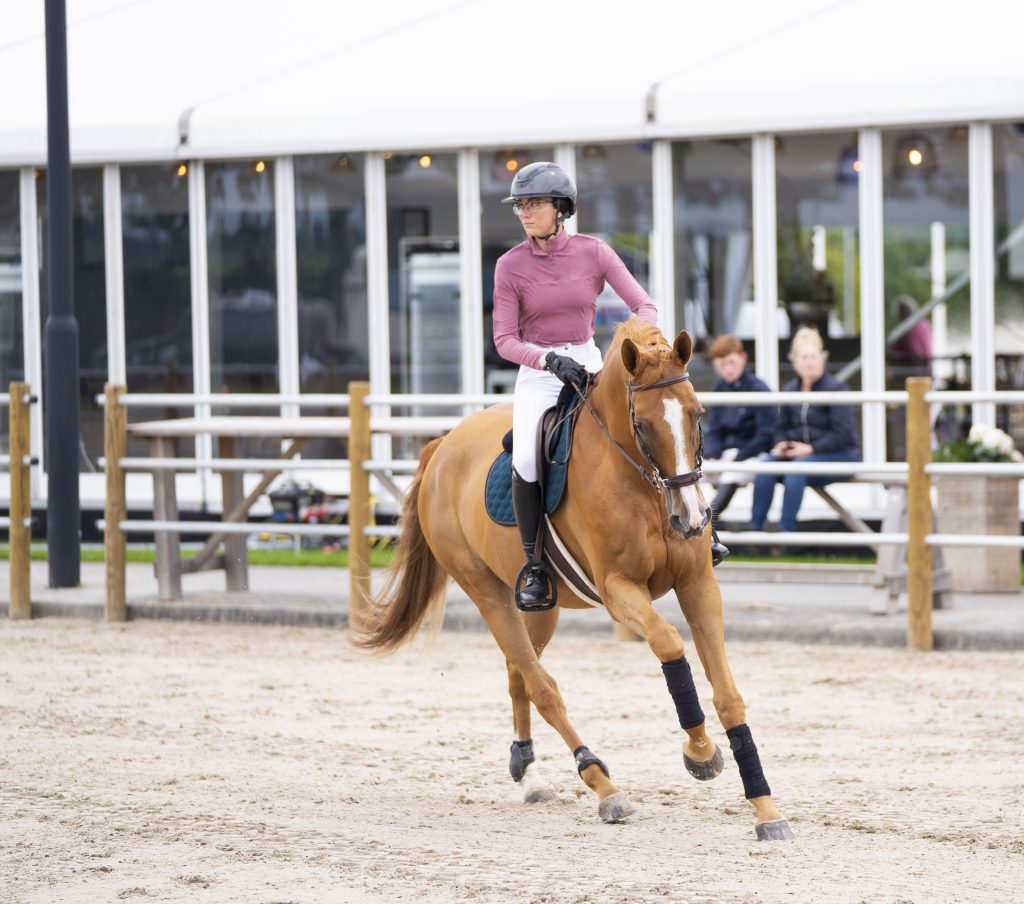
By Dr. MARIA KATSAMANIS
“There are many roads to Rome, but few riders or trainers are aware of the largely unexplored elements even more fundamental than simple postural awareness and fitness when it comes to improving posture and balance,” says Dr. Maria Katsamanis, a horse trainer with a formal background as a researcher currently studying how our eyes and brain connect to our posture in the saddle.
The sport of riding presents unique challenges; not only physical ones, such as endurance and strength, but also the mental challenges of concentration, presence, and for many, contending with the fear factor. A simple web search reveals the volumes of instructional materials available to horse enthusiasts on the topic of rider balance, fitness, and improving one’s “mental game.” However, an element of improved riding not likely found on many search engines has more to do with one’s visual pathways than one’s physical or mental prowess.
Our recent interview with Dr. Katsamanis provided insight on how visual pathways may be a missing link for many seeking to improve their seat, balance, posture, and horse’s performance under saddle.
For example, riders are often told that improving their riding requires many formal hours physically sitting on a horse. Dr. Katsamanis has found that this can often result in placing undue strain on the horse. Why? Many riders can have underlying issues with certain pathways that mediates what the eye sees and how that is then processed in the brain. This can have major implications for balance and posturing of both human and horse.
Riders who have had falls, even minor concussions, or Lyme Disease can be particularly susceptible to experiencing balance and postural issues both on the ground that then show up magnified under saddle. In her latest book titled, Riding In Dignity, she offers a unique perspective on optimizing rider position and balance.
Her trademark quote, “Decide today not to push and pull and watch everything change” is the overarching goal to great riding.
According to Dr. Katsamanis, it is not just the rider that can be impacted by visual pathway issues. There is evidence to suggest that horses can be impacted by visual pathway disrupts as well. Oftentimes, she continues to say, a horse will present with obvious imbalances that trainers will tackle by more exercise and traditional workouts. In her work with horses, Dr. Maria has developed a method to address alignment issues with both horses and humans that has more to do with vision than voltes.
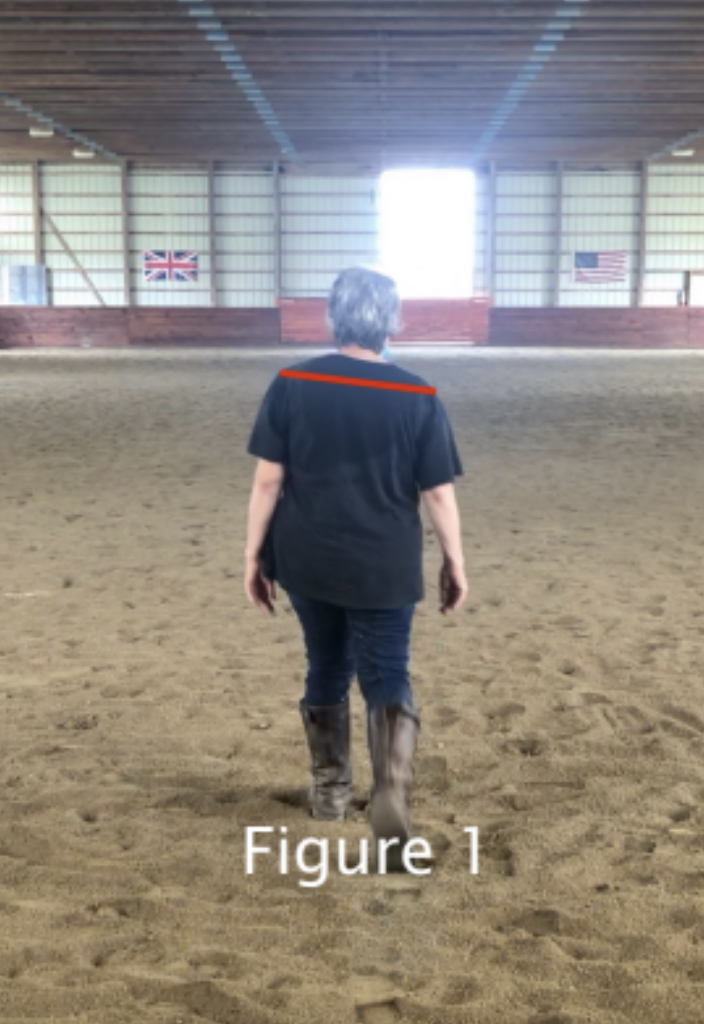

“It’s about integrating training tactics, for both horse and human, that can get both comfortable quickly. Often, the clue of how the rider will be balancing and posturing atop a horse can be found in how they are walking on the ground,” says Dr. Katsamanis. In the photos one can see the left shoulder markedly higher as the rider walks forward (Figure 1). The same rider (Figure 2) shows a marked difference in her balance and posture after participating in Dr. Katsamanis’s OptiPosture ™ program.

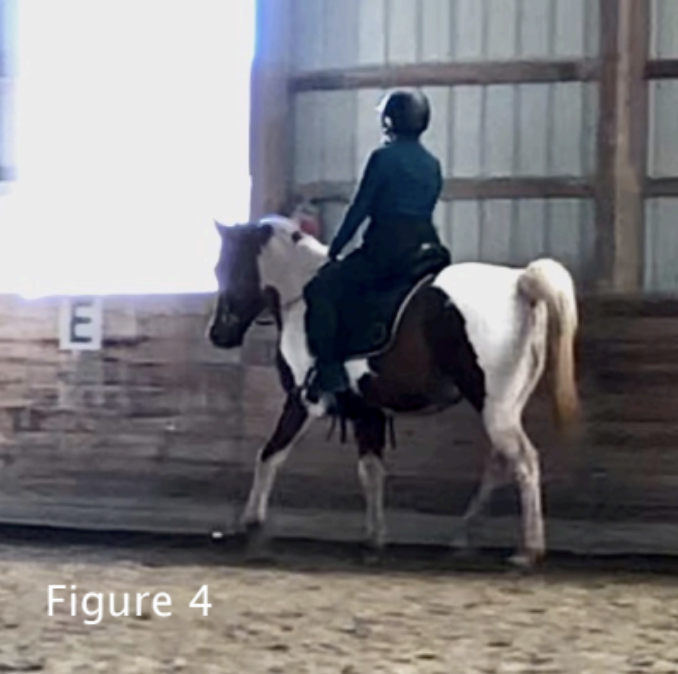
Addressing alignment issues as part of the training program, in both the horse and rider can lead to some incredible results. For example, in Figure 3, the rider and horse are seen before addressing their balance issues. The identical rider posturing from Figure 1 can be seen here. Figure 4 shows a horse and rider with a balanced posturing similar to her ground based posturing in Figure 2.
Dr. Katsamanis explains, “the ride should look comfortable for both, and elegant.” As a trainer, explains Katsamanis, she can come to know very well the negative consequences to the horse when rider imbalances are not addressed. “We have the ability to help the horse or harm them in how we sit and work with them,”
For this body-brain balance, she has aligned with experts in different fields, including optometry, to develop an assessment, individualized programs, and a tack line that speaks to this issue uniquely. Her knowledge on this topic is comprehensive and methodical–it is her hope to continue to educate riders worldwide and promote more pointed and effective methods to address horse and rider alignment issues.















