By MARLEY LIEN-GONZALEZ
A staggering number of children in the U.S. are faced with some form of speech or language impairment. When Ada Haensel graduated with a master’s degree in speech therapy, she set out to combine speech therapy and her knowledge of equine therapy in an innovative program.
Haensel’s experience in equine therapy began early; she volunteered at a therapeutic horse center when she was a child and was also a working student on the hunter/jumper circuit for most of her life.
Speaking of Horses, LLC, was founded in 2022 with just one pony and one client and has been growing ever since. Haensel hopes the use of horses in speech therapy will become a national movement.
“The progress that I see with my students is beyond anything I’ve ever seen in any clinic,” Haensel tells The Plaid Horse.
Why Speech Therapy?
The use of horses in therapeutic settings isn’t anything new, but many might wonder how horses contribute to the development of speech and language skills. There are many reasons, Haensel explains, how her students build connections and find their voices through horses, starting with the environment.
“A traditional therapy setting is just four walls and a few games. When my students are on a horse, they are so enthralled that I can drill them with flashcards for much longer because they’re enjoying the experience of being on the horse so much that, most of the time, they don’t even know they’re receiving speech therapy.”
Speech therapy, Haensel adds, can happen anywhere, using any tools, but she wanted to create a really special space for children to learn. “I couldn’t think of a richer environment than a farm. It’s so natural and kids are really able to gain confidence, which is a big part of speech therapy.”
The kids also develop deep friendships with the animals—one student worked for weeks and weeks to be able to tell her favorite pony that she loved him.
“Winnie, my star pony, is a 13.2 hh Welsh who used to be a show pony, but was not fond of the show scene, so he ended up becoming a therapy pony. This little girl just fell in love with him, but she could only say that she ‘woved’ him, with a W,” says Haensel.
Haensel and her student worked on putting her tongue behind her top front teeth and bringing it down to create that “L” sound, and eventually the student was able to say that she loved the pony. That student’s speech improved so much that she graduated from the program.
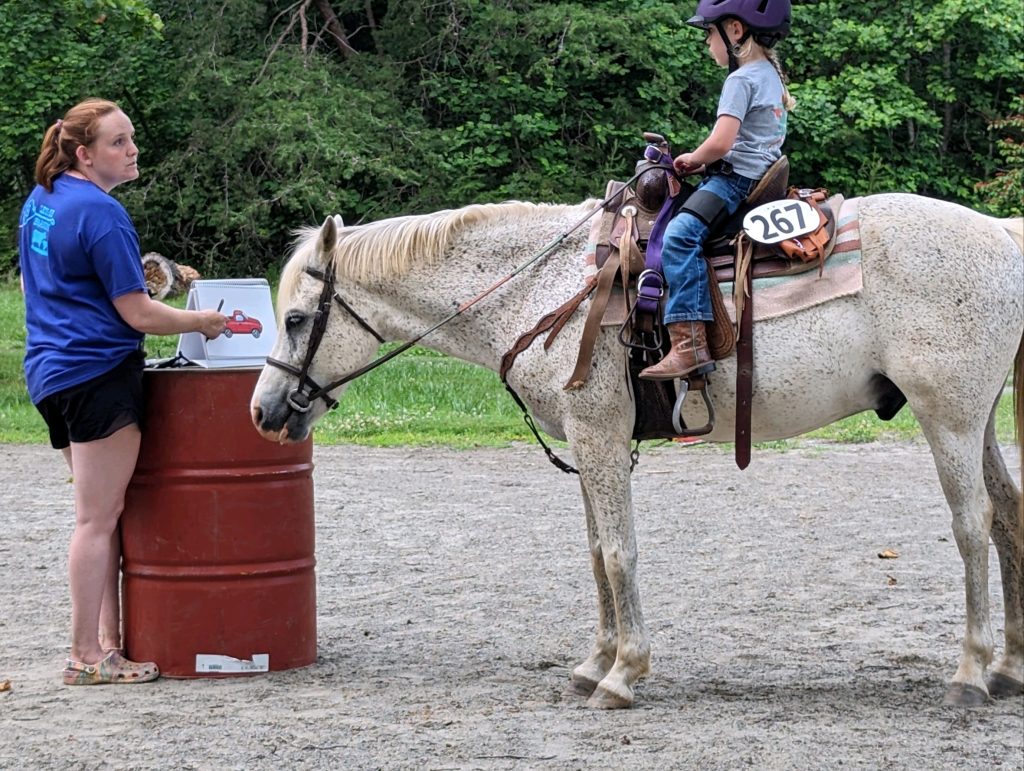
Another amazing factor of the horse environment is the ability to use tangible examples. Haensel says, “A lot of my clients are nonverbal and on the Autism spectrum. I teach them how to read body language, because horses have a whole non-verbal communication system of their own. When their ears are flat back, they’re mad; and when they’re pinned forward, they’re looking expectantly or they’re excited; or when they flap to the sides, they’re content.”
“The students start to learn how to read horses, and then we generalize that to people–so that they can read people’s emotions, and then be able to transfer what they’ve learned from the horses to a school setting, or use those social skills outside of the farm.”
“Horses are non-judgmental, so they are the gateway to opening up social communication for children,” says Haensel, “It’s also such a language-rich environment. I compare so many things about horses to the real world. We talk about how the girth is just like the belt you wear, how the bridle is like the steering wheel of a car, so they’re able to learn about metaphors. A lot of their language just naturally increases by them relaxing in the horse’s presence.”
Giving Opportunities To All
Speaking of Horses is a non-profit organization which relies on donations, the help of volunteers, and Haensel herself, who works two jobs to support it. “It’s a lot of grit and hard work,” says Haensel, but her mission remains steadfast: to give children the best opportunity to unlock their full potential, and to give horses a second chance as well.
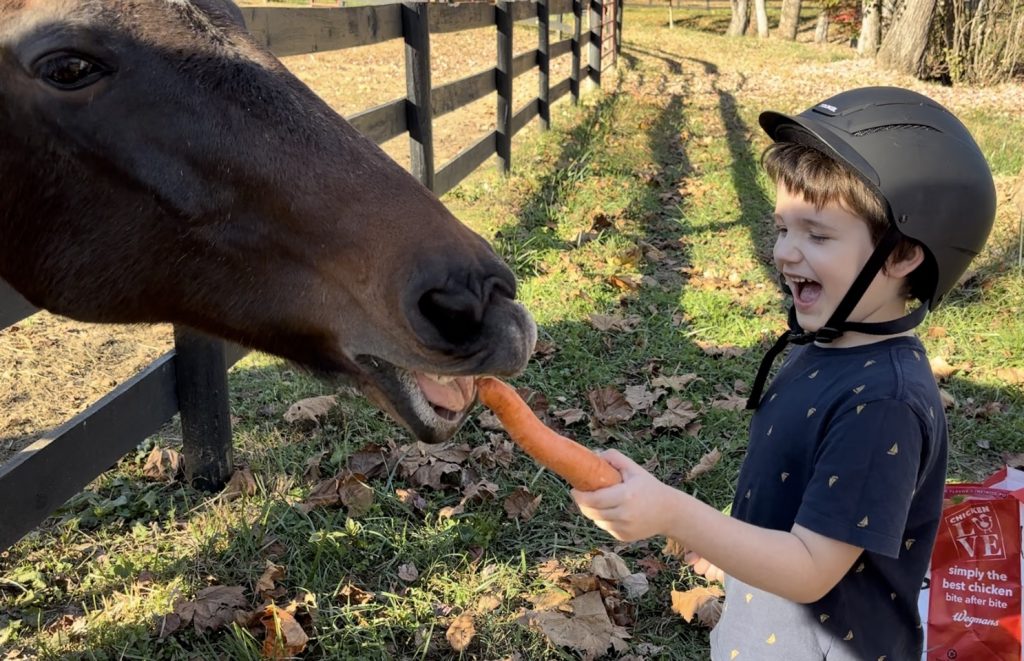
The program has donor-funded scholarships, which Haensel is working tirelessly to grow, and alleviates the cost for families by accepting insurance. “Kids who wouldn’t generally be able to be around horses based on their socioeconomic status are able to participate through Medicaid. Eligible clients don’t have to pay anything when I’m providing speech and language services,” says Haensel.
“Growing up, I couldn’t pay for my riding, I always had to work for it, which was really important because it built my love of horses. Having to work to be able to be around them made them that much more valuable to me,” she says.
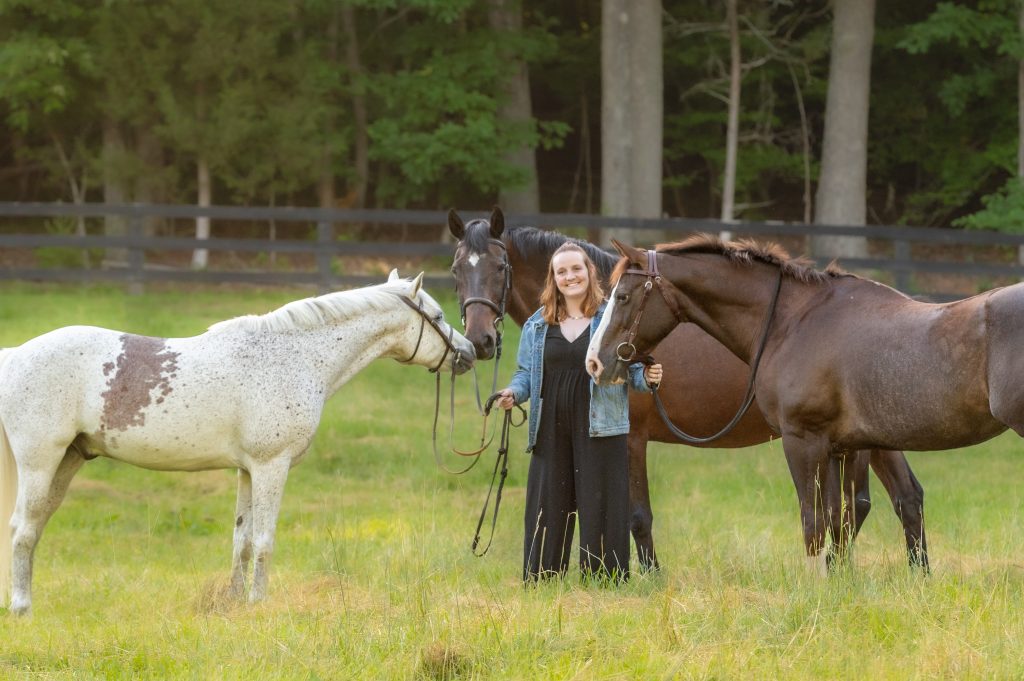
Now, Haensel lives on a 10-acre farm and her animals are all on property with her, allowing her to make an impact on equine lives as well. “My horses are all on their second careers,” she says.
“I have a 25-year old eventer who didn’t want to jump anymore, so he came to my program because he still wanted to be loved on and continue to work, but not in the same way as in his previous career. One horse I rescued was with us for a while and he was very old. When he was 27, he eventually said that he just wanted to be retired, so he went to live in a sanctuary.”
Since Speaking of Horses is not a riding school, the horses don’t need to physically exert themselves to the level they used to–making the program friendly to all kinds of horses. “Trotting actually increases sensory engagement and stimulates the neuro system, so all of my horses are sound at the walk and trot, but they don’t have to canter to do their jobs,” says Haensel.
The newest team member is a favorite of the students. His barn name is Blink (he’s blind in his right eye), but he’s known by his show name, Exclusive, in the Upperville Hall of Fame, which is just one of many accomplishments made throughout his decorated first career.
Haensel says, “He was worth a lot of money when he was showing at that level, but I think he’s worth even more now, helping these kids with disabilities.”
Testimonials from Speaking of Horses Parents:
“Speaking of Horses is an immersive destination where animal-assisted therapy means a growth experience in so many areas of life, not just communication.” —Teresa Taitano
“Speaking of Horses has been an amazing experience for our family! Our son had never ridden a horse before, but due to Ada’s excellent instruction, he has become quite adept. He’s excited to learn, and wants to work harder at articulation. His speech therapy combined with learning to ride and care for a horse has served to increase his confidence and meet benchmarks he didn’t think he could!” — Lauren Rainer
Click here to learn more about Speaking of Horses or donate now!