
By REESE GALLAGHER
We’ve all seen the ads on Facebook for some horse that is “free to a good home.” In recent years, all eyes have been on ads like these due to the reality that there aren’t too many “good homes” left for these horses. These ads typically feature a senior horse that isn’t needed in the seller’s program anymore, or a young, unsound horse that cannot do the job that it was intended to do. Whatever it is, the harsh truth is that there aren’t many people these days who have the resources to provide long-term good homes for these horses or to take them in once they’re no longer serviceable.
After spending the better part of 7 years volunteering and working in the equine assisted services field at home and at my school, Centenary University, I have discovered that for many of those old or unsound horses, a therapeutic riding program can be the good, safe home that they deserve.
In case anyone is unfamiliar with equine assisted services, or EAS, it is a term used to refer to various services in which professionals incorporate horses to benefit people. The target audience for EAS varies from individuals with special needs or physical disabilities, as well as people struggling with addiction or mental health problems. There is also a branch of EAS called hippotherapy, that allows licensed physical, occupational and speech therapists to provide therapy using the horse as a tool.
In my experience, the typical therapeutic riding horse might be asked to walk and trot safely. A normal lesson can consist of practicing transitions, steering, trotting, and other skills that would be taught in a traditional riding lesson. Many facilities also offer therapeutic vaulting and therapeutic driving. So, for certain participants who cannot ride, driving may be a way for them to participate in equine assisted services. Vaulting can be used as well for riders who may not thrive in a traditional riding lesson setting.
The horse should be tolerant and patient enough to provide a safe and productive lesson to the participant. If your horse can tolerate being led and having people walk next to them, they are already a good candidate for therapeutic riding! Many of the horses that I have worked with have been serviceably sound, meaning that they are comfortable enough to complete the tasks being asked of them, but probably shouldn’t do anything more than walking and trotting. Senior horses are also an asset to these programs due to the life experiences that they have, making them quiet and reliable for riders to learn on.
Equine assisted services are one of the fastest growing fields in the equine industry, and the demand for steady and reliable horses grows with it. There is a place for almost any horse in a program due to the variety of participants being served. Where one rider might benefit from a narrower horse with a quick walk, another rider might need a slower and wider horse to get the most out of their riding lesson.
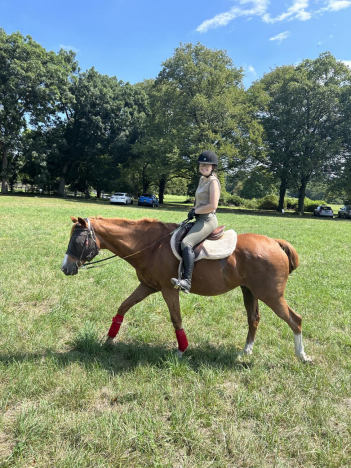
The youngest therapeutic riding horse that I’ve met was an 11-year-old quarter horse that suffered from an injury that made him unable to continue being a lesson horse. He is still doing the therapy job at 14 years old. The oldest horse I’ve encountered at my job was a 30-year-old Thoroughbred who needed a soft place to land after the farm he resided at shut down, and he ended up being one of the best therapy horses I have ever encountered. The need for therapy horses is growing, and even the most unlikely horses can fit into a program somewhere.
Since many facilities for equine assisted services are non-profit, their horses are acquired through donations from the community. Horse owners can inquire about the needs of the facility and decide if it is the right place for their horse. The horses donated become favorites of riders, volunteers and employees and end up with a fan club throughout the duration of their tenure. I consider being a therapy horse as a semi-retirement for these equines. They aren’t doing a hard job, but they are continuing a career and helping people while they do it.
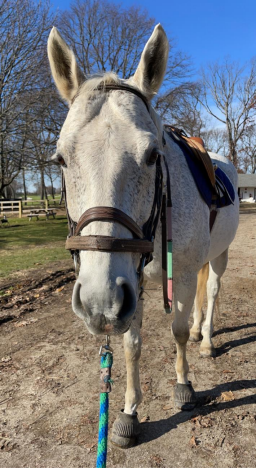
Next time you encounter a “Free to a good home” advertisement, or think about writing one yourself, consider the options available. Equine assisted services open up homes to many horses that may otherwise end up unwanted and have an uncertain future if they are given away for free on Facebook. I am passionate about the well-being of senior horses or horses that are unsound at a young age because I have seen how people can benefit from those horses. Even if they cannot do the job they were intended to do, there is a place for them somewhere, and that may be within a herd of therapeutic riding horses whose jobs are to improve the lives of people who need them most.