
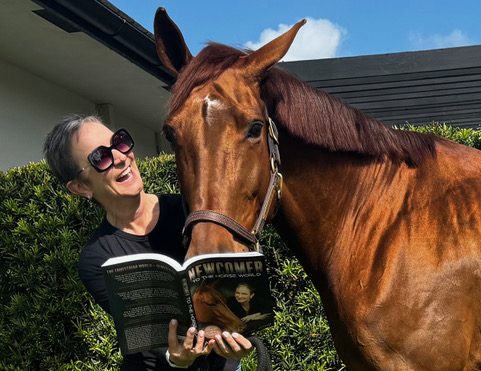
By ANDREA SINNER, ESQ.
Reprinted with permission from Trafalgar Square Books
What to do When You Are in the Wrong Barn For You
This is a delicate topic for all involved. The horse world seems to struggle with the idea that sometimes it just isn’t a good match amongst rider, horse, trainer, and barn. With all those parties involved (including the most important one, the non-human one), it is no wonder it can be a potentially fraught collective relationship. You may determine you have the wrong situation for your objectives a few months or a few years into your relationship; regardless of timing, making a transition is never easy.
Make Sure You Have Tried Everything to Make It Work
There are factors that can influence you to stick it out a bit longer in your current situation:
- Finish the play. Getting better at riding and improving your horsemanship takes time. If you are in a situation for just a few months and unhappy with your progress, you need to seriously consider whether your expectations are out of whack. Have a reset conversation with your trainer and give it a bit more time.
- Moving has risks. The grass often appears greener, but making a transition can be hard on you and, if you have one, your horse. Before you commit to a change, you should rigorously assess whether the things you are unhappy with a) truly can’t be fixed in your current
- barn, and b) are genuinely likely to be substantively better in the new situation.
Stand Firm in Your Values and Priorities, and Make the Move If It Is Merited
There are also factors that are not your problem and should not sway you to stay:
- You do not need to stay in an unhealthy or unproductive situation. This statement is as true in life as it is in the horse world. And yet, many barns and trainers are deeply offended if you say you want to leave, and some are known to trash you in the horse world if you do. Their reaction is often a blend of hurt ego, lost business, and a perception of maligned reputation. If you have made your complaints clear and given them a chance to improve things, and nothing has come of it, you do not need to stay for fear of hurting their feelings or making them angry. You may lose some friends in the process (some trainers are known to gossip about you to your peers at the barn and make them pick sides), but—sorry for being trite here—your real friends will know the full story and have your back.
- You do not need to keep their secret if your barn or trainer has verifiably done something wrong. Please take the high road and stick to a simple version of the facts when you leave a barn, or perhaps even sugarcoat it a bit if it’s just a relationship that came to a natural end. Superfluous and juicy gossip helps nobody. However, if you have verifiable evidence that your horse was mistreated, you were lied to, or you were swindled, a simple version of those facts is reasonable to share with people you know who might benefit from the information.
Handle Your Search for a New Barn Confidentially and Respectfully
A delicate part of this whole process is finding a better situation while, in some cases, not wanting to tip your hand. You will need to talk with another barn or trainer to find a better fit—most likely in advance of giving notice. Some horse professionals may be hunting your business and promising the world; be wary of the big sell and walk away if they gleefully trash your current trainer. Others may be friends with your trainer and inform them that you are looking. As mentioned above, the horse world tends to stick together.
Here are some principles when you are considering new options:
- Clarify your key deal breakers (things you like in your current situation and don’t want to lose) and complaints (things you need to have improved).
- Make sure you have given your current barn a chance to address your complaints. Be honest with yourself on this one! Moving barns because you couldn’t muster the courage to discuss your complaints is potentially disrupting (read: putting at risk) your horse for no reason and is simply irresponsible behavior. Be an adult and have an adult conversation with your barn and trainer.
- Talk with friends you can trust not to share that you are thinking about moving, and compile a short list of potential barns that you think could meet your needs.
- In your search for a new barn, you have a choice of two approaches:
» Attempting to keep your search private. This likely means forgoing taking lessons with potential trainers and limiting your time for visits, as barn staff and clients are prone to chattiness.
» Letting your trainer know you are conducting a search. This approach allows you to not stress so much about keeping your search hidden, and to potentially take lessons at the new prospects. - Make sure each potential barn under- stands whether your search is private or out in the open, and that regardless you appreciate their discretion and will not make any commitments immediately.
If you need to go through a transition of this kind, do make sure you have a trusted friend to talk things through with you. It is almost always easier said than done, but when the circumstances require a move, you owe it to yourself and your horse to settle in a place better for you both.
Once you have decided to leave, handle it professionally. Unless you are truly worried about your horse’s safety—which will be exceedingly rare—you should give reasonable notice, such as one month or longer. You will need this time, and your barn’s help, to prepare for your horse’s transition. You will find a “Horse Transition Template” at this link: https:// tinyurl.com/32vf9m7d. It’s designed to help you safely transition your perfect equine. And when you do move, pay your bills, pack up everything you own—including the old horse blankets they let you store in the attic—and generally leave everything better than you found it.
About the Author
Andrea Sinner, Esq., retired from the global consulting firm Accenture in 2014 as an executive managing director. During her 24 years there, she collaborated with multi-national clients and innovative teams for consulting partnerships spanning technology, process, organization, business process outsourcing, technology outsourcing, organization redesign, and company transformation. Sinner graduated from the University Miami School of Law, summa cum laude, in 2017 to embark on her second career. Her primary occupation (in addition to caring for and being with her horses) is being a Legacy Architect and Estate Planning Attorney for equestrians in her Florida law firm “Stable Legacies PLLC.”
Find Newcomer to the Horse World at the Trafalgar Square Books online bookstore TrafalgarBooks.com.














