As in all sports, sportsmen and fans are often superstitious. They have great success. Superstitions occupy a special place in horse racing because it is very difficult to determine factors such as the physical condition of a horse or jockey, the quality of the start of the race, and the starting position. Other interesting information, news, and betting information about horse racing are on Optimobet, with one simple click on this link https://optimobet.com/betting-sites/horse-racing-betting-sites.
Gray horses are for muddy courses. Do some colors work better?
This method is often used by players, for some reason, gray is a lucky color in horse racing; this superstition comes from ancient times when light-colored horses, if they trained a lot and were in good shape, would often be shot and would appear gray, since then gray has been considered a lucky color because this color indicates that the horse has been trained for a long time and is in good physical shape.
Steer Clear of Green – the unlucky color of horse racing.
When we talk about color superstitions, the most unlucky color is green, we do not have accurate information, although many horse racing enthusiasts believe that if a horse is colored green, it means that it has fallen several times while running and turned green from the grass, this factor obviously speaks badly about the horse, it may be in good physical shape, but during the race, it falls on the grass and will be out of the competition.
Betting the “right” way – rituals to avoid bad luck
Some players go further and perform a ritual when placing bets. One method is to place a bet on the horse that first comes to mind, as changing your mind often means missing out on the best option. Horse racing enthusiasts believe that once you have a certain level of understanding of the characteristics of horse racing, your mind will automatically pick which horse to bet on, and changing your mind often ends in a negative outcome.
Lucky and unlucky numbers in racing – the role of numerology
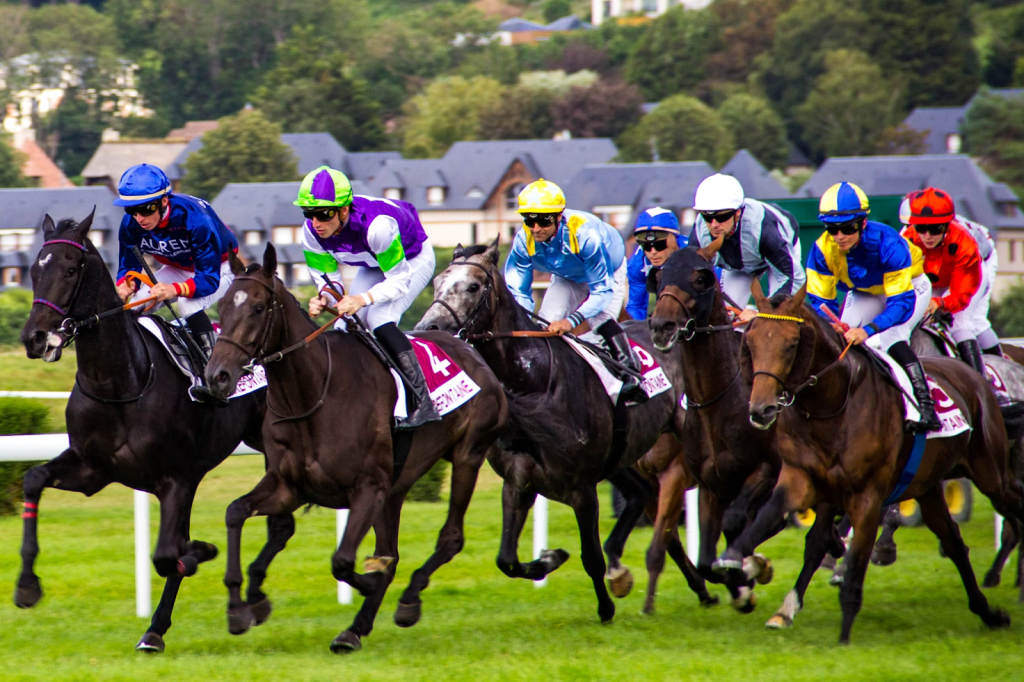
As you know, horses are distributed on the racetracks during a race; out of 8 tracks, the middle tracks are considered lucky, and there is obviously a reason for this. Horses standing on the side tracks are often hindered by environmental factors, and spectators influence them, causing them to have a bad start because of this. After running one lap, the tracks are no longer important, and the horses move around the tracks at will. However, a good start is very important, and everyone wants to start the race successfully. So the numbers 4 and 5 are considered lucky numbers in racing, and if horses of equal level compete, the players give the number 4 or 5 an advantage according to this superstition.
Peanuts near the barn – food or curse?
Peanuts near the barn are one of the iconic superstitions, which originally meant that throwing peanut waste near the stable could have a bad effect on the horse’s performance because it easily settled in the horse’s hooves and digestive system, which is not considered healthy food for the horse. Therefore, both grooms and players avoid eating peanuts as much as possible during the race and in the vicinity of horses.
Tails, Whiskers, and Hoof Shapes – Strange Views on Horse Appearance
The body shape and naturally grown hair on a horse can say a lot if we are to believe the superstitious. Some enthusiasts attach great importance to the tail of a horse because it is believed to be better for aerodynamics and has little effect on the horse’s speed, a factor that many professionals also support and even emphasize those horse breeds that have naturally larger tails. A similar approach exists for the mane for the same reason, although it should be noted that the tail and mane factors do not change the result so much that we should only look at these details. As for the shape and size of the hooves, this actually has practical significance, and some stud farms even artificially change the shape of the horse’s hooves. The ideal oval shape is considered the most effective, and sometimes, round hooves are changed to oval.