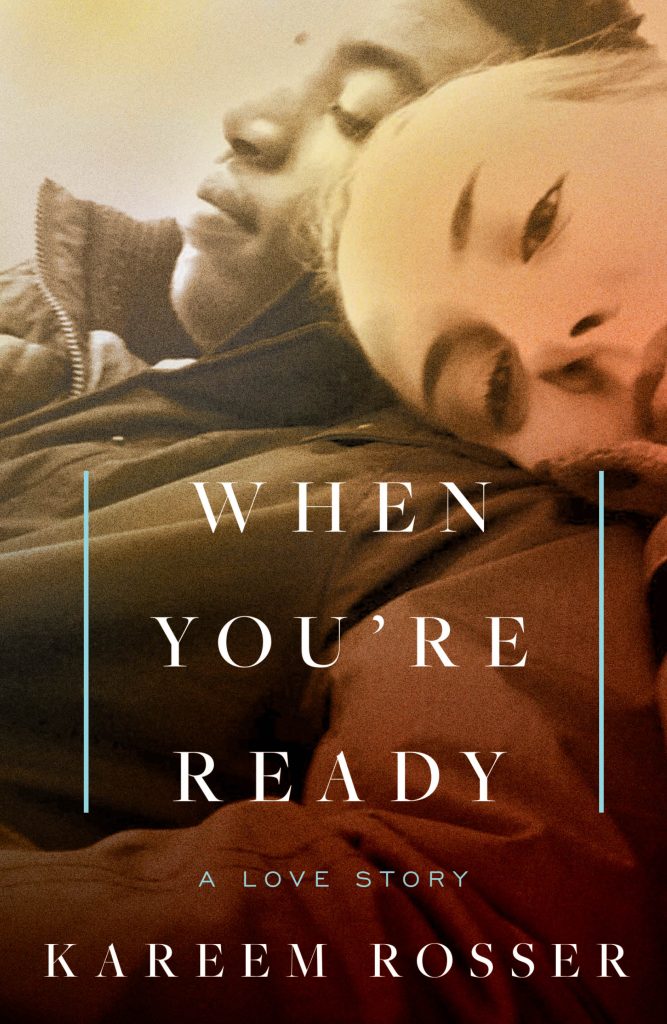
A Love Story
BY KAREEM ROSSER
Excerpted from When You’re Ready: A Love Story. Copyright © 2025 Kareem Rosser. Reproduced by permission of Simon Element, an imprint of Simon & Schuster. All rights reserved.
Prologue
Every day, for four years, I watched the clock at work, waiting for the minute it hit 5:00 p.m. It didn’t matter if I was in the middle of a call. It didn’t matter if everyone else was staying late. I didn’t care if there was a big project due. Five o’clock rolled around, and it was time to snap my laptop shut, grab my coat, and walk out the door.
Every day, for four years, I made an hour-long drive each way. First it was to the hospital in Newark, Delaware, then to the rehab center in Malvern, Pennsylvania, and, finally, to her home out in the Pennsylvania countryside. During those sixty minutes in the car, I’d call my mother. Or one of my brothers.
Sometimes I’d ring a friend who I had shamefully neglected and hope that an hour-long car-conversation could make up for months of missed dinners and parties and unreturned texts.
The drive there was all about distraction. Putting myself in the right frame of mind. Maintaining my control: Keep yourself busy. Don’t think too much. Don’t dwell. Stay upbeat. You cannot carry your grief into the room with you. Lee Lee needs you to be strong.
The first time I made that drive to Newark, Delaware, it was three days before Christmas. I had been at work, but I wasn’t working. I was alone in the office and shopping online for a last-minute Christmas gift for my girlfriend, Cordelia “Lee Lee” Jones.
I was deep in love, dreaming about our first real holiday together. I was thinking about how, someday—once we had kids—we would need to give equal holiday time to both her family and mine.
Or maybe we’ll make our own traditions.
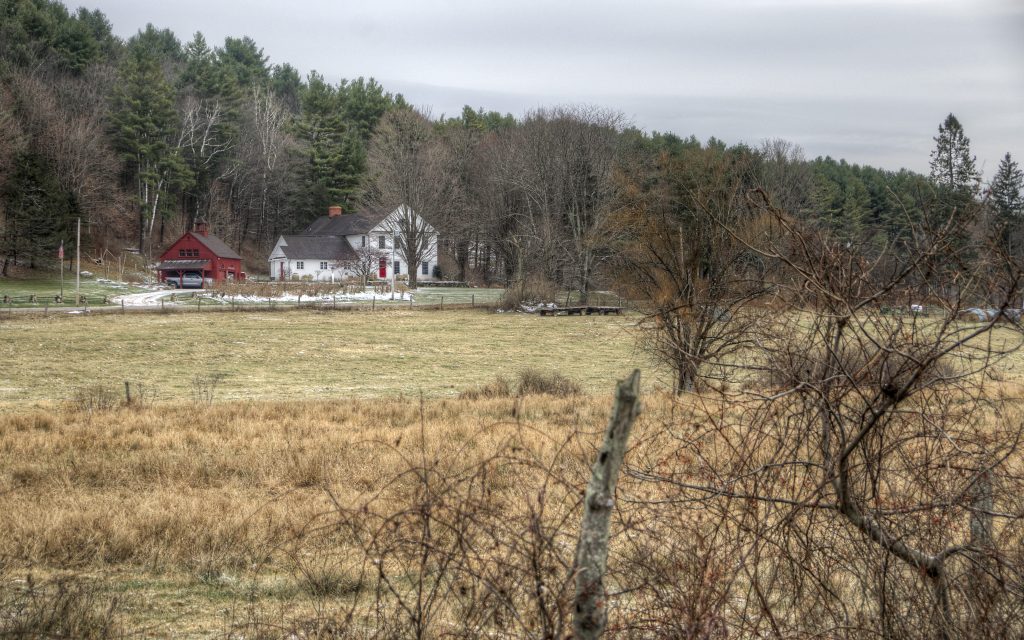
I imagined the pristine white farmhouse we would live in. Our barns and fences draped in snow. The horses gathered around the feeding troughs in the fields, nosing into the hay, their breath crystallizing into plumes of icy fog in the winter air.
My phone rang, busting me out of my daydream. There had been an accident. Lee Lee was hurt. Bad. I needed to come right away.
At the hospital, in the beginning, I’d always sit on her right side. The right side of her face and head looked like the Lee Lee Jones I knew. My girlfriend. My best friend. My love. Her long brown hair was intact on that side. Her right eye was closed, her lashes were so long that they practically grazed the top of her cheek. That side of her face looked almost peaceful. If I just looked at the right side of her face, I could pretend she was merely sleeping.
The left side was draped with a towel. The nurses had laid the towel over that side of her head to try to hide the fact that doctors had removed half of her skull. But it didn’t really hide anything. I could still see the sunken spot where the bone was missing. I could see that half of her hair was gone. I could see the blood that soaked through the bandages—all the way through—leaving a constant bright red splotch on the white terry-cloth fabric.
I would talk to Lee Lee. Bargain with her. Tell her that if she made it through, if she stayed alive, I would never walk away. I would be there, by her side, no matter what.
Or I’d sing to Lee Lee. She and I both had terrible singing voices, but we never cared. We’d belt out songs in the car, trying to harmonize, cracking ourselves up with our off-key wailing. Teasing each other about who was worse.
Just before the accident, we had the Weeknd’s Starboy on repeat. We listened to it over and over, singing along until we knew all the lyrics by heart.
When we were alone in the ICU, I’d quietly sing her favorite song off the album, “Die for You,” stretching my voice into a wavering falsetto.
I desperately wanted to hold Lee Lee. To crawl into bed with her, to push aside all the tubes and machines and PICC lines, and wedge my body against hers. Bury my face in her neck. Let her warm, familiar scent replace the frigid, sterile air of the ICU.
Instead, I’d gently wiggle two of my fingers into the clenched fist of her right hand.
Before the accident, Lee Lee and I loved to walk around with our arms around each other. We were constantly hugging and kissing on each other. If we sat, we were always close enough for some part of our bodies to touch. My arm warm against hers. Her thigh squeezed up next to mine. But we almost never held hands. Because no matter what the temperature was, within a couple of minutes of tangling our fingers together and pressing palm to palm, we’d start to sweat, and then we’d start to giggle. We were both naturally afflicted with palmar hyperhidrosis—clammy hands—and we quickly learned to avoid the slippery, squelchy result.
At the hospital, I imagined how, someday—after everything was better—I would tell Lee Lee about the way I had held her hand.
How I didn’t care at all anymore about the film of perspiration that still grew slick between our skins. How it was the only way I could hold her. I would imagine how I would tell her that I waited and waited for her to squeeze my fingers. To show me she was still there. To show me that she still recognized who I was and that she understood what I desperately wanted from her.
At the Rehab Center, I’d sit by the bed and talk to Lee Lee. Telling her about my day. Telling her about a new song I’d heard. Sometimes I’d tell her the same story twice, hoping that the second time around might elicit some sort of new response. Sometimes I’d help the nurses turn her from side to side to avoid bedsores. I’d try not to dwell on the flash of anger in Lee Lee’s eyes as we rolled her over. The expression on her face that made me think that she was absolutely, achingly aware of all she had lost.
Sometimes I’d run out of things to say, so I’d take her hand and we’d just sit. Lee Lee had so much support, so many people who loved her, the best medical care that money could buy—and yet, her body was healing so slowly. She was still in such obvious pain. And there was nothing I could do. Nothing anyone could do, really. It was entirely out of my control. And so, sometimes, instead of talking to Lee Lee, I found myself talking to God. Which felt a little odd and unnatural, because I was not a religious man, but it also felt entirely necessary.
Please, I would chant in my head as I held her hand. Please, just a small miracle.
I suppose some people might call it denial, or magical thinking, but, for a while, my makeshift prayers felt like my last and only option.
Once Lee Lee was back home on her farm, I was certain her healing would accelerate. I was sure that being home with her horses and dogs and family—being surrounded by all her familiar things— would change everything.
But, of course, as I would learn over and over, my being certain about something hardly qualified as a guarantee.
We’d sit in her room. Sometimes Lee Lee would be in bed. Sometimes in her wheelchair. I’d turn on the TV, and we’d watch shows that we had enjoyed together before the accident. Shameless. Grey’s Anatomy.
I’d laugh loudly at the funny parts. Loud enough for both of us.
Loud enough to cover her silence.
At the hospital, the rehab, and Lee Lee’s home, I always stayed with her for at least an hour. Longer if I could. Talking to her. Singing to her. Helping her eat. Hoping to hear her laugh.
Holding her hand.
Then I’d kiss her goodbye, get back in my car, and drive another hour, crying
the entire way home.
Every day, for four years. This was my life: work and Lee Lee. There was nothing else. Nobody else who mattered. It was all I wanted. It was all I felt I deserved. It was all I could allow.
“But what would happen if you left just twenty minutes early?” asked my psychiatrist, Ellen.
My response was instant. “I couldn’t do that.”
Her gaze was steady. “But what would happen if you did?”
All the promises I’d made to Lee Lee started to swim around inside my head.
I promise that I will never leave.
“I can’t do that,” I said.
I promise that I will never stop loving you.
“Okay, then,” Ellen said. “What about fifteen minutes early?”
I promise that I will always be here, no matter what.
“No,” I said.
I promise to be yours forever.
Ellen picked up her teacup and then put it back down without taking a drink. She met my eyes. “You are twenty-six years old, Kareem. It’s very likely that you have a long life ahead of you. Is this it? Is this what you want the rest of your life to be?”
I promise that what is between us will never end.
I looked away from her. I swallowed, trying to push down the burning lump of tears in my throat. “No,” I finally whispered. “No.”
“Ten minutes, then,” she said. “Just ten minutes.”
I left work at 5:00 P.M. Sharp. I called my younger brother, gerb, from my car. We talked about football. We talked about a girl he was dating. We didn’t talk about Lee Lee.
I parked outside Lee Lee’s farmhouse. I said hello to Lee Lee’s mother, Evie. I walked into Lee Lee’s bedroom. She was sitting up in her wheelchair. Her aide was helping her look through a photo album.
In some ways, I thought, Lee Lee looked like herself again. She had gained back all the weight she’d lost after her accident. Her hair had grown back in, and it now grazed the nape of her neck. The color was back in her cheeks. When her eyes met mine, she clearly recognized me. Her face looked almost like the face of the girl I had fallen in love with.
I thought about before the accident. The way Lee Lee lit up every room she walked into. The way people were irresistibly drawn to her. When she smiled, it was like the air warmed by ten degrees. She was radiant. Enchanting. She was the most joyful person I’d ever met.
I still loved her. In fact, I loved her more than I had loved her before. I loved her beautiful, beautiful face. I loved her strength. I loved her determination. But the consistent joy she once exuded was now rare. It had been replaced by anger. By sadness. By frustration. Her smiles were fleeting and often tinged with pain.
I thought I could sing or pray that pain away. I thought I could wait it out. I thought that if I showed up every day, if I held her hand, if I told her about my day, if I militantly hid my own fear and sadness, if I showed her pictures of us together—if I just tried harder—I could fix it all for her.
That had always been my job: to fix things.
But this isn’t that kind of story.
I sat down next to Lee Lee. I kissed her cheek hello. I took her hand in mine. And when the time came—even though I felt like it might kill me—I forced myself to my feet. And I left ten minutes early.