
By MARLEY LIEN-GONZALEZ
It is not unusual for equestrians to do whatever it takes to hone their skill through practice, repetition, and the discipline to wake up at pre-dawn hours to do it all again.
One post on “horse-Tok”–the equine-devoted side of the popular social media app TikTok–states an appreciation for getting all of your riding done for the day by 8:00 am; the short video is captioned, “before it’s 90 degrees.”
For improvement-hungry riders who just want to clock more hours in the tack, ring time is not always the blockade of opportunity, but as we squeeze more riding opportunities into population centers, it can be the source of limitations.
An article submitted to The Plaid Horse in 2022, titled Moonlighting: How Ponies Keep Me Going Through Med School, detailed one determined rider’s way of staying sane and in the saddle while pursuing a time-guzzling education in a career field that offers little respite. In her few free hours in the middle of the night riding solo, the author effectively employed a strategy common in skating rinks, practice fields, racquet courts, and other athletic facilities: adding shift rotations.
Jessi Pierce writes for Minnesota Hockey, “As registration numbers continue to climb, so does the demand for ice time. That in turn can lead to some teams taking to the ice for practice when they should be hitting the sheets for the night.”
Like hockey, high participation in equestrian sports poses a utility concern of space and timing. In any ring, only so many lessons can happen at once, and only so many horses or ponies can be ridden without compromising safety or productivity. In the barn, a limited number of crossties, lack of enough tack, or conflicts with turnout time are among the many factors that prevent riding efficiency during a barn’s regular hours.
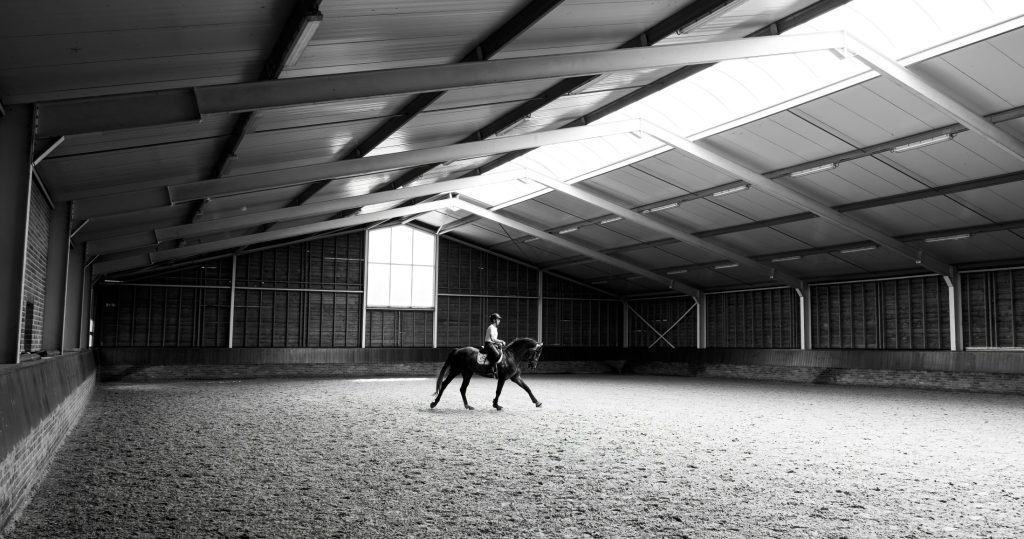
Aside from night classes under the lights and round-the-clock lessons at Indoors, equestrians rarely ride past dark. Is the key to less congested barns and more riding opportunities–prohibited by weather, daytime occupations, or lack of enough time–to add a riding night shift?
It seems to work for hockey players sans the sleep deprivation, which equestrians are no strangers to. The utilities can be similar—a well-lit, semi-temperature regulated space to practice, and a Zamboni resets a rink much like a tractor drag does for a ring. Can we learn from the logistics that other sports have mapped out to utilize a space for practice?
As land becomes more and more of a commodity, and often there are huge riding centers with many horses on small acreage, a night shift ride could offer them a chance to get out of their stalls and move more often and riders more time to not be rushed in and out of riding and horsemanship time.
Despite the logistical difficulty, it is so good for the growth of our entire sport to have horses in population centers. However, these are often expensive housing markets, and land is pricey–forcing barn owners to be creative about how to keep horses exercised and out of their stalls in motion.
From a business perspective, using a facility in off-hours can potentially give up-and-coming riders and trainers a lower cost of establishing their own business. So many properties are used for limited hours, and an increase in efficiency could allow more students nationwide to start riding.
Naturally, increased time of people at the barn requires more communication, management, wear and tear on the facility, and a conscious plan to make sure horses stabled in the barn aisle, or commotion areas have adequate time with the lights off and to rest. Safety must be at the forefront of any barn, and no one should ride alone.
Most horse people are the wake-up early types who tackle as much of their day as possible as soon as they wake up, but in this selection process, are we losing careers for those whose brains function a bit differently? Could this allow more flexibility for those people trying to balance traditional jobs, families, and other daytime pressures?
For busy barns with indoor or outside lights, could a night shift add additional opportunities for training? Could the additional training and revenue of a night shift help make certain facilities more cost-effective and keep this sport as affordable as possible? What else can we think of that would welcome new equestrians to our community and maintain opportunity for those hungry enough to seek it?















