
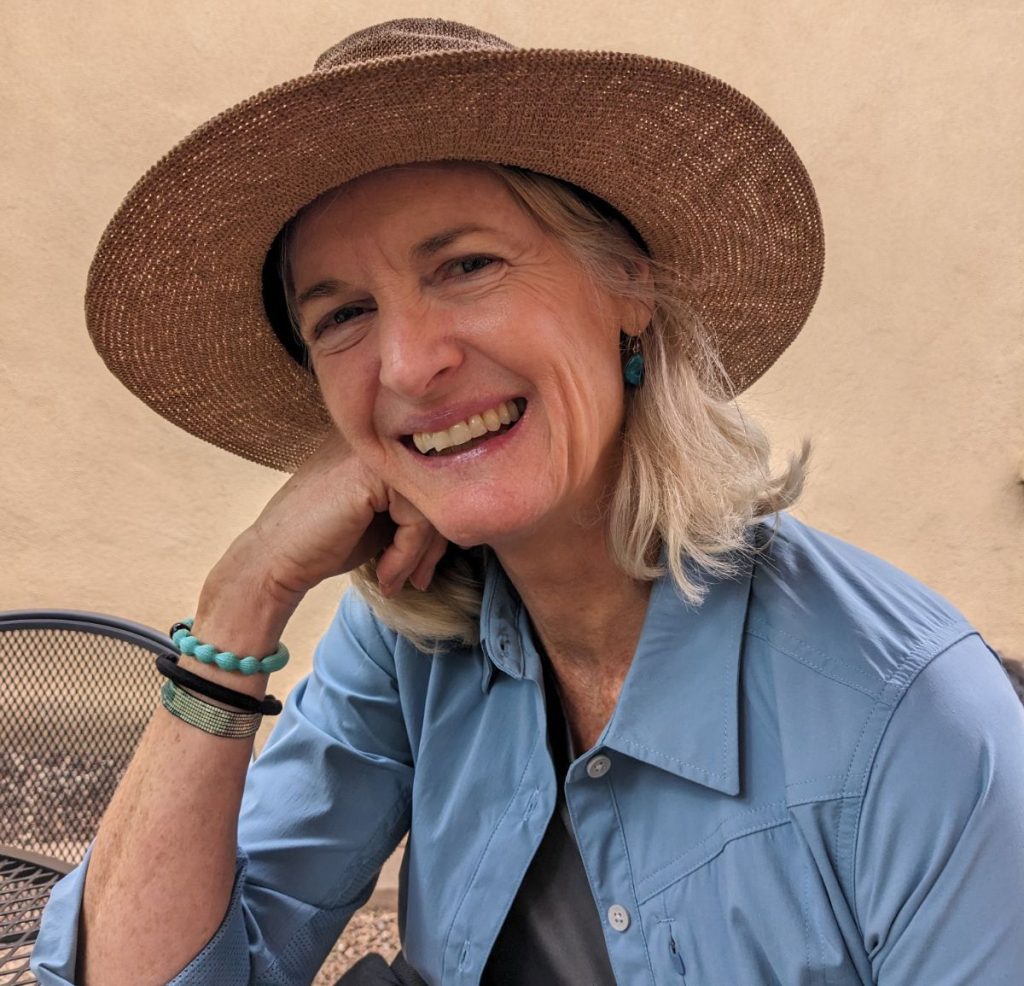
By CAROL ODELL, LICSW
Chapter excerpts reprinted with permission from the author.
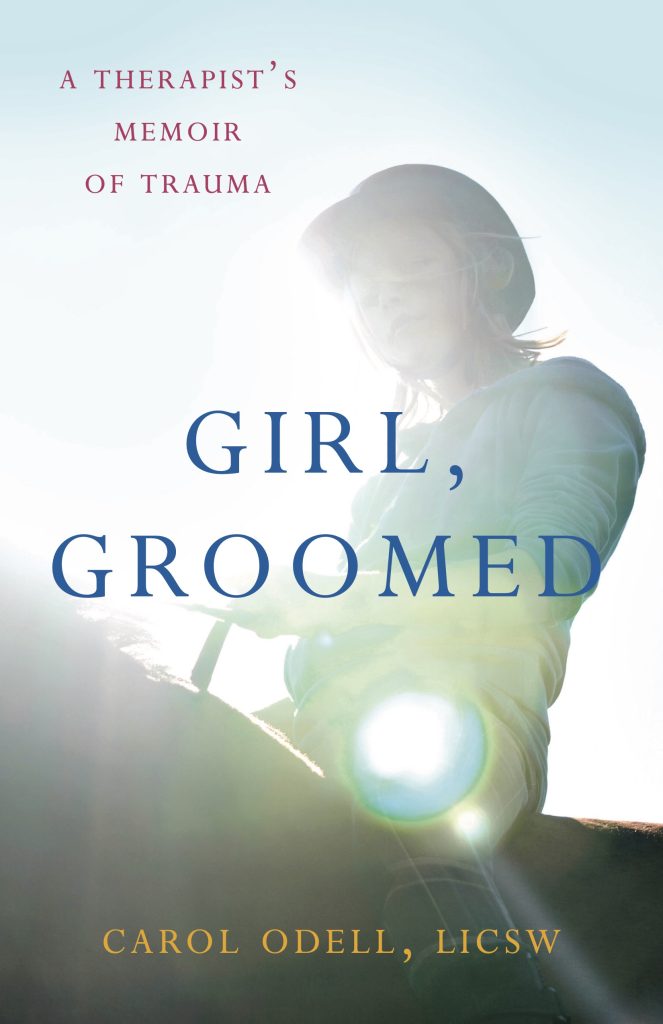
What is It About Horses?
I can’t remember a time in my girlhood when I wasn’t smitten with horses. Even before I had any real exposure to these magnificent creatures, I heard their whispering in my core. And I felt a visceral longing to respond. What was it about horses? Was it an unconscious urge to relate to my own powerful animal self? Was it the unique spectrum of qualities these creatures embody? Horses are paradoxical. They are wild yet cooperative, independent of spirit yet innately herd-oriented, strong and vulnerable. The passion I felt for them so early on seemed inextricably linked to my own desire for self-discovery, wholeness, and connection.
Those of you who have felt similar hoofbeats in your blood know what I am talking about, for this is the same insatiable need that fills bookshelves and movies with countless stories about horses and the girls who love them.
Whatever the origin, horses were primally imprinted on me from the beginning. Real horses, however, were a rarity in both Wisconsin and Indiana, the states where I split my early school years. So despite begging my father for a horse, my vicarious young girl self instead played with a plastic toy pony and the girl doll in braids that sat atop. While the rider detached from the pony’s back along with the various individual parts, there was a satisfying harmony I felt was restored only when the saddle, bridle, hat, and girl were fitted neatly back together again. I also spent time galloping in the yard, imagining myself as a horse whinnying in stride. All this adoration for horses was relegated to my fantasy world until the summer of 1970.
A year after Neil Armstrong and his crew landed on the moon, my father received a professorial teaching job at the University of Virginia. While the world at large had been recently bolstered by the prospect of exciting new frontiers, my family was likewise about to make a historic launch from the Midwest to our own inaugural landing in the rural South in Charlottesville, Virginia. I was ten years old, and with the siren’s call of horses already having a hold of me from sinew to spirit, moving to the “heart of horse country” was a dream come true.
As my parents, my younger brother, and I drove toward our destination, the verdant green tapestry of hills and fields that undulated all around us was capped to the west by the Blue Ridge Mountains. And in every direction there were horses! These sleek, tail-swishing graceful creatures grazed and frolicked near split rail wooden fences, bucolic barns, and groves of trees. Watching out the back seat window, I was abuzz with the possibilities.
In a quiet subdivision well outside of town, my parents bought a house. Squatting on the edge of our property just down the gently sloping hill from our new home was a shabby-looking barn and horse stables. To me, it was a utopia. My lifelong yearning to learn to ride, care for, and just be near real horses was now merely a field away.
First Open Jumping Class
I was a tense bundle of nerves. It would be my first competition over fences starting at four and a half feet rather than the three-foot, six-inch hunter height. The jumps would be raised with each round. And I would be riding against adults, some of them professionals.
The course consisted of a wide variety of fences, like what one can now watch on TV. It included colorfully designed brick and stone walls, gates and poles, fancy coops, brushes, and combinations. The goal was to make the course challenging enough to weed out a percentage of riders on each round but not so difficult as to eliminate everyone.
The only schooling fences we had at our stables were made out of rusted barrels and standards set in customized truck tires. Naturally worn wooden poles sat on plain iron pegs. No fences had wings. Nothing was painted. Our brush fence was made out of temporary evergreen branches hastily cut and piled up in front.
In other words, none of the fences we practiced jumping over looked anything like these that I was now staring at. Like the difference between watching a familiar black-and-white film and suddenly sitting in a colorful IMAX movie, I wondered if Fargo was experiencing any of the same intimidating awe I was feeling in this moment.
My mind started to go blank. My voice sounded squeaky to my own ears. I felt a droplet of sweat roll down the inside of my shirt. Would I be able to incorporate all this information when I was feeling so much anxiety? I wasn’t at all sure.
The order of ride was always decided lottery style and posted prior to the class. I silently prayed that I wouldn’t have to go first. I also didn’t want to go last. There seemed to me a special pressure inherent in either one of these polar positions. Either I would have to be the first to blaze the trail or I would have to wait and watch too many other riders take their turns, which would give my nerves too much time to wreak havoc on my stomach.
The order was decided, and I would be riding first. Now adding to my worries, I feared that I wouldn’t be able to remember the twists and turns of the course. It was always one thing to see the diagram of the course thumb-tacked up on the board and quite another thing entirely to ride a horse over each jump in the proper order with onlooking spectators. The course would also be altered and made more challenging with each subsequent round.
Long after I gave up riding, the residue of this anxiety would regularly visit me at night. Rather than flashes of being unprepared for an exam or not being able to find a classroom, I instead would dream of having forgotten some difficult jump course.
As Fargo and I waited on deck just outside the gate for the class to start, I tried to soothe my galloping nerves. I would discover that these anticipatory times were always the most excruciating. In what would become a regular practice, I leaned over to stroke Fargo’s neck and whisper in his ear, “We can do this.” I was not at all convinced, but by reassuring him, I was of course attempting to reassure myself. It was in this moment that Clarentine came up beside us and handed me his plastic cup.
“Here, have a sip of this,” he encouraged. By this point I was familiar with this drink and in that moment welcomed the warm, burning sensation that poured some liquid courage into my body.
“Now ride him right,” he succinctly commanded.
Our number was called and Fargo and I trotted into the ring. While completing the standard warm-up circle, I was acutely aware that the stands were full and the ring was lined with eager fans. A blanketed quiet came over the crowd as everyone’s focus was on the two of us. While I was feeling like a skinned chicken in front of all these onlookers, Fargo seemed enlivened by the attention. His gait grew bouncier, his neck more strongly arched. I hoped I could borrow from his confidence.
As we rounded the corner toward the first fence, something shifted, and suddenly I was oblivious to all that surrounded us. We became aligned in a symphony all our own. First came the musical drumming sounds of collected hoof beats as we approached the first fence. Next the hefting sounds of horse and girl taking flight. Then the seemingly elongated suspension of time I always experienced when we soared through the air together. Followed by the landing thuds back on earth and the accompaniment of tinkling metal bit parts. These melodic measures were repeated over each fence. Our riding concerto concluded with the clicking of my own tongue as we hustled across the finish line. The sudden roaring applause at the end of our turn confirmed our first clean round together.
From that time forward, Fargo and I were an inseparable team.
Learn more and read the whole book here:
Website – www.carolodellmsw.com
Instagram – https://www.instagram.com/mosaicofthoughts_
Goodreads – https://www.goodreads.com/book/show/215697760-girl-groomed
Amazon – https://www.amazon.com/Girl-Groomed-Carol-Odell/dp/1647428726/
Bookshop – https://bookshop.org/p/books/girl-groomed-carol-odell/21633639














