
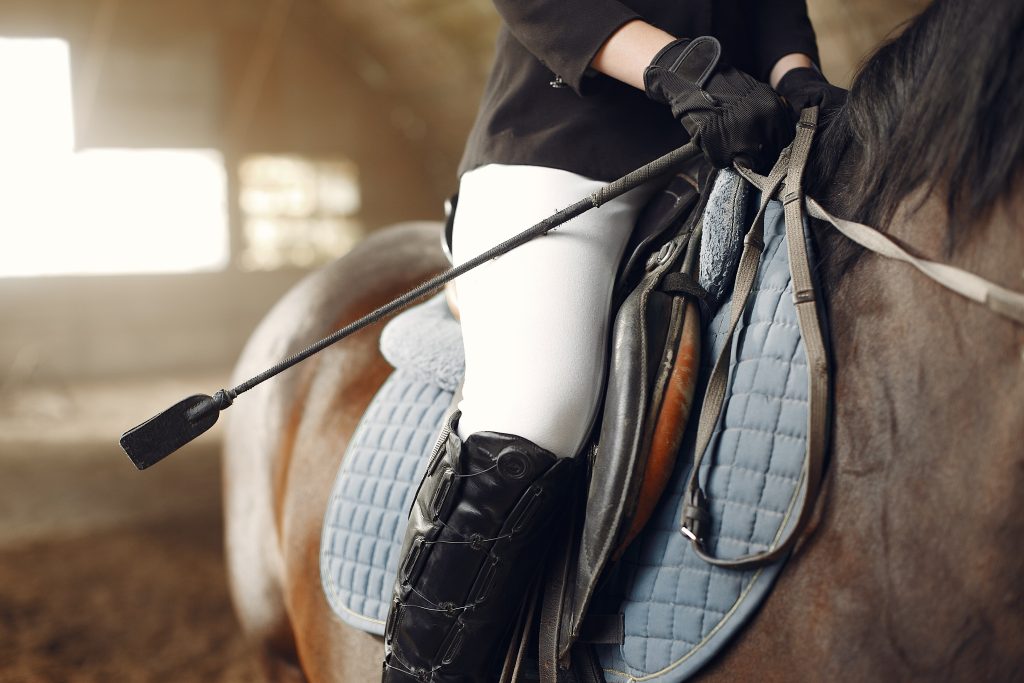
Equestrian competitions are very competitive and high-pressure. While physical ability and skill play big roles in determining success in the sport, some pros would consider it more mental than physical. Focus and strategic thinking in the arena are keys to good performance. And sometimes, a touch of luck even comes into play.
For riders to have a competitive edge, they need to understand how both physical and mental elements of equestrian sports interplay. Spoiler alert: it’s more than just saddle time.
Focus
The best equestrian athletes know that the quality of their training makes or breaks the competition. But no matter how tirelessly they train to perfect their riding skills, none of it will matter without focus in the arena.
Despite noise from the crowd or the rider’s nerves, they have to stay fully focused and attuned to their horse’s movements and cues. According to sports psychologist Dr. Jenny Susser, focused attention is what allows riders to read subtle changes in their horse and make quick, real-time decisions in a round.
Equestrian athletes must then engage in mental preparation as much as physical preparation. Visualization and breathing exercises, among others, can benefit riders, helping sharpen their reflexes and allow them to predict scenarios — skills they’ll need under pressure.
It’s worth noting that mental training also boosts mental toughness, a trait competitive equestrian athletes need to withstand sporting demands and deal with setbacks and injuries.
Strategy
Strategy is central to success in equestrian sports. Just like how chess players train strategy and decision-making, equestrian athletes must also have a plan in place before their horse even sets foot in the arena.
Course walking is one of the best ways to train strategy. Riders, led by their coaches, should take time to walk the course and analyze jump angles, terrain, and distances. All while learning things like how to approach each fence or when it’s smart to take tighter turns.
Preparing a strategy for a match is what will teach a rider to read the landscape, anticipate outcomes, and choose the best moments to take risks. Many equestrian athletes even train strategy outside the arena, engaging in strategy-based leisure activities like video games, puzzles, online CasinoCompare games, or other team sports.
Luck
Physical and mental preparation are the bread and butter of success in equestrian competitions. But let’s be honest — there will always be an element of luck, just like in any other competitive sport.
No matter how intensely an athlete trains, they never truly know what’s going to happen in a round. An unpredictable horse reaction, a gust of wind, disruption from the crowd — even the smallest things can affect how a match turns out.
But that’s not to say that success is random. Proper training and skill-building will get you far in equestrian sports. But even then, riders must learn how to manage variables they can’t fully control.
In his book, “The Luck Factor”, psychologist Richard Wiseman shared his findings from his decade-long research on luck. He found that lucky people are those who are open to opportunities and have trust in their intuition. They also know how to turn adversity into advantage.
In contrast, his study shows that unlucky people are those who miss opportunities, mainly because they are too focused on fear or fixated on past mistakes or misfortunes.
While luck is a wild card in equestrian sports, the best athletes are those who acknowledge the role of chance but don’t let it consume them. These riders have higher emotional resilience and the ability to recover from mistakes, allowing them to maintain peak performance in competitions.

















