
Brought to you by The Plaidcast
Confidence doesn’t just come from winning. For trainer and Grand Prix rider Quentin Judge, it’s the product of preparation, positivity, and personal connection. From helping clients walk into the ring with a clear mindset to offering a message of encouragement after a tough round, Judge’s coaching style is centered around building riders up—not breaking them down.
Creating a Supportive Training Environment
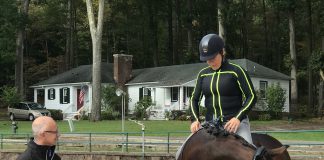
Judge, who recently launched his own business after years in top barns, keeps his program intentionally small so he can connect deeply with each rider. “I think it really allows me the chance to really know everyone deeply. Maybe my best attribute is really getting to know who I’m helping from the ground.”
That connection becomes essential in high-pressure situations like Spruce Meadows, where Judge recently coached several clients for the first time. “Being up here in Canada, there’s not the same group of friends or support systems,” he said. To help riders thrive, he fosters a team-like atmosphere. “Someone has a good day and someone has a bad day,” he said. “Between the preparedness and… a bit of a team aspect, letting my clients talk to me on and off the horse… it’s important to make them comfortable so they can kind of share with me what they’re feeling.”
Because nervousness can easily impact performance, those conversations are key. “If someone’s nervous or worried about something, it really carries over to the riding,” he added. “So you’ve got to know it to help them through it.”
Lifting Riders Up After Tough Rounds
Even the most talented riders have rough days. When that happens, Judge approaches each situation with empathy and perspective. “You have to know the people you’re coaching in all aspects—on the horse and off the horse,” he said. “And I think it’s important to know what those people need in that moment.”
When one of his riders struggled with a difficult class, Judge gave her space, then followed up personally. “I sent her a message and said, ‘Hey, I know that’s a rough day. Let me know when you’re free to chat this afternoon.’” His goal was to help her process the experience constructively, not beat herself up.
“I think what I found with myself and other riders, it’s really, really easy to overanalyze and overcomplicate and dissect these little mistakes down to the last denominator,” he said.
Using Humor and Optimism as Tools
Judge also brings a sense of humor and joy to his program. “It’s business with pleasure,” he said. “It’s a lot of commitment. You have to love what you’re doing and not feel like it’s such a grind.” That includes social media, where he often shares candid behind-the-scenes moments rather than picture-perfect rounds. “Something funny we do, and people seem to be really interested and gravitate to it.”
That levity helps riders stay mentally buoyant in a sport known for more bad days than good. “It’s very easy to get doom and gloom in all this if you let yourself,” he said. Instead, he’s constantly reminding riders that mistakes don’t define them or their horses. “You’ve got to remember these are horses,” he said. “They don’t speak English. They’re not thinking, oh, I should or could have done this.”
For Judge, confidence isn’t just something a rider has. It’s something they build through thoughtful feedback, preparation, and encouragement from the ground up. “I don’t think that’s because I have some unbelievable training skill,” he said of the transformation he’s seen in his students. “I think I really care about it.”
To hear the full conversation with Quentin Judge, listen to episode 440 of The Plaidcast. Subscribe and follow The Plaidcast on your favorite podcast platform for more conversations from top riders and trainers.