
Brought to you by The Plaidcast
When the Lake Placid Horse Show faced an alarming drop in entries in 2023, the conversation around its future got real.
“We really were on the razor’s edge of canceling Lake Placid five weeks out before the show because the math was terrible,” said Philip Richter, chairman of the Lake Placid Horse Show, during a recent Plaidcast In Person event. “And this is already a low-margin business.”
But Lake Placid isn’t just any show. Home to Olympic trials in the 1980s and legendary wins from the likes of Michael Matz and Rodney Jenkins, it’s long been a Northeast staple. But nostalgia doesn’t pay the bills. Boutique horse shows across the country are learning the same hard lesson: footing matters, and even the most storied venues must evolve.
To survive, Lake Placid went all in and all-weather.
Tradition vs. Traction
“For a long time, we were told not to touch the grass,” Richter explained. “The ring has a 25-foot grade from top to bottom, and a lot of undulations. It made it very difficult to ride.”
Riders on sensitive, expensive horses didn’t want to risk footing variables. For trainers with amateur clients and major investments in the ring, the charm of tradition couldn’t outweigh modern concerns.
Richter said COVID accelerated the shift. “After the pandemic, people didn’t want to go back to places with footing that added risk. The standard had shifted.”
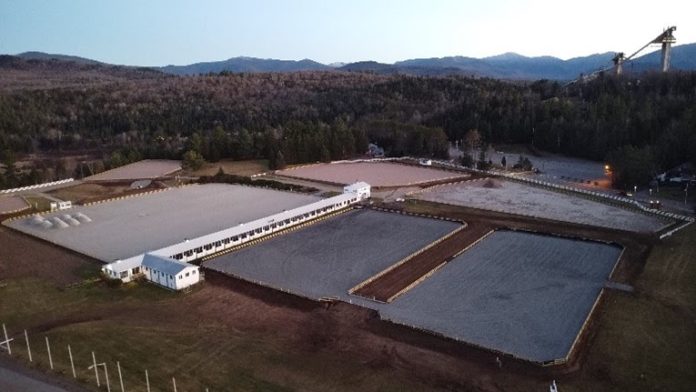
So Lake Placid made the hard, and expensive, choice to upgrade. The footing was completely redone. A new FEI schooling area was built. The show gained FEI designation. As a result, entries rebounded and enthusiasm returned.
Boutique Shows Fight Back
Lake Placid isn’t alone. Shows like Old Salem and the Hampton Classic have also upgraded to all-weather footing.
“We’ve gotten addicted to comfort,” said Plaid Horse publisher Piper Klemm. “Winter circuits like WEF and WEC are routine. That consistency is hard to walk away from even if a boutique show has charm.”
But Richter believes there’s still a place for boutique shows especially if they modernize.
“They’re coming back,” he said. “We’re working on tying top US Equestrian Heritage shows in the Northeast into a circuit—Lake Placid, Old Salem, Upperville. Bigger purses, year-end points, and incentives for riders who do the whole tour.”
The goal is to give boutique shows the competitive edge they need to thrive.
Public-Private Partnerships Are the Path Forward
The big reason Lake Placid could evolve so quickly was strong public support. In 2024, New York Governor Kathy Hochul visited the show and awarded $6 million in funding to modernize the grounds.
“It’s become one of the best examples of a public-private partnership in the sport,” Richter said. “Private donors helped get the footing redone. Then the state stepped in to help upgrade infrastructure.”
Still, Richter emphasized that these projects are financially daunting. Lake Placid leases the showgrounds and runs only two weeks per year making its multi-million-dollar investment even more extraordinary. “We show there two weeks a year, and we put over $10 million into the facility,” he said. “That’s not economically rational. But it’s necessary.”
The Pressure and Opportunity of FEI
With more U.S. shows moving to FEI status, Richter noted the increased complexity and cost: more stewards, more judges, more staff. But the benefits are clear.
“For the amateur riders at the show, it’s a chance to watch McLain Ward or Kent Farrington compete up close,” Richter said. “It inspires riders. It brings in spectators. It raises the game for everyone.”
It also makes boutique shows feel relevant, even elite, without losing their soul.
Where Tradition Meets Innovation
While footing may be the catalyst, what boutique shows truly offer is character: history, hospitality, atmosphere. With the right investment, those qualities don’t have to be sacrificed.
“We don’t have to lose what makes these shows great,” said Richter. “We just have to make sure they evolve.”
Riders may love the comfort of routine, but when done right, boutique horse shows offer something the circuits can’t: a sense of place, of legacy and a fresh start grounded on solid footing.
For more insights and conversation, listen to the full Plaidcast 443: Plaidcast in Person with Jeff Papows, Geoff Case and Philip Richter. Subscribe to The Plaidcast on your favorite podcast platform for conversations with the most influential voices in the equestrian world.