
Brought to you by The Plaidcast
In a world where everyone wants more riding time, trainer Geoff Case says the secret isn’t luck—it’s effort.
“People always ask me, ‘How do I get more chances to ride?’” he said. “The answer is simple: show up, pay attention, and work hard when no one’s watching.”
For Case, the difference between a rider who gets one opportunity and one who gets a hundred is professionalism.
Be There, Be Ready
Case learned early in his career that the riders who get called on are the ones who are there. “Half the time, opportunity looks like being in the right place at the right moment,” he said. “If you’re at the barn, if you’re helping, if you’re ready—you’ll get asked.”
He’s not talking about luck or timing. He’s talking about commitment. “You can’t get a ride if you’re sitting at home,” he said. “You have to be around. You have to make yourself available.”
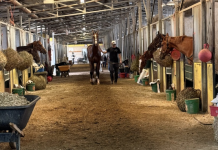
That means doing the small things that make big impressions like helping tack up, walking a course for someone, or simply being on time every day. “Trainers notice,” Case said. “We always remember the kid who’s early, who’s dressed, who’s ready to help. That’s the one we trust to get on a horse when we need someone.”
He’s seen it time and again: a rider who’s quietly sweeping the aisle or holding a horse gets a surprise catch ride simply because they were nearby and prepared. “If you’re ready, those moments happen,” Case said. “If you’re not, they pass you by.”
Act Like Every Ride Matters
Once you do get the chance to ride, Case says attitude is everything. “If someone hands you a horse, treat it like it’s the most important ride of your life,” he said. “That’s how people know they can count on you.”
He believes the best riders make every single ride look like a privilege, not a chore. “Even if it’s just walking a horse, do it like it matters,” he said. “That’s the difference between someone who’s hungry and someone who’s entitled.”
That level of care shows in how you cool out the horse, how you clean your tack, and how you talk to people around the barn. “Being a good horseman is being a good professional,” Case said. “The horses feel it, and so do the people who might give you your next chance.”
Work Ethic Beats Talent
Case doesn’t mince words about what separates long-term success from short-term promise. “Work ethic beats talent every time,” he said. “Talent’s great, but if you don’t work, it doesn’t matter.”
He’s quick to point out that in barns full of talented riders, the ones who stand out are the ones who keep showing up. “If you keep working, people will find ways to put you on horses,” he said. “That’s how you get noticed, by doing the work when no one else wants to.”
Even small jobs like lunging, wrapping, or sweeping are part of building trust. “If you can do the little things right, people will believe you can do the big things right,” he said.
Case also warns that ego can end opportunities just as quickly as effort creates them. “You can’t act like you’re too good for anything,” he said. “The second you think a job is beneath you, you’re done.”
Consistency Is a Professional Skill
The riders Case admires the most are reliable. “Professionals show up the same way every day,” he said. “You don’t have to be perfect, but you have to be consistent.”
That means keeping your emotions steady, your effort high, and your attention sharp. “If you ride well one day and disappear the next, no one’s going to hand you more horses,” he said. “People trust consistency.”
Case encourages riders to treat the barn like a workplace, not a playground. “If you want to be treated like a professional, act like one,” he said. “That means doing the job right every time, whether you’re paid for it or not.”
Earning Trust, Not Expecting It
At the heart of Case’s message is respect for the horses, trainers, and the process.
“You earn trust,” he said. “You don’t get it just because you showed up once. You earn it by being reliable, respectful, and ready every single time.”
And once you’ve earned that trust, Case says, the opportunities start to multiply. “People want to help riders who help themselves,” he said. “If you’re willing to put in the time, this business will meet you halfway.”
For those chasing the next ride, Case’s advice is simple but powerful: “Be the person who works harder than anyone else,” he said. “That’s the person who gets the call.”
Want more insight from Geoff Case? Listen to episode 404 of The Plaidcast and subscribe on your favorite podcast platform for conversations with the most influential voices in the equestrian world.