By PETER CASHMAN
The recent closure of UC Davis’ NCEA equestrian program serves as a sobering reminder of the precarious nature of varsity collegiate equestrian sports. While the loss of any team is disappointing for student athletes, it also presents an opportunity to examine an alternative existing model that serves the broader equestrian community.
In A. Lewis’ editorial, “A Misaligned Model: What the Loss of UC Davis’s NCEA Team Really Reveals,” she closes by saying, “Maybe it is time to imagine a future for equestrian sports that is not just competitive and elite, but truly inclusive.” That future already exists—and has for 56 years.
The Intercollegiate Horse Shows Association (IHSA) has built a model centered on accessibility, growth and genuine inclusivity.
Opening Doors at Every Level
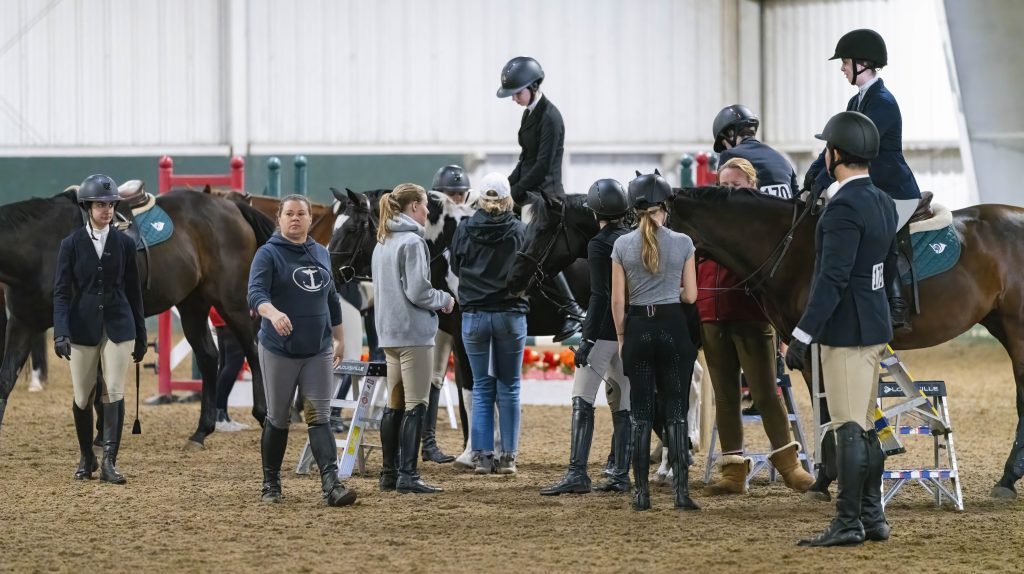
IHSA’s greatest strength lies in its commitment to riders of all skill levels. Students who have never ridden can join their college’s IHSA team and compete alongside peers, progressing from walk-trot classes to more advanced divisions as their skills develop. Members are placed in levels based on past experience and have the opportunity to qualify for the IHSA National Championship at each level. This “no horse, no problem” philosophy means that financial barriers—often the most prohibitive aspect of equestrian sport—are dramatically reduced. Students compete on horses provided by the host school, eliminating the need to own, manage, and transport a horse at great expense.
This accessibility doesn’t mean IHSA lacks competitive rigor. The association’s upper levels attract serious riders who compete in national championships that showcase top talent. Students in IHSA’s open divisions regularly go on to professional careers in training, coaching, and competition. The pathway from beginner to advanced competitor exists within a single organization.
With an estimated 250,000 equestrians having participated in IHSA programs since its founding, the association’s impact on the sport is undeniable. IHSA alumni fill the ranks of equestrian professionals across every sector: four Olympians, countless competing amateurs, trainers and coaches, officials and staff within governing bodies, product developers for equine manufacturers, and specialists in equestrian-focused marketing and communications. The breadth of career paths reflects not just the quality of competition, but the depth of community and professional networks IHSA cultivates.
True Gender Inclusion
IHSA welcomes all genders. Men, women, and non-binary students compete in the same classes, judged on the same criteria. This scenario is more reflective of the broader equestrian world, where gender typically plays no role in competition. The IHSA fully embraces gender inclusion.
A Network of Opportunity
Perhaps most compelling is IHSA’s reach. With nearly 400 member schools across the country, IHSA offers many options for collegiate equestrians. Students at large universities, small liberal arts colleges, and community colleges can all participate. This geographic and institutional diversity means that a student’s choice of college need not be limited by equestrian opportunities, nor must they choose between academic fit and athletic participation.
Flexibility in Structure
One of IHSA’s most practical advantages is its adaptability to each institution’s unique circumstances. IHSA teams vary significantly in their structure from school to school. Some operate as NCAA varsity programs with full athletic department support, academic and athletic scholarships, and coaching staff. Others function as varsity sports outside the NCAA framework. Still others thrive as club sports, run largely by students with faculty advisors and modest institutional backing. Prospective students should research the range of schools with IHSA programs, focusing on their priorities.
This flexibility means schools can tailor their equestrian programs to fit their resources, athletic department priorities and student interest levels. A university facing budget constraints doesn’t need to eliminate equestrian opportunities entirely—it can transition from varsity to club status while remaining within IHSA. Conversely, a school with growing interest and resources can elevate its program without changing associations. The IHSA framework accommodates growth, contraction, and everything in between.
For schools facing budget pressures, IHSA can present a sustainable model. Teams can operate with smaller budgets, often through student organizations and club sports structures at off-campus facilities, rather than significant varsity athletics investments. When resources are limited, IHSA allows equestrian opportunities to continue rather than disappear entirely.
The Bottom Line
IHSA offers a different vision: equestrian sport as a place where students can discover a passion, regardless of their background. Where a rider who grew up without means can develop into a national competitor. Where gender is irrelevant to opportunity. Where nearly 400 schools can offer their students the chance to be part of something meaningful.
As universities face difficult decisions about resource allocation, IHSA demonstrates that broader access and long-term sustainability need not be mutually exclusive. In fact, they may be inseparable.
The IHSA program offers a chance for more students to ride, compete, grow and belong.