
Brought to you by With Purpose: The Balmoral Standard
Riders often equate effectiveness with effort. If the horse is strong, we hold tighter. If the horse is quick, we pull harder. If something feels uncertain, we reach for the reins first.
“You have to add your hands last,” Carleton Brooks writes. That single sentence reframes how many riders approach control. Hands are not the first solution—they are the final refinement.
Riders are constantly trying to look smooth or subtle, but Brooks points out that even that can become counterproductive. “Or, the rider may carry their hands too low, sometimes trying to be ‘smooth’ or ‘subtle’ or ‘stay out of the way,’ which can become detrimental to the horse being light, forward and balanced.”
Quiet does not mean passive. Soft does not mean absent. Effective hands are supported by a stable body and an engaged leg.
Why Riders Go to the Reins First
It’s instinct. The reins feel like the steering wheel and the brakes. They’re visible. They’re immediate.
But if your reins are slack and you suddenly pull, Brooks is clear about the result: “If your reins are droopy or slack, your pull becomes a jerk.” A jerk creates resistance. Resistance creates heaviness. Heaviness leads to more pulling.
It becomes a cycle.
Instead, Brooks emphasizes preparation before contact. When slowing down, he advises riders to “try slowly letting out a big breath and settling in.” You are making a suggestion with your body before your hands ever enter the conversation.
The Body Creates the Conversation
Before your hands do anything, your posture should be organized. Brooks describes a simple visual check: “As you’re riding around and your shadow is in front of you with the sun on your back, you should not be able to see light between the sides of your body and your elbow.”
That image tells us something important: elbows are connected to the torso. The arms are not floating independently. The contact travels through a stable, anchored core.
Anytime you think about using the reins, Brooks insists, “your leg should be active and you should feel sturdy and anchored.” The leg supports the energy. The body organizes it. The hand merely shapes it.
When the horse leans, the answer is not to pull harder. Often, the leaning exists because the horse is not strong enough behind, or because the rider has been holding the hands too low, encouraging heaviness. Lift the balance first. Then refine.
Practical Ways to Develop Lighter Hands
Developing soft hands is not about simply “being nicer.” It’s about building independence and security so you don’t rely on the reins for balance.
Brooks uses creative exercises to help riders find that independence. In one example, riders knotted their reins so they could not rely on them for steering or support. The goal was not to ride without reins permanently, but to ask an honest question:
“What would your position be if you just dropped your reins?”
That question exposes everything.
To build lighter, more effective hands, focus on:
- Breathing before pulling. Slow your own body first when asking for downward transitions.
- Active leg before rein. Keep the hind leg engaged so the contact feels elastic, not dead.
- Lift, don’t pull. Brooks notes that lifting the hand encourages the horse to lift the sternum and balance upward rather than push down and lean.
- Secure core. Elbows should connect to the body, not drift behind or away.
- Hands last. Ask yourself what else you can adjust before touching the reins.
These adjustments are small. But small adjustments create big changes in feel.
Softness Is Built on Confidence
Brooks also notes that security plays a role: “The more people feel like they are secure and confident on a horse, the more likely they are to be able to maintain light, soft hands.”
If you are gripping with your hands, it may not be a training issue, but a balance issue. Riders who rely on the reins for stability cannot ride lightly. Building strength in your lower leg and core is not just about position; it is about fairness.
Because heavy hands are rarely intentional. They are usually compensatory. And compensation, whether from horse or rider, creates tension.
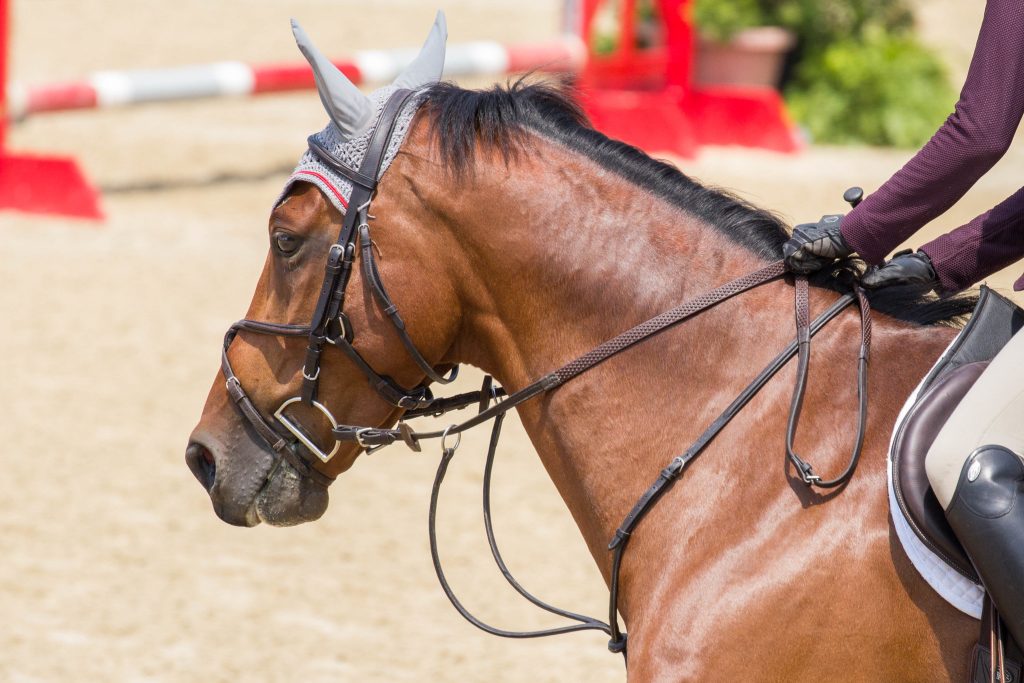
Hands communicate directly to the most sensitive part of the horse’s body: the mouth. Every unnecessary jerk, every unprepared pull, every defensive brace registers immediately.
Effective riding is often invisible. From the ground, it looks effortless. But that invisibility comes from organization, preparation, and discipline.
When your aids are quiet and deliberate, the horse becomes lighter, more balanced, and more confident. The conversation becomes cooperative instead of argumentative.
Want to take your riding and horsemanship to the next level? With Purpose: The Balmoral Standard distills decades of wisdom from Carleton and Traci Brooks into practical, thoughtful lessons you can apply every day at home, in the schooling ring, and in the show ring. From training philosophies to mental game strategies, the book offers riders of every level a blueprint for success built on empathy, structure, and purpose.















