BY KIMBERLY LOUSHIN
If there’s two things that Andrea “Andi” Bill likes, it’s problem solving and applying it to the human experience. It’s part of what led her to a career in Civil Engineering, but those same skills have also been invaluable in her second career as a trainer and owner of Sugar Creek Stables in Brooklyn, Wisconsin.
“I like being busy,” she says. “My fiancé says, ‘You can figure out how to put 25 gallons into a 10 gallon bucket.’ That’s what I do every day. And just being able to balance it. It’s time management, making sure that lessons are scheduled in the mornings and then the evenings, and getting work done in between. When I have to travel for work, I have great people around who can step in and help out.”
That sense of teamwork is what allows her to be in Montana for a work conference during the week and an Intercollegiate Horse Shows Association (IHSA) competition on the weekend. Even when inclement weather delayed her flight home, she knew others would step up to ensure the stalls were set up and all the horses were schooled and cared for pending her arrival.
Bill’s first ride actually took place in utero, when her mom rode in a costume class, so it was a natural direction for her to take. She followed in her older sisters’ footsteps and started in the pony division and moved up through the levels. Upon graduating high school, she enrolled at Mount Holyoke College in Massachusetts, drawn by their riding program and strong academics. She thrived in the additional structure being part of the team provided to her collegiate experience, and she was a member of their riding team all four years, serving as manager in her sophomore year and then as team captain for her junior and senior years.
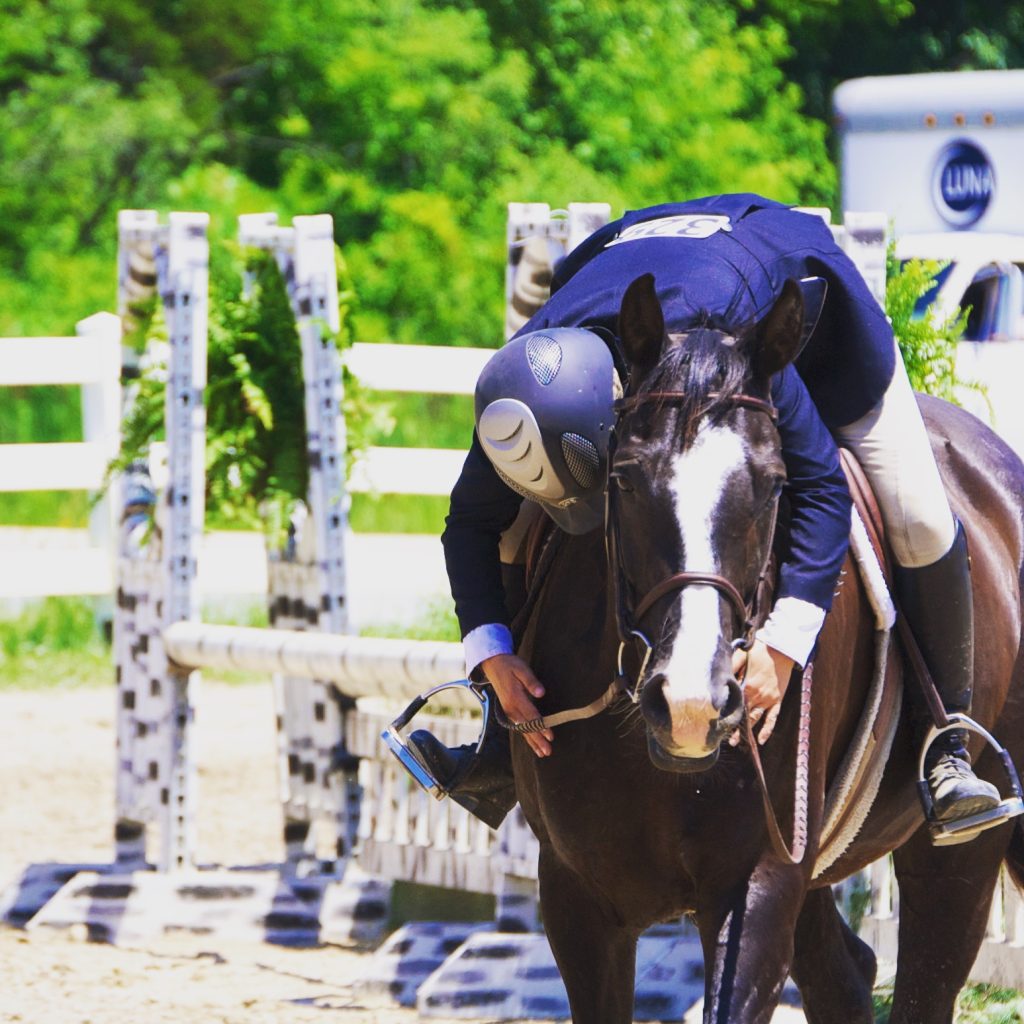
“I learned so much, and it really helped me adjust to college,” she says. “When you go to college you don’t know anybody, and you have this built-in group of friends that all love horses, you have this built-in language and commonality through it. And what’s great is that it’s all ages. I have best friends who were seniors that helped me get along and work through that process, and I’m still in touch with a ton of them.”
While at Mount Holyoke, Bill studied Physics and Classics before attending the University of Massachusetts, where she got a Civil Engineering degree.
“When I got my degree in Physics, I liked the basic Newtonian Physics components, like force equals mass times acceleration,” she says. “So I got into Civil [Engineering] because it was doing those basic Physics equations and looking at it. I was debating between structures and traffic engineering and traffic safety and really found a passion in traffic safety because there’s so much involved with the human factors and the psychology and why do drivers do what they’re doing on the roadway and how can we as engineers try to help them make the correct decisions through that process. It feels amazing. It’s similar to horses and riding too. Sometimes people and horses do silly things, but if we set them up for success, then good things happen. It’s kind of that same sort of brain mentality component to it.”
While her career choices were in part due to a desire to be able to afford horses, Bill wasn’t looking to become an equestrian professional. Though she worked as an assistant coach at Mount Holyoke for two years, the pressures of doing that fulltime didn’t appeal to her. But when she moved to Madison, Wisconsin for graduate school, she got back into training because the University of Wisconsin—Madison’s public riding school needed instructors. Doing so allowed her to be involved without being as deeply invested.
As things with the public program changed and they searched for a different facility, Bill considered getting her own property, and 11 years ago, she opened Sugar Creek Stables. The 110-acre property houses 25 horses with a combination of rough board and indoor board, with access to extensive trails. While Bill is a hunter/jumper rider herself, her clientele participate in hunters, jumpers, dressage, eventing, and western pleasure. While some prioritize showing, others focus on having fun.
“I really focus on people having fun with their horses, whatever that is,” she says. “I have clients who are showing, but I also have folks who just want to come out and go on trail rides and be a better partner with their horse. I think of myself as a translator between the horse and rider to try and make sure that everybody’s having a good time.”
Having a variety of disciplines in her barn has driven home the importance of cross-training, so her hunters work out in a grass field on an open stride and use dressage principles in their flatwork, while she encourages her dressage riders to push their comfort zone with things like cavaletti.
“I’m a big believer in that well-roundedness of both horse and rider, so that no matter what, you’ve got that experience to be able to handle it,” Bill says. “I think it’s important that I keep learning and keep pushing my comfort zone a little bit.”
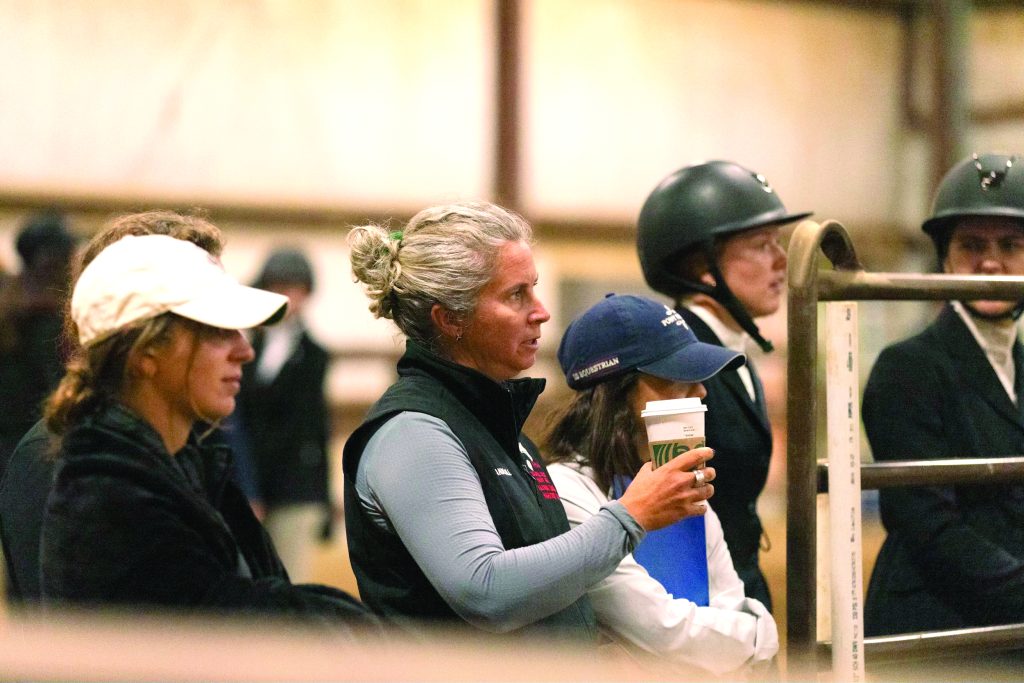
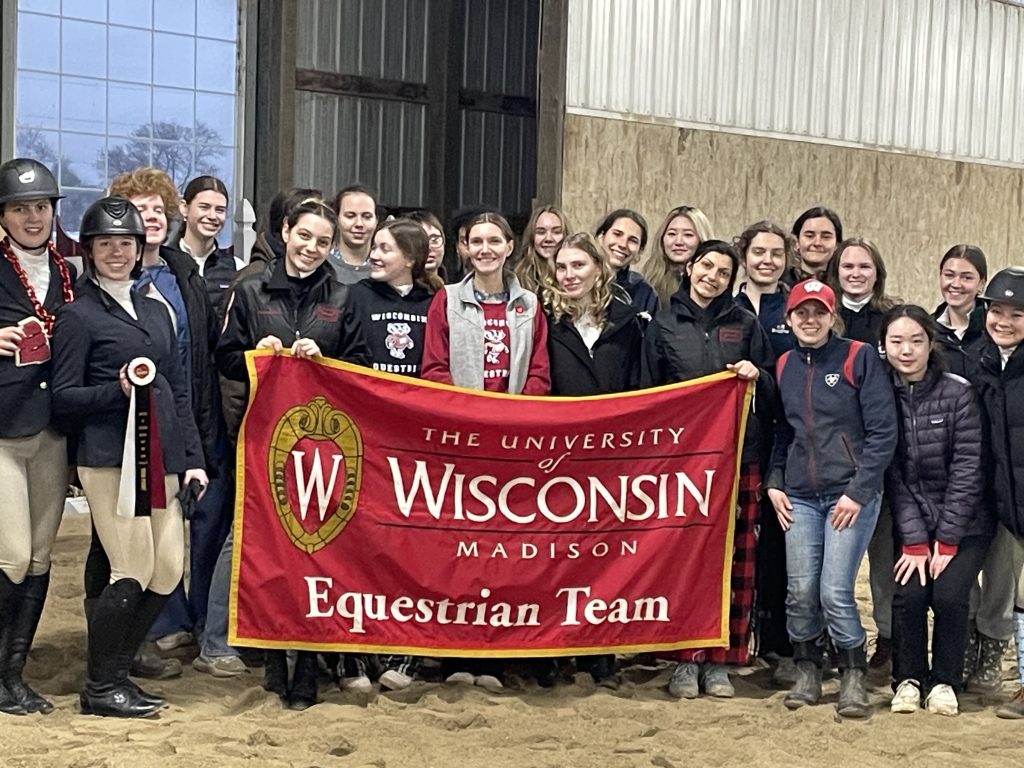
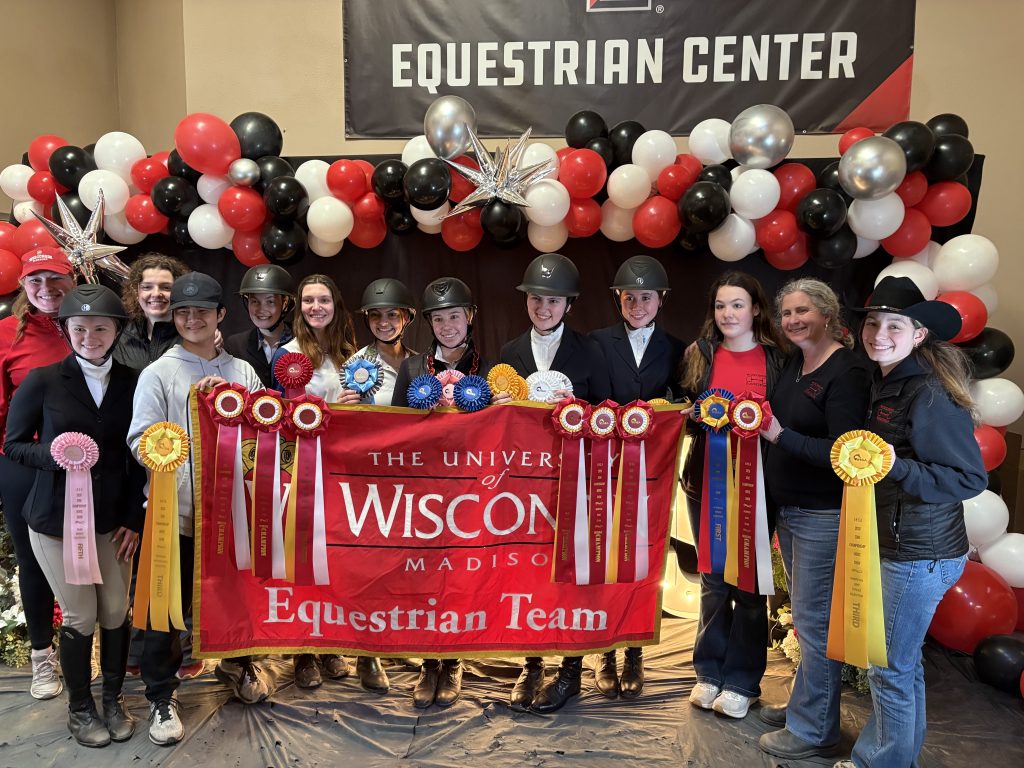
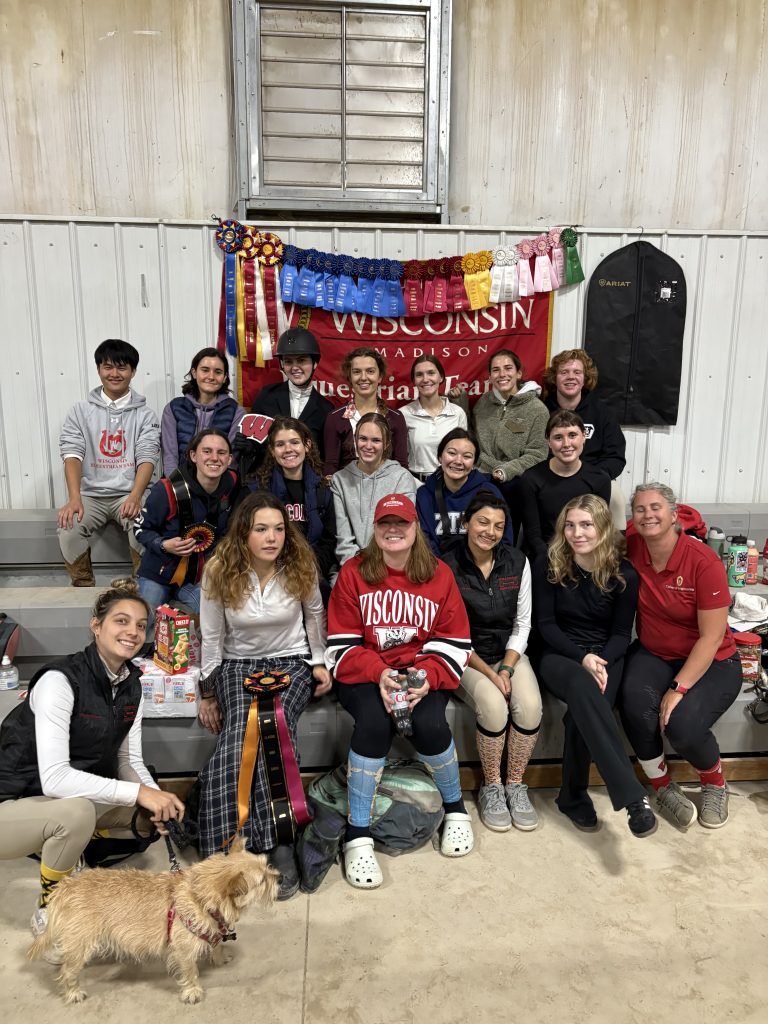
She also serves as the IHSA coach for the University of Wisconsin—Madison campus and steps in as the coach for the University of Wisconsin—Platteville team at shows, since their lesson coach is unable to travel to shows.
Beyond horses, she serves as the Associate Director of the Traffic Operations and Safety Laboratory at the Madison Campus, evaluating roundabouts or other safety countermeasures on roadways to see how they are performing and what safety features should be put in place. Her focus is primarily research, but she does teach some professional development classes to consultants and practicing engineers. She also leads two technical assistance programs, one for the state of Wisconsin and one for the Eastern tribes of the United States, where the focus is implementation and using research to train local areas of government or tribal members. The training spans from setting up proper work zones, evaluating roadways for highway safety to correct pedestrian treatment, covering a wide array of transportation safety.
“I’m trying to make the world a better place,” she says. “We have way too many people dying on our roadways every single year. About 40,000 folks, which is basically the entire UW campus, [die] because of traffic fatalities. I think we all have that experience associated with losing a loved one. So that’s about trying to make sure that everybody gets home safe and sound every day.
“And with regards to horses, it’s kind of the same thing in terms of making the world a better place,” she continues. “The partnership with horses gives people that sense of peace in this crazy, chaotic world that we have, and then making their lives better and making the horses’ lives better. That’s one of the things I didn’t think I would enjoy about boarding, but to see the horses thriving in their environment is really rewarding too.”