BY JESSICA JACKSON
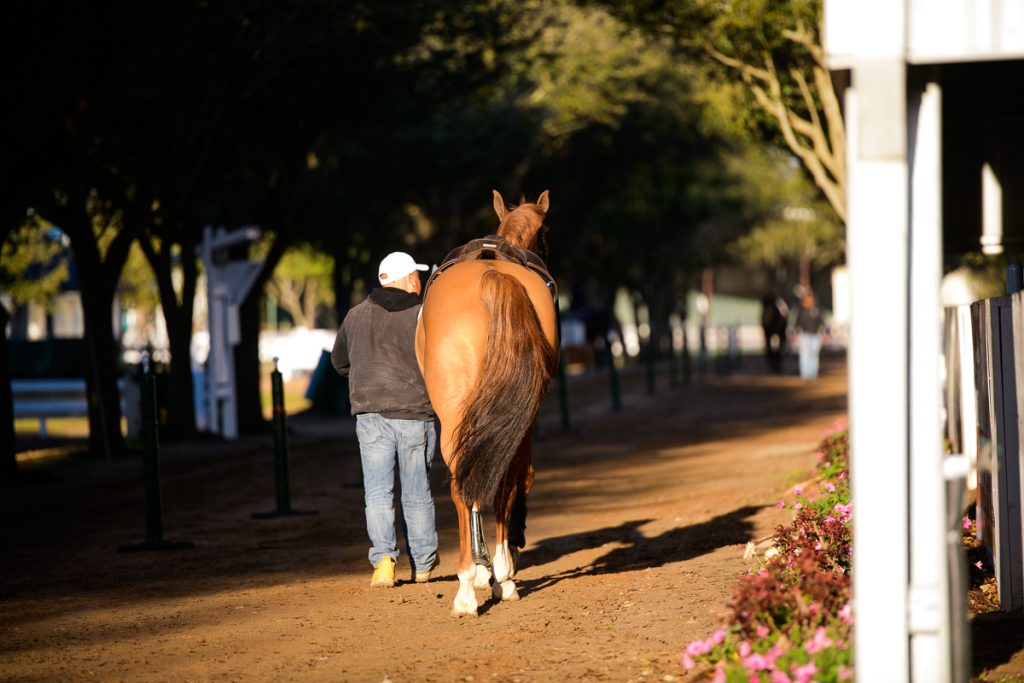
Barn work is easier to romanticize for those who don’t do the work every day. You wake up at an hour when the rest of the city is still asleep, soak hay in mid-winter mornings until you can’t feel your hands, and you’re still scraping dirt beneath your fingernails hours after the work is done. It’s even easier to romanticize being around horses all day for people who love horses, but not everyone who loves horses knows the work involved.
Riders show up, get on their horse, and compete with themselves at lesson time. I’ve known some barn owners who never stepped foot in a stall long enough to know the difference between a clean stall and a dirty one, until their usual help is gone for good. Traditionally, help is where you can find it. In a friend, in a relative, in an unfortunate soul fortunate enough to call this their job, but desperate enough to never question their pay, never defend their rights, and never seek out promotion or opportunity.
Barn labor is a thankless job, but it’s the job we signed up for. We don’t expect gratitude, but we feel grateful. We don’t look for respect because it’s never been felt, but we respect the work. Frankly, we are the unrepresented population of people in this industry responsible for keeping it afloat. We are the ones keeping your horses alive and cared for. Now, we’re starting to find our voice, and we mean to use it to speak up against exploitation in the workplace.
I did not come from money, horses, inheritance, or ribbons. The barn door was my only entrance into this world. Most of my time has been spent in and out of stalls, on the ground with the horses. Getting to know them and their quirks, taking note of anything abnormal, and reporting to my boss. All while trusting them to speak for me and for the horse, because I had not yet learned that I could speak for myself. Anything I could say would be met with a look; that “what do you know, you don’t own a horse” look.
What remains of the workforce is the resulting centuries of unchecked exploitation across many cultures and disciplines. Yet after all this time, the work and the worker remain the same.
Somehow, while prices soar and the economy is strained, undocumented grooms and barn workers are ushered into detention centers. This entire industry is crippling itself from the inside out, and the ones without the resources and protections are the first to go. This industry will not survive an exodus of barn workers. What’s worse is, they won’t even notice until it’s too late. Until horse owners are leaving barns because they’re expected to do the work they thought they were paying for. But self-care won’t be the first sign of something being very wrong.
The first thing you may notice is a widespread issue affecting barns at every level of the industry: good help is becoming harder to find. Horses left in their own mess for hours longer than they should. Signs of distress and health conditions that no experienced barn worker could ever manage to ignore. This is the future the industry unknowingly built, but knowingly contributes to. Thankfully, it is not the same future that I’m building.
With a pitchfork in hand and my eyes on the manure pile in front of me, my mind plays in endless gardens of possibilities and potential for a future of barn labor that didn’t exist before I started this venture. Imagine with me for a moment what professionalized barn care would look like. Routines in the form of documented systems, thorough reporting and communication, consistency and reliability at the forefront of what only skilled professionals can manage. It’s time the industry looks at barn hands, grooms, barn workers, whatever you want to call them (as long as it isn’t “the help”) as what they are: professionals.
I founded Barn Maids to turn the clock forward to an era where barn laborers are treated with dignity. Where we recognize we all live in the same economy, under the same financial pressures, inside an industry worth billions annually. In fact, we have already proven that paying livable wages and building a professional operation is not just possible; it is sustainable. At Barn Maids, we see the full person behind the pitchfork, and gone are the days where we can only see what we can get out of them until there is nothing left.
“The Great Equestrian Labor Shortage” is not because barn workers aren’t capable of sustaining their passion for horses, or because “nobody wants to work anymore”. Those are weak, ill-informed, and lazy cop-outs for the truth. Barn laborers are fewer and farther between because the generations before them never received the recognition or advocacy they deserved to find a true place in community within this industry. The unspoken promise that Barn Maids produces in every proud and passionate barn worker is this: the generations to come after us will have a voice in this industry that will only grow louder as the years come.
Horsemanship is not a trait reserved for those who ride. It is built from the ground up, primed by the work that we do every day. Many barn workers have been unable to afford any pursuit with horses beyond our roles with the pay owners deem acceptable. We are not asking to be elite equestrians, but to be seen as the skilled horsemen and horsewomen we already are, having learned this animal from the ground up in ways that no saddle could ever teach.
Many barn workers grew up loving horses, wishing to one day be involved with them. The privilege of owning and riding ourselves is a dream that lives on in us all. The power to nurture and protect that enduring passion rests with you. It begins with asking an important question: what kind of future are we creating for people who want horses to remain part of their lives?
Jessica Jackson is the founder and CEO of Halcyon Equine Industries, based in Las Vegas, Nevada. She came up through barn work in hunter jumper facilities in Florida and built Barn Maids, a professional equine facility management company, from the ground up after living firsthand the exploitation, low wages, and lack of infrastructure that defines barn labor across the industry. Barn Maids sets a new standard for what professional equine care looks like through fair wages, documented systems, and a team culture built on worker dignity. Jessica is also developing projects in sustainable waste processing and the first professional certification platform for equine care workers. She writes and advocates from lived experience, building the pipeline from the barn floor up. https://barnmaids.com