BY PIPER KLEMM Ph.D.
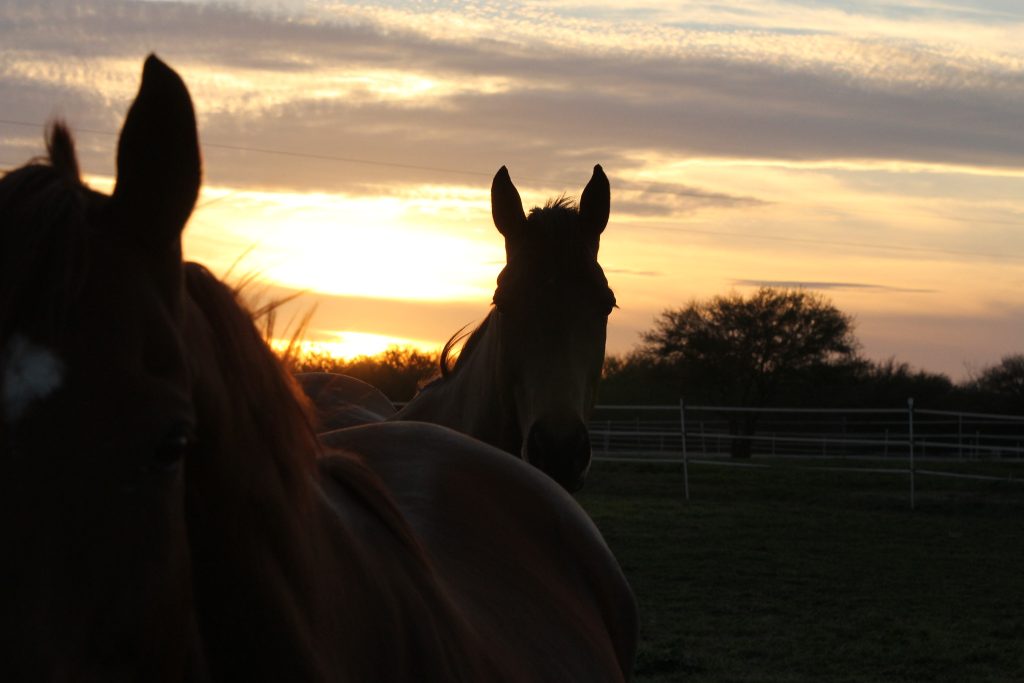
Most barns in America operate on a schedule that looks something like this: horses come in from the paddocks in the early afternoon, stand in stalls through the night, get turned out in the morning, then after the feeding and mucking is done, come back in sometime in the early afternoon, and stand in their stalls again through the late afternoon, evening, and night.
If you examine it honestly from the horse’s perspective, from the barn management perspective, and from the perspective of everyone who needs access to those horses during the day, it is also, in some cases, exactly backwards. While night turnout in the summer or heat is not a radical idea, it is time for it to be given more and serious thought for year round horse management.
The Horse Gets More of the One Thing Research Says Matters Most
Research shows that horses are happiest and healthiest with regular turnout, and that allowing horses freedom of movement and social interaction fulfills basic needs that support equine welfare. The question is not whether turnout matters (that is settled) but how much of it the horse actually gets under the typical schedule. In most working hunter-jumper barns, the honest answer is somewhere between six and eight hours on a good day, and considerably less on busy show prep days, bad weather days, or days when the schedule simply runs long. Night turnout, by contrast, gives a horse the entire dark stretch of hours — realistically twelve to sixteen hours outside, moving, grazing, breathing fresh air, and doing what horses are physiologically built to do.
Researchers have found that animals in natural settings spend significantly more time in restorative rest cycles compared to stalled counterparts, and that the physical space of a field encourages low-impact movement that reduces joint stiffness while building muscle tone. A lack of turnout is linked to stereotypic behavior, digestive problems, and weaker musculoskeletal tissues. Every extra hour outside is an hour of circulation, hoof stimulation, gut motility, and mental decompression that the stall simply cannot replicate regardless of how well it is managed.
The Barn Runs Better During the Day
The operational argument that is not always a consideration is a barn where all the horses are in their stalls during the day is a barn that functions. The farrier arrives at 8 am and every horse they need is standing in its stall. The veterinarian comes for a lameness evaluation at 10 am and nobody has to hike to the back pasture to catch the patient. The equine bodyworker, the saddle fitter, the dentist, the chiropractor and every single person who needs a horse during business hours walks into a barn where the horses are available, clean, and ready. No one is losing time catching, no appointments are running late because a horse decided today was the day to test the far fence line and no horse misses their hours in the turnout due to other basic necessities in their life.
The same logic applies to the barn’s own staff. Riders, grooms, working students and everyone who needs to ride, lunge, tack up, hand walk, or put a horse on the treadmill can do so without pulling that horse out of turnout, creating the awkward calculus of whether this horse has been out long enough, or managing the transition stress that some horses experience when they come in early. The horse comes in from a full night outside, rested, settled, and ready. The day’s work happens. The horse goes back out at the end of the workday.
Winter Is Not the Obstacle Most People Think It Is
The most common objection to year-round night turnout is cold weather, and it is worth examining honestly. For the majority of the country, properly blanketed horses with access to abundant hay and ideally shelter are entirely comfortable in nighttime temperatures that most climates experience through a typical winter. Horses generate significant body heat, particularly when they are moving, and the combination of an appropriate blanket, a run-in shed, and free-choice hay to fuel the digestive furnace handles the vast majority of winter nights without issue. The shelter is worth having, even though most horses will stand outside it rather than in it, because the option matters for the horse’s sense of security and for the occasional genuinely severe night. Pastures without adequate winter forage need supplemental hay provided in sufficient quantity, which is non-negotiable and simply part of the operational cost of doing this right.
The nights that are genuinely too cold, too icy, or too dangerous for turnout exist and on those nights, the horses stay in or can be turnout out in an indoor arena cleared for safety. But those nights are the exception, not the rule, and building a year-round management system around the worst-case scenario means the horses pay the welfare cost of that exception every single night.
The Horse’s Body Votes for Outside
Horses evolved to graze and roam throughout the day, and confinement can increase stress and interfere with normal body function. Consistent movement and forage intake support digestion, lowering the likelihood of impaction or gas-related colic, and pastures provide mental stimulation through varied terrain and herd interactions. Hoof health responds directly to movement as the hoof mechanism functions as a circulatory pump, and horses that move consistently simply have better feet than horses that stand. Back health, joint health, respiratory health and more top the list of physical systems that benefit from genuine, unstructured movement time is long and well-documented.
Night turnout is not for every barn in every situation. But for most working barns in most of the country, it is a system that gives the horse more of what it needs, gives the barn more of what it needs, and asks very little in return except a willingness to flip a schedule that nobody ever examined particularly carefully in the first place. The horses will tell you it was the right call. They always do.