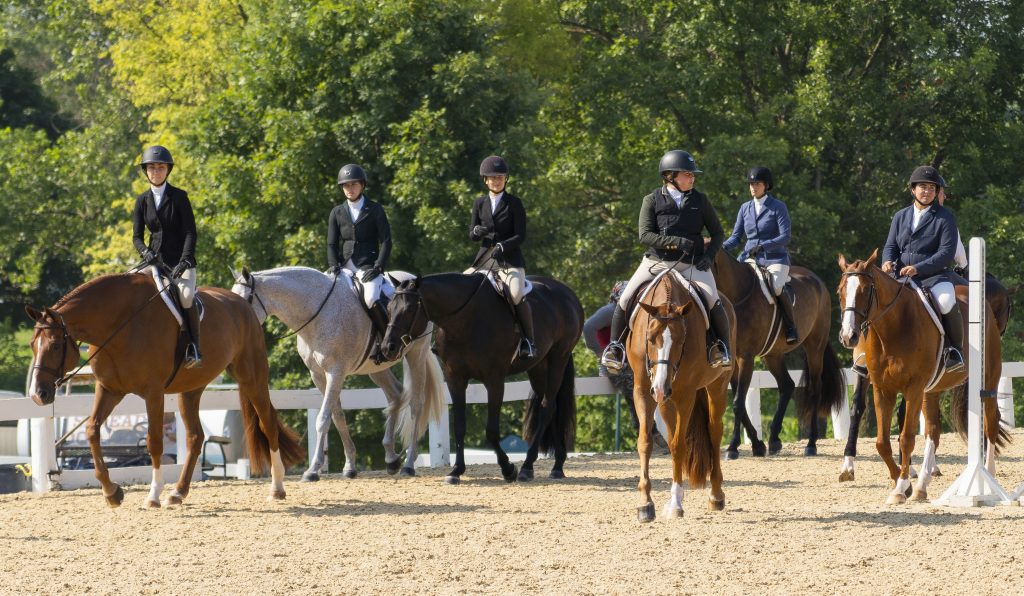
Welcome to Trainer Tuesday! Each week, we ask trainers a question and gather their answers for you. These trainers have a range of experience, backgrounds, and focus points of their programs, so the answers have as much variation as you would expect, and also probably much more similarity.
This week’s question posed is: How do you work with a horse who gets nervous in the schooling arena?
Here are their answers:
“Nervous and difficult horses are actually one of my specialties, and I think the biggest thing is staying calm and confident yourself. You can’t have an ego with these horses, and you definitely can’t be a nervous rider. They feel everything.
I find that the more calm and relaxed I am, the more the horse follows through. I also try not to take what they’re doing too seriously. If they spook or get worried about something, I’ll usually laugh it off, brush it off, and move on to the next thing. I don’t want to make their reaction into a bigger deal than it needs to be.
I also think it’s really important to give yourself enough time between getting on and going into the ring. These horses can’t be rushed, but they also can’t linger in the warm-up area with nothing to do. Once you’re on their back, they like to know they have a job.
I have ridden horses that like to get on, warm up, and go, and I have ridden horses that need a more purposeful warm-up with transitions, changes of direction, circles, and bending, while still keeping a soft, calm hand and seat. Not all horses are created equal; you have to find what works best for them. Sometimes it’s getting on hours before the class, finding a quiet area, and letting them have a purposeful hack, so then when it’s time to warm up for the show ring their bodies are already loose, and they can just have a quick warm-up and go. Or I have had ones that prefer stall-to-ring with a warm-up focused more on flatwork and very little jumping.
When I’m warming up for a jumping class, I usually choose the quietest jump and pay a ton of attention to the other horses and riders. I’m constantly watching the traffic and looking for the right moment to go so I can give my horse plenty of space and set them up for success. Sometimes that means waiting a few seconds for the right opening rather than forcing the horse into a situation where they’re going to feel crowded or overwhelmed.
With these horses, I’m not trying to make them tired or prove a point. I’m trying to build their confidence and give them a job. More than anything, they need to feel that I’m confident enough for both of us. If I stay relaxed, keep moving forward, and don’t make a big deal out of their reactions, I find that they usually start to follow my lead.” – Sami Senft-Fessler
“When I have a horse that is nervous in the schooling or traffic shy, I try to have them go in the beginning or the end of the class where there is less traffic. I also try to keep the horse in a small circle in the corner of the schooling ring to warm up and pick a fence on either end to jump rather than the middle.” – Gaston Escamez