Welcome to Trainer Tuesday! Each week, we ask trainers a question and gather their answers for you. These trainers have a range of experience, backgrounds, and focus points of their programs, so the answers have as much variation as you would expect, and also probably much more similarity.
This week’s question is: What is one routine or habit you developed a long time ago that has served you very well in your career?
Here are their answers:
“I’m a very routine oriented person so I go through a bit of a ritual when I ride: I check my bridle, tighten my girth, get on, and while warming up at the walk, I allow my horse to slowly stretch their body. I ask them to bend left, bend right, move hips and haunches around my legs, then I move the forehand. I do that about two or three steps per side until it feels right. I call it ‘checking my control panel’. This is especially important if I am not familiar with the horse – I want to know what kind of leg to hand pressure they need before I start asking for things like collection. I pair this with trying to release as soon as the horse gives me the right answer, which usually creates softness along the way.” – Brooke Rainey
“One thing I’ve really tried to make a habit of is to always find the positives and/or learning opportunities in everything you do. Had a bad ride? Take a step back and figure out what made it bad so you can learn from the experience. Didn’t get the score you wanted? Take a step back and look at your scores and focus on the positives first – the good scores and good comments – then go and look at the lower scores and really read those comments and take them as a learning moment and apply them to make yourself better, not only for you but for your horse. This industry can be tough, but the more we can focus on the positives and turn the ‘negatives’ into learning opportunities the more motivating and exciting training/riding will be!” – Micah Hickman
“In my program, I try to prioritize top care and training in everything we do… I go over the horses daily and try to provide top hay/grain/stalls/turnout/best fitting tack etc. But, beyond that, a key thing that I do (which is incredibly simple) is to make sure I respond to people right away. I have consistently received feedback from clients, both existing and new, that other barns or trainers didn’t respond for several days if not longer. I will get new clients and keep my existing clients by simply communicating consistently with them in a timely manner. If I don’t have the answer at the moment, I will let them know that I will have an answer by that evening or the next day or whenever. Remember to check your texts, calls, WhatsApp, emails and however else someone would communicate with you and… respond!” – Brooke Bayley
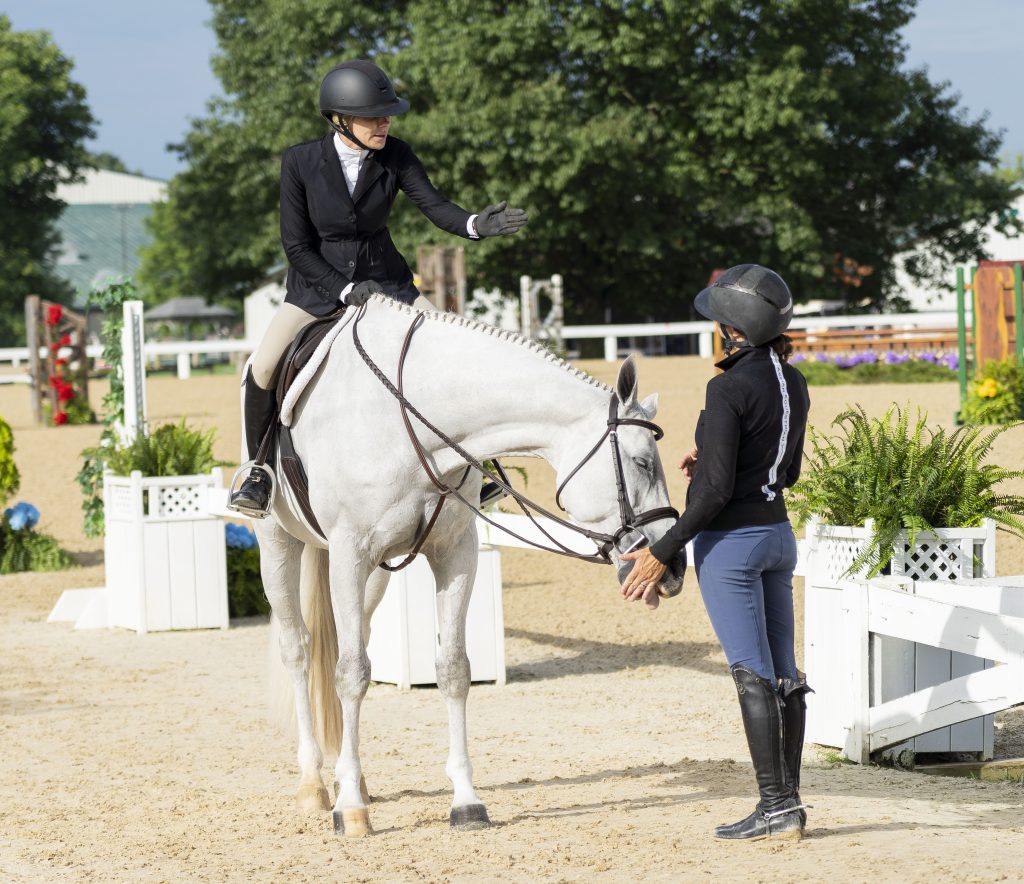
“Intentional time out of the arena for both horses and riders is an essential routine. Long walking warm-ups and cool-downs are part of daily rides. However, in addition to this, scheduled student/staff hacks are part of the weekly schedule. These hacks are opportunities for student/staff communication. For safety purposes, at least two students ride out with a staff member. No more than four is preferred. Students appreciate the relaxed format which inspires honesty and trust about riding and personal experiences. It’s also another chance for the horses to get a mental break from the arena. It takes careful planning to accommodate everyone. But, it is well worth the effort. These ‘out of the ring’ times can include training exercises if appropriate. For example, the ride can be without irons. Or, it can be an opportunity for students to learn how to pony another horse. The creative nature of the activity can be dictated by the interested student, or proposed by the staff member. In any case, hacking out is a win for all.” – Susan Sjolund
“The most helpful tip or advice I can give anybody who is a trainer and those who want to become one is: never stop learning! I was told by one of my biggest mentors, who was as cowboy as they come, that you’re only limiting yourself as a trainer by limiting what kinda saddle you ride in.” – Joe Williams