
BY ALEX HASS
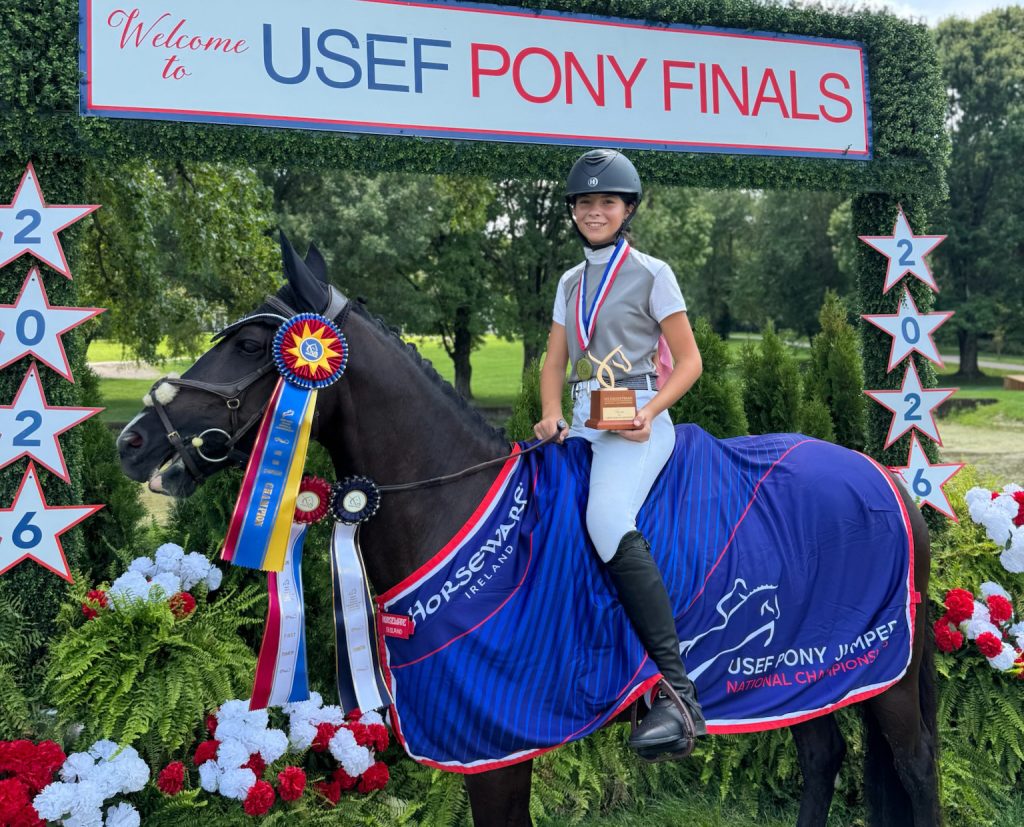
When 14-year-old Adelaide Hass entered the Kentucky Horse Park aboard Effortless H for the 2026 USEF Pony Jumper National Championships, she brought considerably less show-ring mileage with her than many riders on a national championship stage.
Adelaide has competed at just eight rated horse shows in her life. Five of those came during the past two years with Effortless H, affectionately known as “Effie.” Pony Finals was number six. It was also her first horse show outside of Texas and approximately her 10th competitive round at the championship height of the large pony jumpers.
By the end of the week, Adelaide and “Effie” had helped Zone 7 capture Team Gold and finished 21st individually out of 95 Large Pony Jumper competitors.
Their road to Kentucky was unique, built primarily at home. For young riders watching national events while knowing their families cannot afford to spend every other weekend on the rated circuit, Adelaide’s story offers another version of what the road there can look like.
Building Mileage Without Leaving Home
Adelaide isn’t a backyard rider without access to experienced horse people. I’m her mother and trainer, and I’m a former equestrian and pony jockey who now operates a horsemanship-based riding academy for homeschoolers. Her father, Clayton Hass, operates a performance horse facility focused on training rope horses.
Adelaide has grown up surrounded by horses. What she hasn’t grown up doing is showing every weekend.
We learned to be resourceful about creating education and mileage without constantly paying for another rated show. We’ve watched show jumping clinics on YouTube together, looking for exercises, explanations and different perspectives they could take back to their own arena. We built courses at home and rode them like horse shows. We spent countless hours on poles, cavaletti and gymnastics. We’ve trail ridden and built endurance outside the arena.
When the mother-daughter/trainer-student dynamic starts wearing thin… or when I see we need more knowledge, we bring in another set of eyes. Adelaide has taken Pivo lessons with upper-level trainers from home and participated in a handful of clinics with dressage trainers and show jumpers. It’s a different way of accessing coaching.
And perhaps no horse has tested that system more thoroughly than Effie.
The Pony Who Sent Us Back to Dressage
Effortless H has a name that is, at times, almost comically misleading.
Effie is peculiar. She’s the pony that looks incredibly easy to ride from the ground, but her canter can feel like riding a square-wheeled wagon. She’ll four-beat before a fence or when she gets excited. For a long time, I could see what was happening, but I couldn’t completely understand what Addy was feeling.
Eventually, watching from the ground wasn’t enough. I had to start riding her myself so I could feel what Addy was trying to explain to me. We really partnered on Effie on the flat. Between the two of us, we had to learn how to read and judge her canter, create more suppleness through it and figure out how to ride her up and through instead of letting everything fall apart when she got excited.
At one point, the answer was to stop jumping altogether. For approximately three months, Adelaide and Effie went back to basics and focused on dressage. Only when the rideability began to improve did they slowly introduce cavaletti again, followed by grid work and eventually courses.
The feel Addy has had to develop to truly ride Effie has been a year-long effort. It is still very much a work in progress. We go back to dressage with her all the time. But at Pony Finals, Addy suddenly had access to the rideability we’ve been working so hard to create. Watching that work show up exactly when she needed it was incredibly rewarding.
When the Homework Had to Hold Up
The order of go for the Zone 7 team competition was determined by random draw. Adelaide drew the anchor position for both rounds.
Twice, that meant the 14-year-old entered the arena as her team’s final rider with four faults already sitting on the scorecard. With the team’s highest score eligible to be dropped, a clear round from Adelaide and Effie would allow those existing faults to come off the team total.
There was no practice round left. No opportunity to gain a little more show-ring mileage first. The homework had to hold up.
And Ii did.
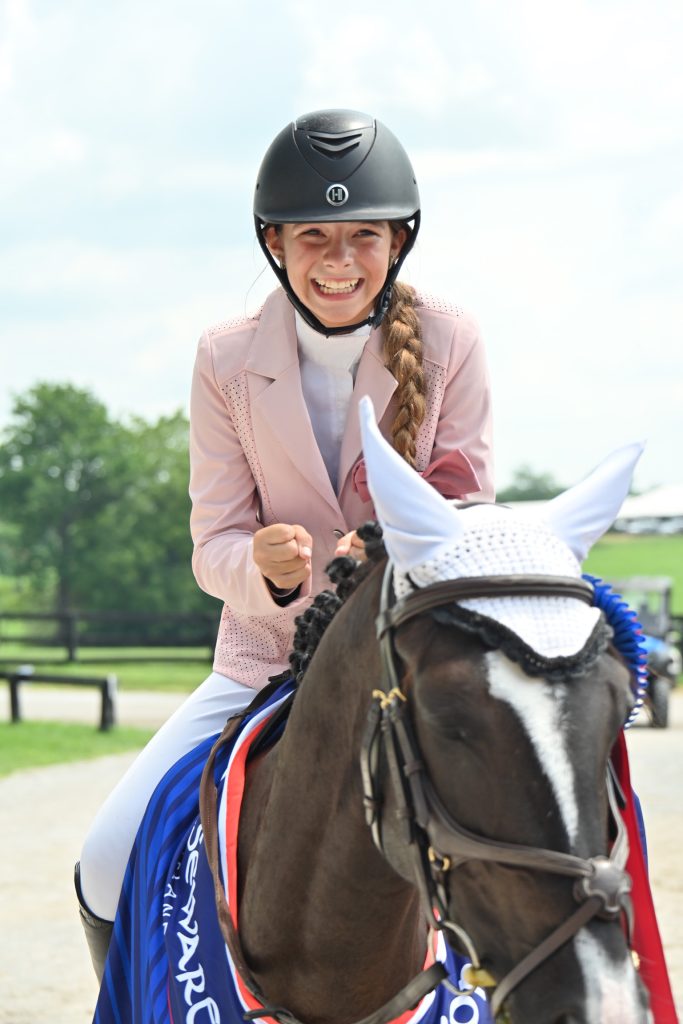
Adelaide and Effie produced clean, fast rounds in both team competitions, helping Zone 7 secure the Team Gold Medal.
I was so impressed by how Adelaide responded to the pressure. She wasn’t cautious, but kept getting better. Each trip was more confident and more competitive than the one before it. On the biggest stage she had ever ridden on, Adelaide produced some of the grittiest riding we had ever seen from her.
A Different Road to the Same Ring
There are families in this sport who can give their children tremendous show-ring mileage, and that experience has enormous value. There are also families who can’t.
Rated showing is expensive. For many young riders, competing two or three weekends every month isn’t financially realistic. National goals don’t necessarily have to disappear, but the road there has to look different. Adelaide’s story shows what can happen when a family takes the resources it does have and becomes intentional about filling the gaps.
For Adelaide, five rated shows over two years led to a sixth at the Kentucky Horse Park. She arrived as a 14-year-old Texas rider at her first out-of-state horse show, and left a National Team Gold Medalist.
For the girl watching Pony Finals from home and wondering whether she gets to dream that big without showing every weekend: You do.
Alex Hess is a lifelong horsewoman whose education began in a Pony Club barn and eventing before spending decades riding, studying, and working as a working student under trainers across multiple disciplines. Her experience has had an emphasis on starting and developing ponies and young horses through a combined-training foundation of dressage and show jumping. Today, she runs a horsemanship academy for homeschoolers in Weatherford, TX, developing capable young horsemen who care for and ride their own horses, grounded in a horse-first philosophy.














