BY NANCY K. CAMP
You’ve been there: your horse struggles to pick up the correct canter lead, falls in on corners, or starts ticking rails. You try harder, but nothing improves. What if the issue is understanding what’s happening in your horse’s body?
That’s where self-carriage enters the picture.
Before we explore self-carriage, take a moment to honestly reflect on what the term means to you. Have you heard it before, and is it something you think about when you ride?
Maybe explanations of self-carriage have always felt too technical, too abstract, or not especially relevant to your own riding. Or perhaps you have assumed it is something that only matters for dressage horses or high-level performance horses.
What Self-Carriage Really Is
Self-carriage is the foundation of ethical riding. In simple terms, it’s when a horse adjusts their posture by engaging core muscles to lift their back, thereby shifting their center-of-gravity back. Consequently, they can carry more weight on their hind legs, becoming lighter in front, which enables them to support the rider. In essence, self-carriage is balance in motion. It’s fluid movement that allows a horse to carry weight efficiently and beautifully.
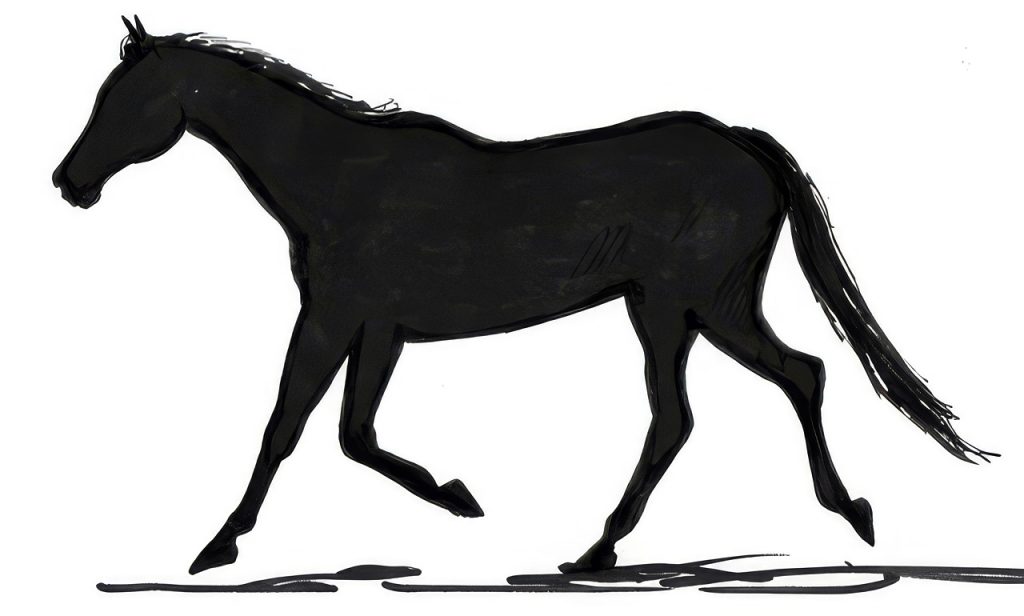
Most horses are required to accept a rider’s weight without ever learning how to use their bodies to support it. But when horses are taught self-carriage through patient, skilled training, the physical difference is dramatic.
Why This Matters for Horse Welfare
Horses suffer when forced or ‘gentled’ into accepting weight without proper training. But to understand why, it helps to know how horses are naturally built. Horses naturally carry 60% of their weight on the forehand. That’s a handy survival technique for a grazing creature. After eating everything in front of you, you lean forward, reach further, and step ahead to find fresh food. But this balance ratio doesn’t serve the ridden horse well.
To carry a rider with ease, horses must learn to use their bodies differently. Unless they do, their backs hollow. Their muscles tighten. Over time, chronic pain and injury follow. As an equine bodyworker, I see this pattern repeatedly. The body issues and back problems that fuel the “horses shouldn’t even be ridden” argument.
But when horses learn self-carriage before carrying a rider, they develop the strength and awareness to carry weight safely. They move differently, feel more comfortable, and can perform tasks with style. This is the difference between a horse that tolerates riding and one that thrives under saddle.
The Anatomy Behind the Human-Horse Connection
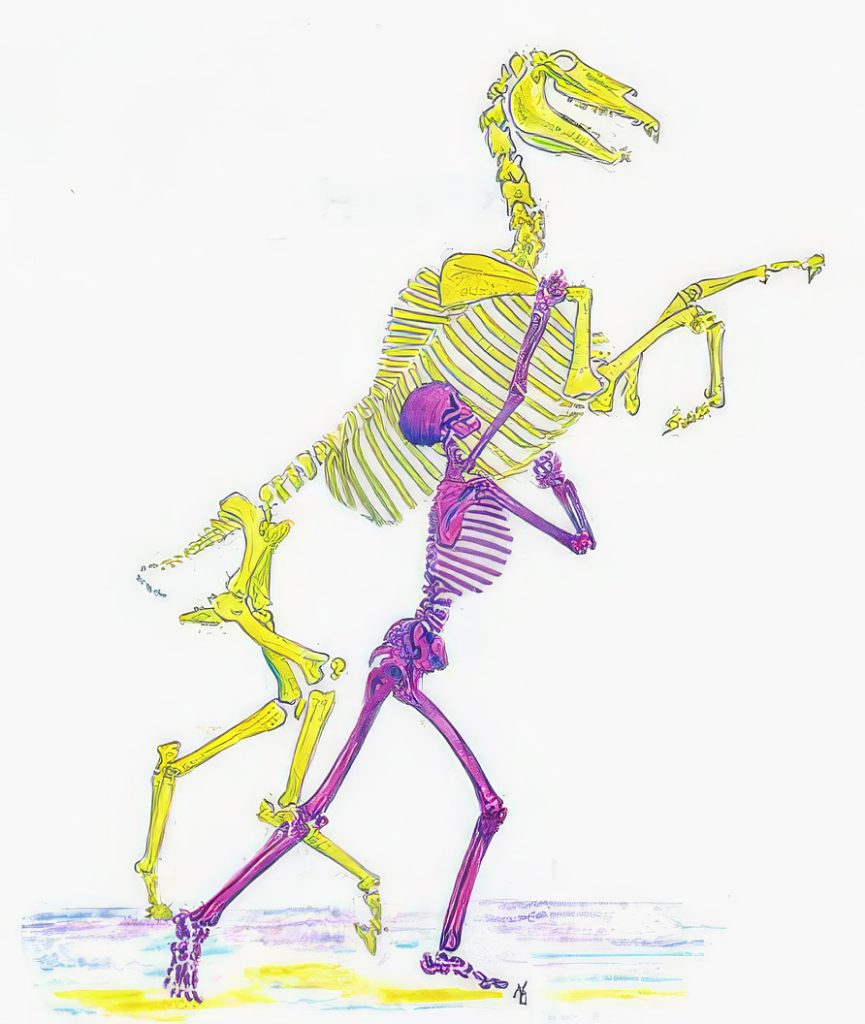
Years ago, I encountered a Smithsonian exhibit photograph that showed horse and human skeletons side by side. It transformed how I understood equine movement.
The similarities are striking. Both species have spines, ribs, shoulder blades, and hind limbs designed for similar functions. Both engage core muscles when moving with balance and power.
Go ahead––get on your hands and knees and “be a horse” for a moment. Now, tighten your belly muscles. Do you feel your back rise and your weight shift more to your knees? That’s the first step toward self-carriage.
This is why human riders can help horses develop self-carriage, because we can feel what’s happening in our own bodies. When you feel your core engage, your back lift, your weight shift, you know exactly what you’re asking the horse to feel. It’s not force, but shared understanding.
The Cycle of Self-Carriage
Here’s how it works in practice: When a horse engages their abdominal muscles, they draw their center-of-gravity backward. This allows the hindquarters to carry more weight. As the back lifts, the front end lightens naturally. The result? A weight-bearing posture where the rider sits over the horse’s altered center of gravity. This allows the horse to use their body the way any athlete does: for strength and endurance, not compensation.
This is fundamental to training across all disciplines, not just dressage. Horses rarely develop self-carriage under saddle on their own. It takes training and repetition to strengthen the muscles and habituate the posture.
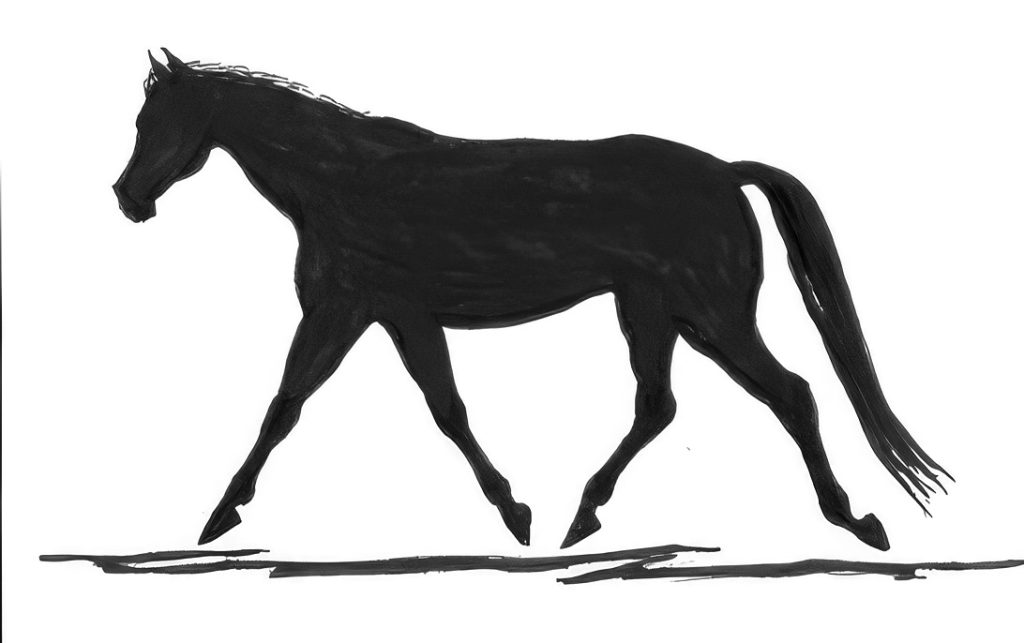
Now that you can see the difference, start watching. When you observe horses at a barn, a show, or in a video, notice which ones move with a light, fluid, supple quality. Which ones appear heavy, or awkward, or forced in their movement? You’re seeing the presence or absence of self-carriage. This awareness changes everything about how you think about riding.
The Symbiotic Partnership
When a horse develops true self-carriage, something shifts. The relationship transforms from burdensome to a partnership. They’re stronger, more aware, more engaged. The rider becomes a guide rather than an antagonist.
This is how self-carriage changes everything. As horses develop self-carriage, they improve in strength, awareness, and willingness. Riding transforms from something the horse tolerates into something they can excel at. The skill every ridden horse needs to learn isn’t obedience, but self-carriage. Everything else flows from there.
Nancy K. Camp has spent decades with horses, rethinking everything she thought she knew about training. She is the author of In It for the Horses: A Journey from Whips to Whispers and co-author of Connect with Your Horse from the Saddle with Peggy Cummings. Based in Idaho, she challenges traditional training myths through writing and advocacy grounded in empathy and a spiritual connection with horses. Learn more at www.wholehorsetraining.com