Brought to you by The Plaidcast
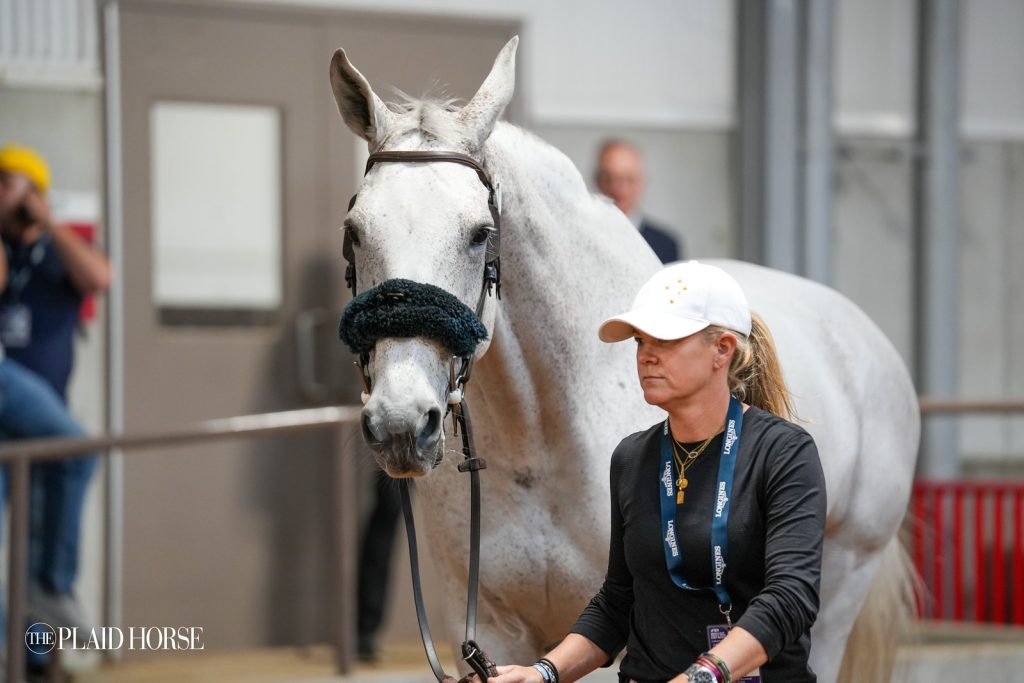
A rider enters the ring thinking about the course, but the horse may be thinking about something entirely different.
According to neuroscientist and horse trainer Janet Jones, that gap between what matters to the human brain and what matters to the horse brain is one of the most important things riders need to understand.
“The human mind is driven primarily by goals. The horse’s mind is driven by external fear,” Jones writes in her book A Horse’s World.
Those two brains may be working together, but they are not processing the same environment in the same way.
Horses Are Looking Outward
Jones explains that horses’ brains are strongly biased toward noticing external distractions, particularly anything new, unexpected, or potentially threatening. That tendency is rooted in survival. “To a horse brain, distractions and surprises can mean the difference between life and death,” Jones said.
A movement outside the ring, an unfamiliar object, a noise from behind, or something that looks different from how it did yesterday may command a horse’s attention in a way that seems completely disproportionate to a rider.
To the human, the object may be irrelevant. To the horse, noticing it is exactly what the brain has been designed to do. That distinction is important because riders can easily interpret a horse’s attention to the environment as a failure to pay attention to them. The horse may not be ignoring the rider at all. The horse may simply be processing the world exactly as a horse does.
Human brains have a different bias. Jones says people tend to focus more heavily on internal goals. We plan, analyze, execute, worry, replay the past, and anticipate the future.
At a horse show, that might mean thinking about the score from yesterday, the distance you missed in the schooling ring, the result you need today, or the instructions your trainer just gave you. Meanwhile, your horse is far more focused on what is happening right now.
“That’s the opposite from the horse’s focus on the external environment and the here and now,” Jones said.
That creates what she calls a “huge disconnect.” The rider may be mentally three jumps ahead. The horse may be noticing the banner beside jump one. Neither brain is necessarily doing anything wrong. They are simply prioritizing different information.
Don’t Punish the Horse for Being a Horse
Understanding that difference has practical implications. Jones argues that riders should not punish horses for mental processes that are innate and outside the horse’s control.
“We don’t ever want to punish horses for their innate mental operations that they have no control over,” she said.
A horse noticing something unexpected is not necessarily choosing to be difficult. That does not mean riders should simply allow horses to react however they want. Training still matters. Horses still have to learn to function safely and effectively in human environments.
But the rider’s job begins with understanding the reason behind the response. Jones says riders also risk impairing performance when they fail to anticipate what is most important to the horse’s brain.
If you know your horse is likely to notice a new object, a strange movement, or a sudden environmental change, you can prepare for that response instead of being surprised or frustrated by it.
Our Own Brains Work Against Us
Perhaps the most challenging part of this is that simply knowing the difference between horse and human cognition is not enough. Jones says many experienced horse people already understand these ideas intellectually. The problem is remembering to apply them.
“Our brains encourage us to forget them,” she said.
Because human attention naturally returns to our own goals and experiences, riders have to make a deliberate effort to consider what the horse is perceiving. That requires more than reading a book or hearing the concept explained once.
“It takes daily practice on the back of a horse to learn to maintain that attention to what the horse is experiencing, rather than only focusing on what we are experiencing,” Jones said.
That may mean asking different questions during a ride. Instead of only asking, “Why isn’t my horse listening to me?” ask, “What is my horse paying attention to right now?” Instead of immediately labeling a reaction as silly, difficult, or unnecessary, consider whether something in the environment has changed. That small shift can alter the way a rider responds.
The remarkable thing about riding is not that horses and humans naturally think alike. They do not.
Humans are goal-driven. Horses are highly attentive to their immediate environment. We tend to live mentally in the past and future. Horses are much more rooted in what is happening now.
And yet the two species learn to work together. Jones believes the burden is on the human to understand that difference and teach the horse what we want.
“It is our responsibility to teach the horse what we want her to do,” she said. The horse cannot be expected to adopt a human brain. The rider has to become better at recognizing how the horse’s brain works. That means remembering that the animal carrying us toward those goals is experiencing the world differently. The more clearly we understand that difference, the more effectively we can communicate with the horse beneath us.
To hear the full conversation with Janet Jones and Tonya Johnston, listen to episode 489 of The Plaidcast. Subscribe and follow The Plaidcast on your favorite podcast platform for more conversations from throughout our industry.