BY PIPER KLEMM Ph.D.
PHOTOGRAPHED BY: SARA SHIER PHOTOGRAPHY
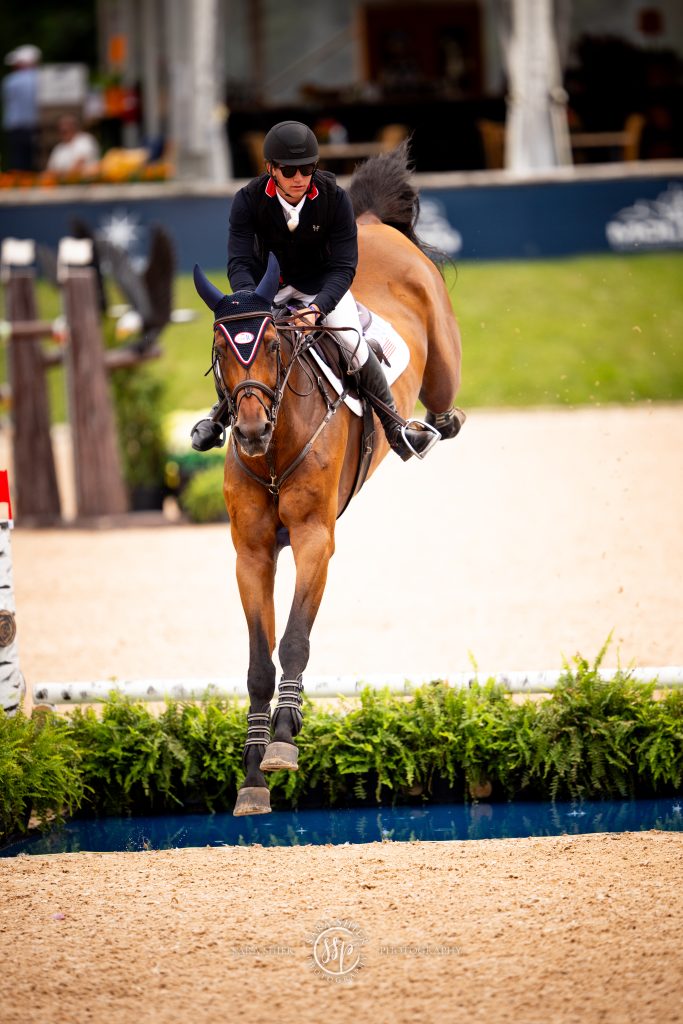
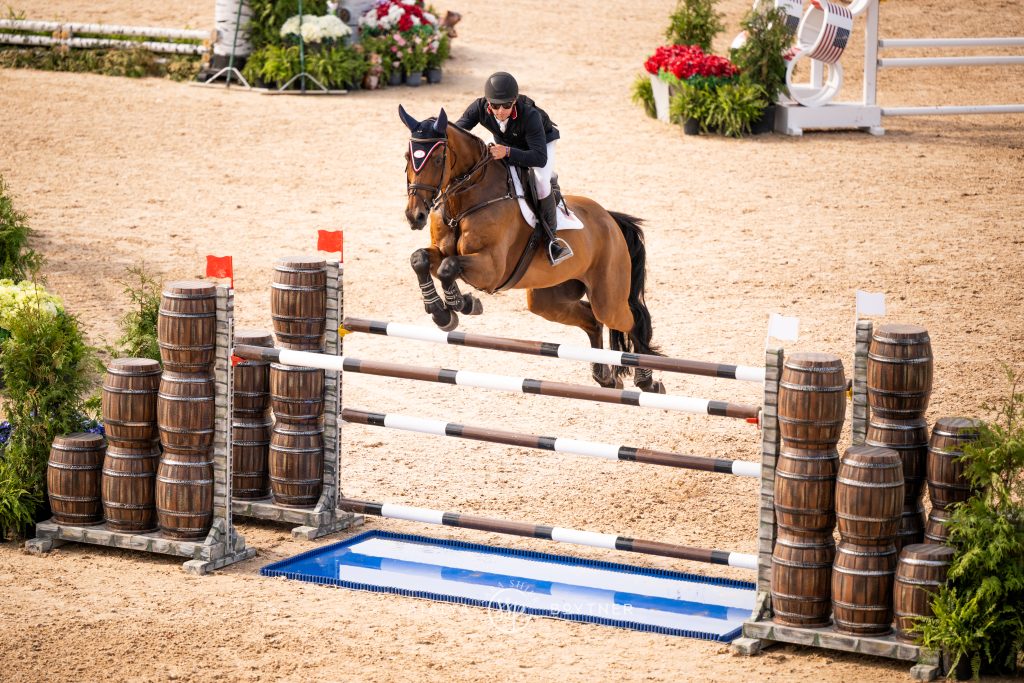
When Grayson Pacelli walked into the schooling ring with E-Up at the FEI North American Youth Championships this summer, he found himself in a setting that far surpassed what he had expected when deciding to commit fully to the jumper ring just nine months prior. Several of his Young Rider teammates had jumped four-star and even five-star classes. Grayson had jumped a handful of 1.45 m tracks. Nine months earlier, he had been showing in the 1.10 m.
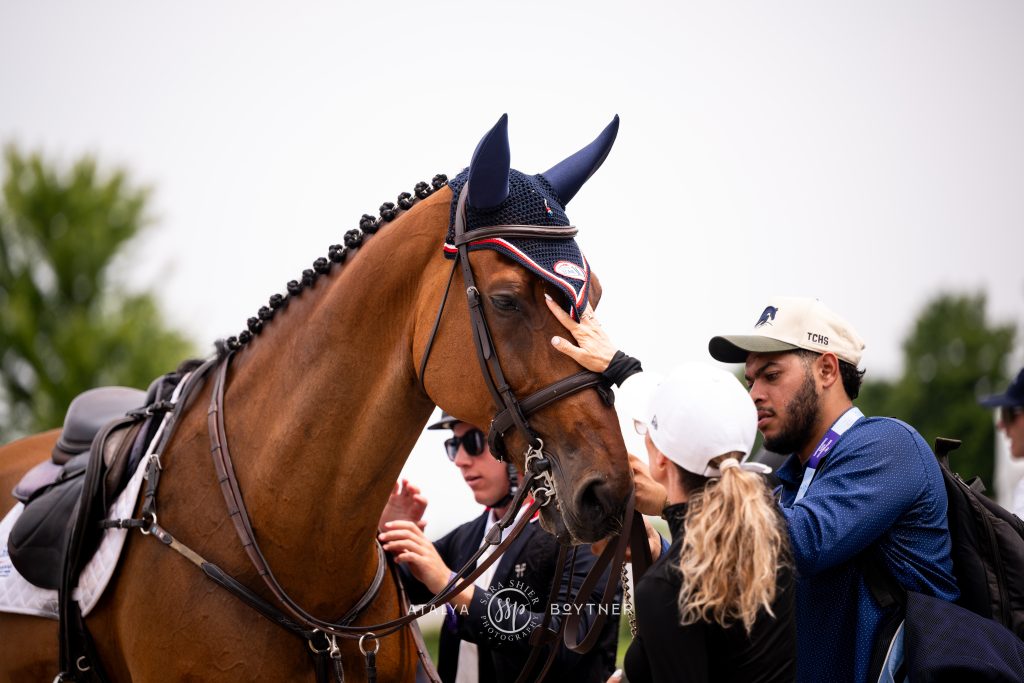
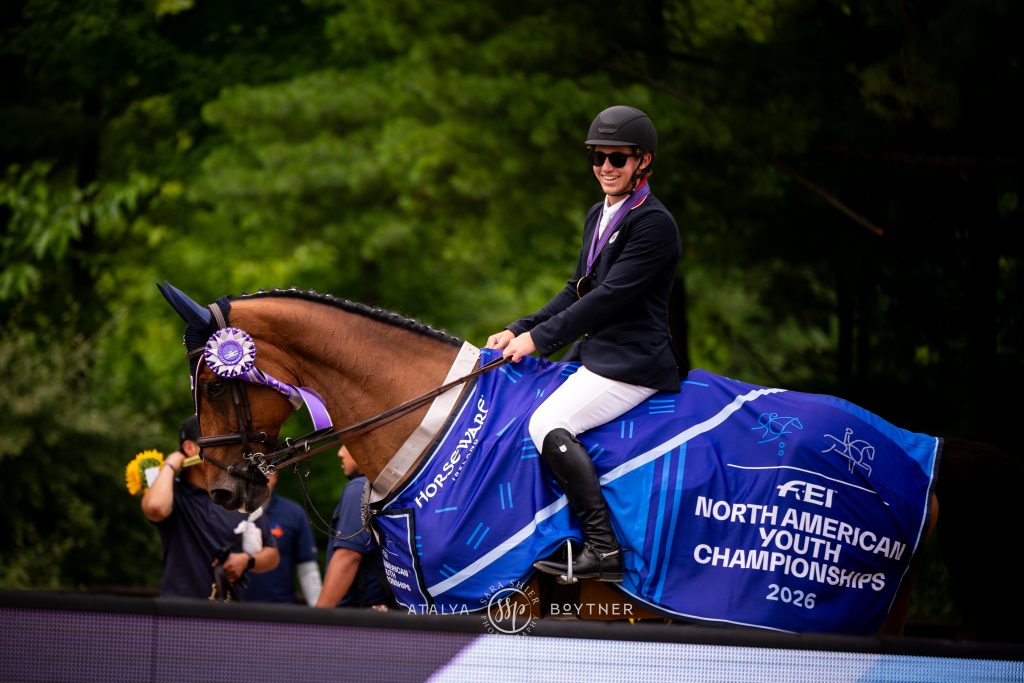
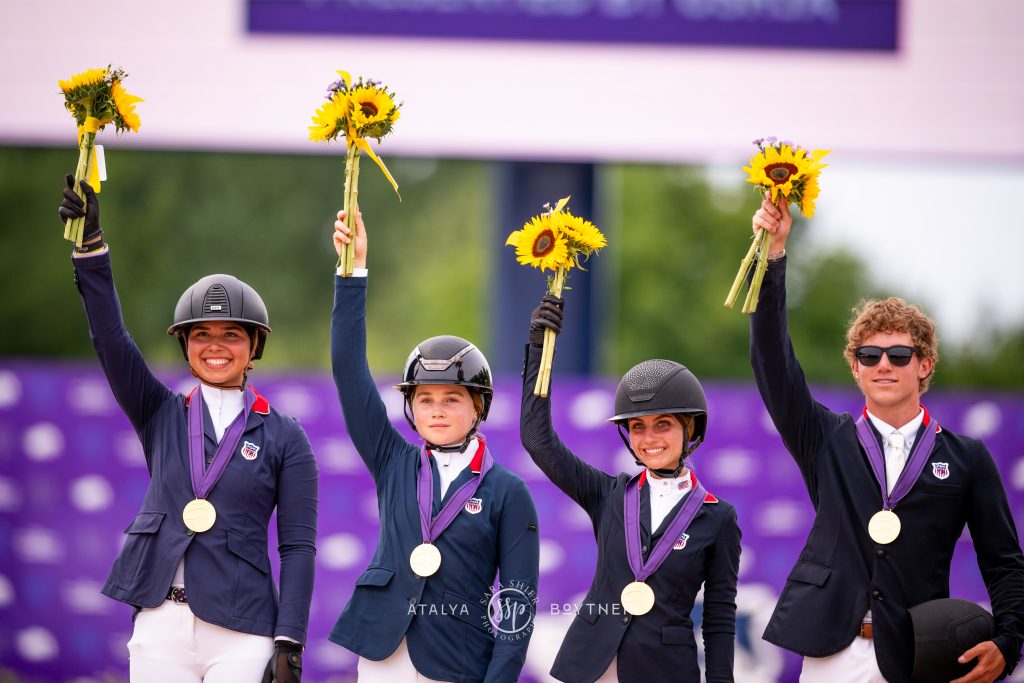
By the end of the week in Traverse City, Michigan, the underdog from Zone 10 had not posted a single drop score. His result counted in every round as Cameron Trimino, Emmeline Adamick, Della White and Grayson brought home North American Young Rider Championships team gold for Zone 10—the defending champion—aboard his mount E-up or “Eddie” at the barn.
A Foundational Beginning
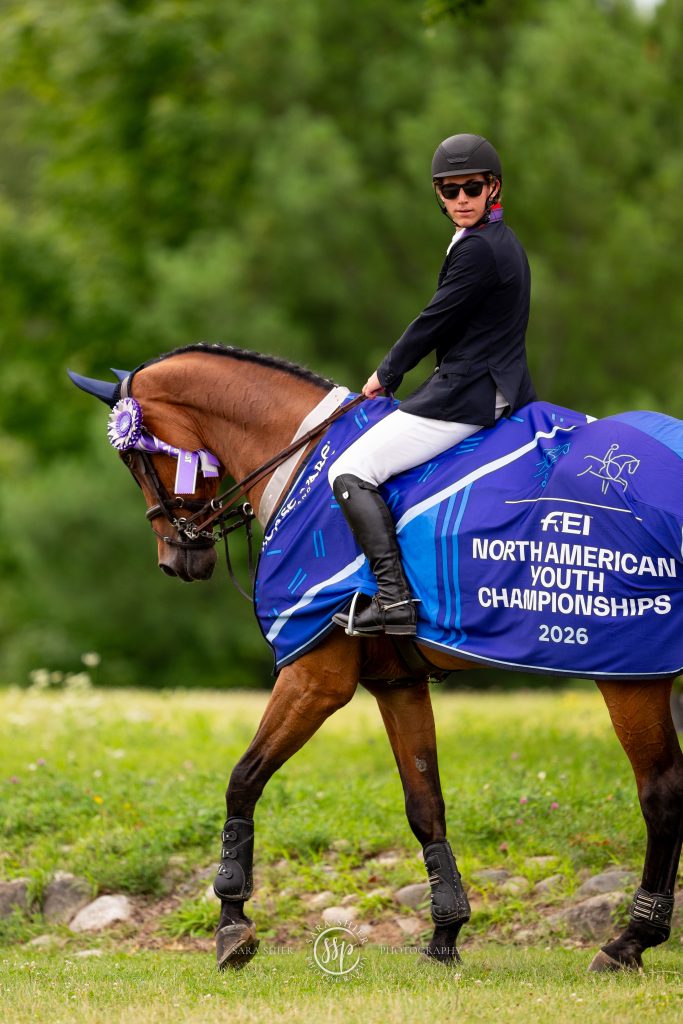
“I was probably seven or eight years old when I started doing pony rides at the barn my mom rode at,” Grayson recalls. “Eventually we got a pony, and started showing, and I just kept at it. It’s been a long time.” From the very beginning, he says, he was hooked. “I’ve had ups and downs for sure, but I always wanted to be at the barn every day.”
In the Children’s Pony Hunter divisions, the Pacelli family made the move in 2019 to Oceancrest Farms in Encinitas, California, to train with Alicia Saxton and Alysia Lynch-Sherard, where they have remained through Young Rider Team Gold. While this continuity is rare in our industry, Saxton credits the trust in the relationship for the longevity and success.
“They asked for our advice, and they followed it every step along the way,” said Saxton. Foundational questions like staying in a division a little longer to build confidence or not chasing bigger jumps before Grayson was ready were paramount to building the foundation that could springboard Pacelli to the top of Young Rider sport. Saxton used that trust to build a long range plan for Grayson’s career.
“Sometimes as trainers our hands are tied a little bit by preconceived notions, or by what people think they want to do,” Saxton explained. “The Pacelli family trusted us and the program and our desire to teach foundation, and to have the success come out of the foundation rather than out of shiny things.”
Working up the Levels
Grayson came up the way a lot of California kids do: through the hunters and the equitation before the jumpers ever entered the picture. His first horse was a chestnut gelding named Chico Grande who started him in the 2’6” hunters and then progressed up the levels.
Being new to the A-rated show world, Saxton and Lynch-Sherard were always trying to make horse shows less pressure and ensure Grayson was overprepared for the task at hand. There was, famously, the day his trainers quietly entered him in his first 3’ class without telling him when he had been showing in the 2’9” consistently. “That was my first time jumping 3’. I still remember that,” he laughs. He placed. When he came out of the ring and remarked that the jumps “looked a little bit big,” the adults played innocent.
“He came out and said, ‘Those looked a little bit big.’ And we’re like, ‘Did they?’” Grayson’s mom Stacey Pacelli remembers, grinning. She was, of course, in on it. “Our trainers never asked him to do what they didn’t know he was fully capable of doing.”
Grayson’s first ever equitation final came with a win in the California Professional Horsemen’s Association (CPHA) Final 14 & Under section. The following year, Grayson was Champion in the USHJA 3’3” Hunter Seat Medal Final, West. As he moved up the ranks, the Pacellis leased a variety of horses as Grayson progressed to the 3’6” equitation, trips back east, and a third-place finish at a RW Mutch Equitation Championship.
When Grayson was 16, he decided he wanted to be in the jumper ring as well as the equitation. Alicia and Alysia put feelers out, and Grayson had the opportunity to lease Lamborghini, a “pint-sized” 15.2 h powerhouse. He introduced Grayson to the 1.10m jumpers and Grayson was hooked. After continuing in the jumper ring with Giggs, he started to make decisions on how to best spend his last junior year.
“I want to do just the jumpers”
Last November, after Giggs finished out his lease, Grayson made his choice: he wanted to focus on the jumpers, full stop.
“At Thermal, a call came in about a horse who had to be Grayson’s. That was Eddie. Grayson also tried a wonderful jumper named Conrad 155 from Alex Wilson and Kaitlin Campbell’s program. Both came home on a nine-month arrangement,” said Stacey, lining right up with when Grayson would leave for college at University of Southern California.
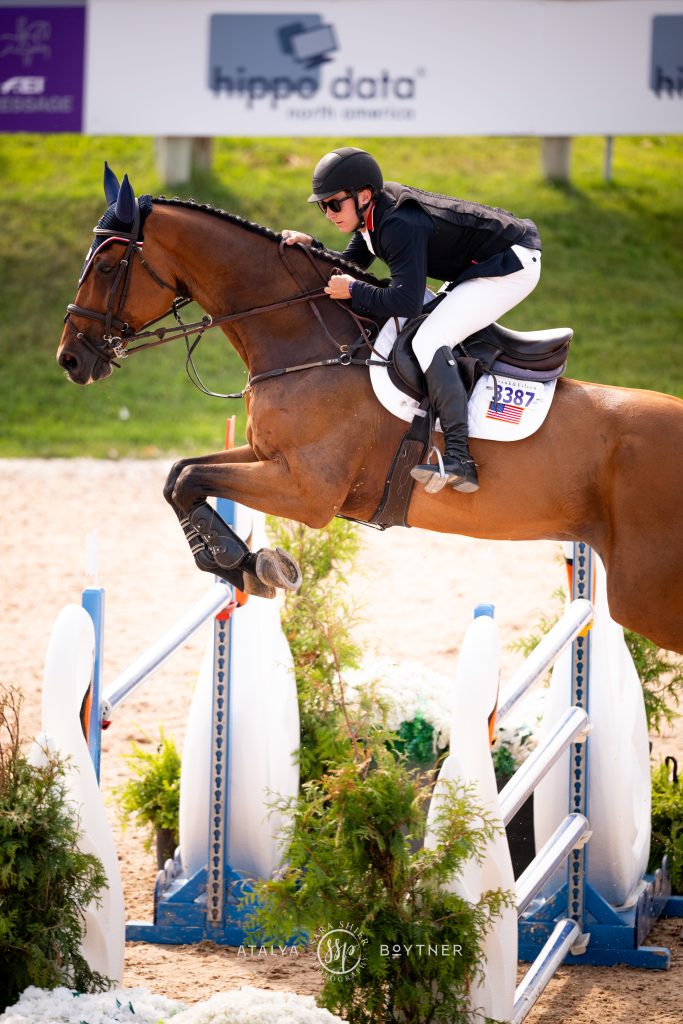
At that point Grayson had never jumped higher than 1.15 m. He jumped bigger for the first time when trying Eddie and Conrad.
What followed was a compressed, methodical climb. Two months at home schooling full courses at 1.20 m. Back to the Desert Horse Park to show in January in the 1.20 m, then straight into the 1.25 m classic on both horses. Coming back in February to show in the 1.30 m and then debuting 1.40 m at Del Mar in April, in an Open Jumper Classic. After that 5th place finish against professionals, Saxton felt that he was ready for bigger tracks.
“It was always about good decisions and not running around,” said Saxton. As long as Grayson was riding with good thinking, good technical skills, and good accuracy, Saxton let him keep moving up.
The class that cracked everything open came in May: a 1.45 m classic where Grayson was the only double-clear in the field. “There were only two of us in the jump-off, and I was last to go,” he says. “It’s the slowest jump-off I’ve ever jumped. I was being so careful. But it paid off.”
That win was what put the North American Young Rider Championships (NAYRC) on the radar at all.
Rising to the Occasion
The road to Traverse City ran through a hastily arranged trip to show in Temecula in May, where Grayson needed his open-water certification to be eligible for NAYRC. He was certified in a 1.35 m class, then competed in his first-ever Grand Prix that Saturday night, three weeks after his first 1.40 m. “Warming up in the ring with all the people I’ve looked up to for the past 10 years was pretty crazy,” he says. It wasn’t his best round, he rode cautiously and had rails, “but it got the nerves out of the way.”
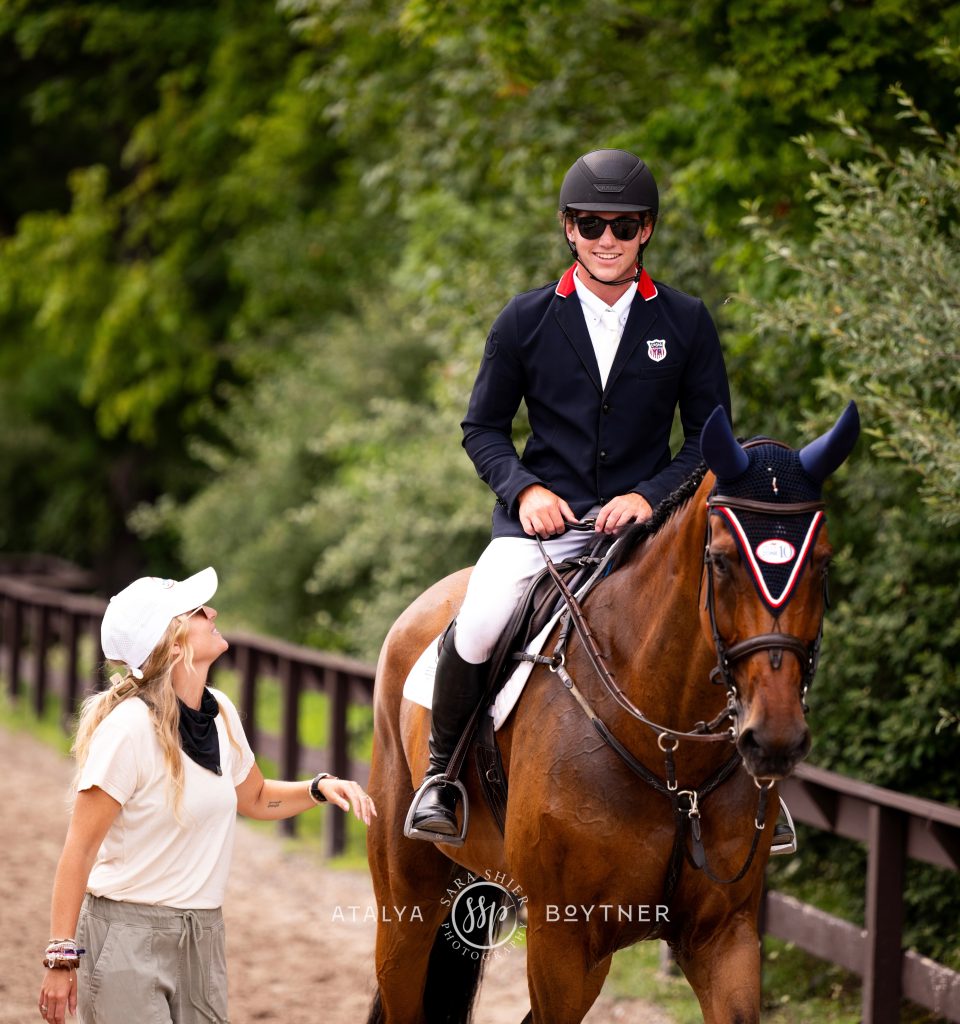
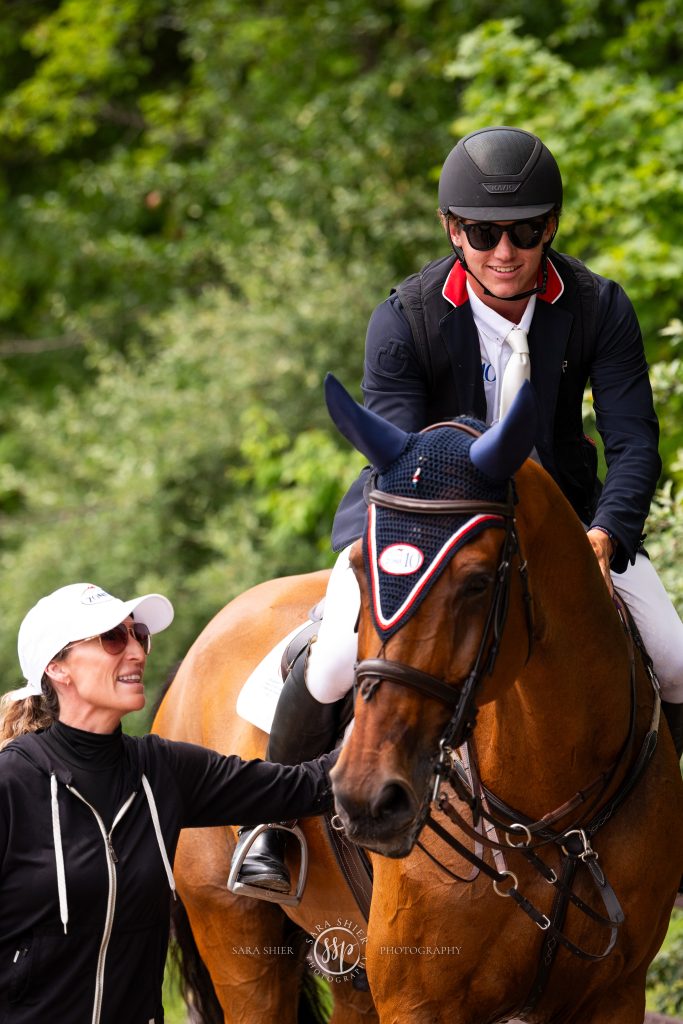
Showing as FEI age 18 (USEF age 17), Grayson was eligible for both the North American Junior Championship (NAJC) for FEI athletes 14-18 years old with fences up to 1.40 m and the NAYRC for FEI athletes 16-21 years old with fences up to 1.50 m.
Leaving California, Grayson was the Young Rider alternate and not scheduled to compete on the Young Rider team unless a team member dropped off. As team members made decisions whether to compete, he was also offered the alternate spot on the Junior team for USHJA Zone 10. As luck would have it, he also ended up being called to the plate for the Young Rider team and had to choose between that spot or the Junior Team alternate spot.
As is his style, Grayson put himself all in and opted for the higher level and more challenging NAYRC team. Looking at his teammates, he knew they could carry the team if needed. In the end, he didn’t produce a single dropped score for the team.
The format, as it turned out, suited him perfectly. Grayson has always been a technical rider—a product of all those years in the equitation—and the big, related, tightly-timed tracks in Traverse City rewarded exactly that. “The more technical the course, the better I knew he’d do,” Stacey says. “It was those open, sweeping, non-numbered lines that would get him. If there was a move-up to a compressed to a move-up, I knew he’d nail it.”
Grayson felt it too. “It wasn’t, ‘Oh, these fences are big, it’s scary.’ It was like, ‘Oh, these fences are big, I’m excited to go jump them.’ Almost everything was related distances and the time allowed was tight, so it forced people to be methodical and stick to their plan.”
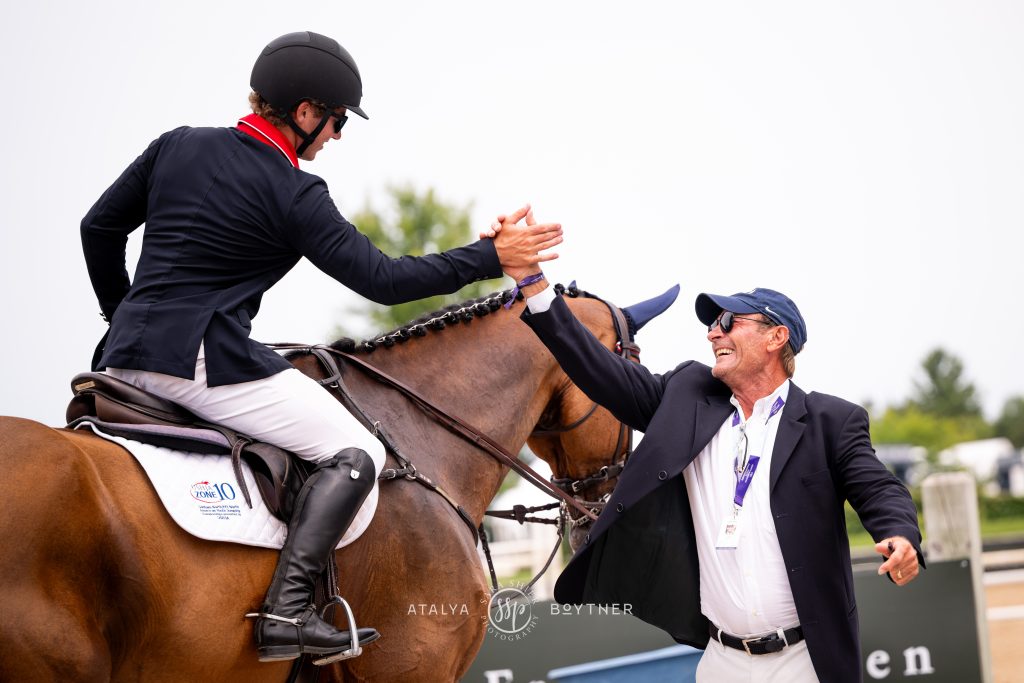
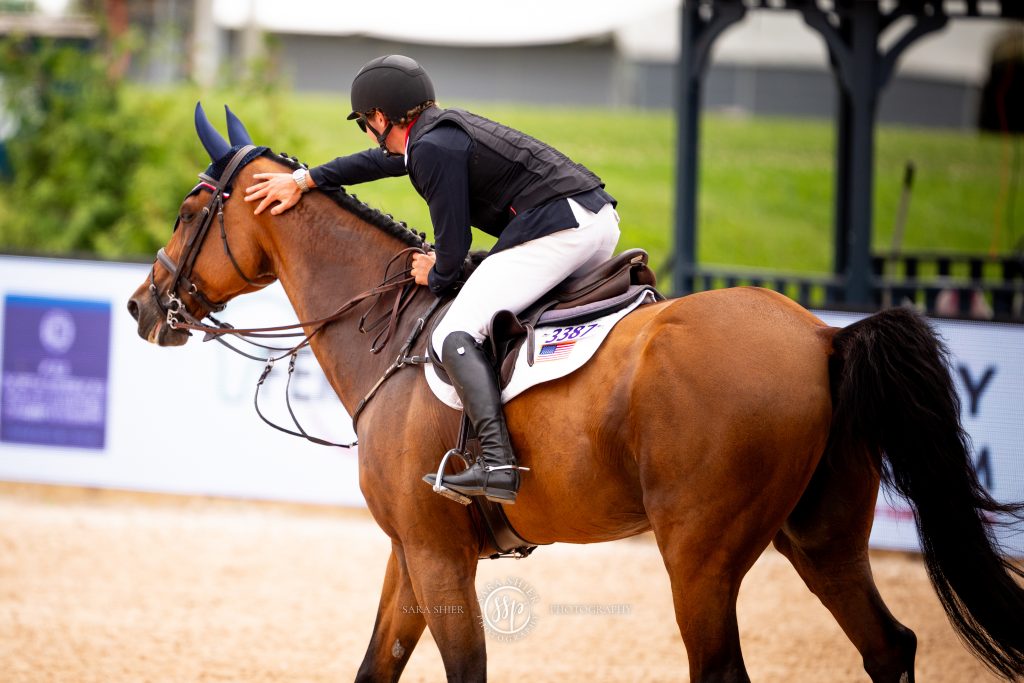
He also felt something else out there: the pull of Zone 10. “It’s so cool how strong of a community we have,” he says. “Everybody showed up to watch each other’s divisions. Really strong, tight-knit community.” Riders and parents alike kept telling Stacey the same thing about her son—that he belonged there. “I knew it was unexpected that Grayson was on the Young Riders team, but we all knew he was ready and capable.”
The Long Game
If there’s a lesson in Grayson’s rocket-ride from the 1.10 m to Young Rider gold, his mother is clear about where the credit belongs, and it isn’t luck.
“Alicia and Alysia’s theory has always been: if you ride smart and you ride well, then you’re ready to move up,” Stacey says. “If you’re racing around and hoping for the distances, hoping for the rails to stay up, then you’re probably not ready. Grayson’s entire mentality the whole time was, ‘What can I do to move up?’”
The equitation foundation, the years of hard work and doing right by the horses, and the boutique, individualized program that never took its eye off the ball provided the winning formula. “I do understand how remarkable it is that he went from the tens to the 45s and had no drop scores at Young Riders. I attribute it to his incredible hard work, but also to going through the steps of learning to be a good, thoughtful rider, learning to ride safely and accurately instead of just fast. That’s what got him where he got.”
These days, Grayson is navigating a new kind of adjustment: he just wrapped up his first month of college classes. He’s making friends and settling in, but the horses are never far from his mind.
“It’s a big change,” he says. “I do miss riding everyday.”
Given how far he’s come in so little time, the sport almost certainly hasn’t seen the last of him.