Brought to you by The Plaidcast
A horse jumping 1.20 meters successfully in Europe does not automatically arrive in the United States ready to walk into the same division with a new rider. That does not mean the horse suddenly became less talented. According to show jumper and sport horse producer Sonja Ochadlik, it may simply mean we are underestimating how much of the horse’s life has changed.
When a horse arrives in a new country, the obvious change is geography. But Ochadlik points out that the horse may also lose many of the familiar parts of its daily system.
Its groom changes. Rider changes. Feed may change. Turnout may change. Barn routine changes. Even the basic style of riding may be different.
A horse that previously lived in a relatively quiet European yard might suddenly arrive at a busy American facility with dozens of horses, constant lessons, music in the aisle, leaf blowers, golf carts, and a completely different level of activity. Those things may seem ordinary to us, but the horse may literally never have seen them before.
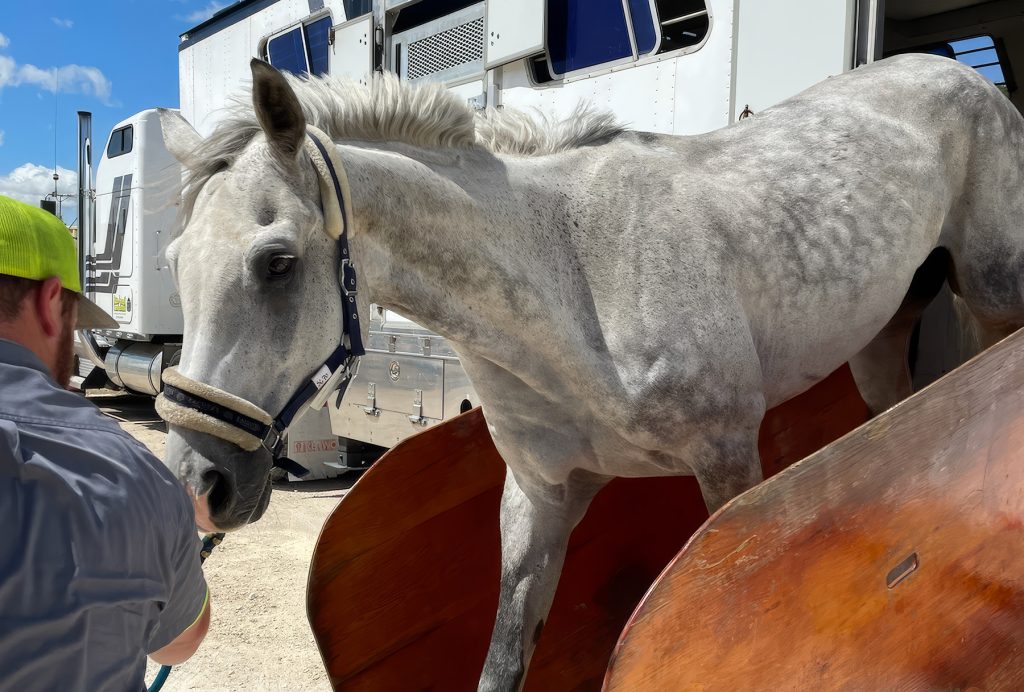
Plus, getting here is stressful. The horse leaves its home yard. It may stay at a horse hotel. Then comes shipping to the airport, air travel, quarantine, unfamiliar handlers, another transporter, and finally the destination barn—or in some cases, a horse show. Depending on the horse and the quarantine process, it may also have had time out of work.
Then it meets another new group of people with another set of expectations.
“Things don’t smell the same,” Ochadlik said. “Their routine is totally trashed.”
Even if every person involved handles the horse professionally, the cumulative effect is still enormous.
There are also differences between how Europeans and Americans ride. Speaking broadly, she describes many European horses as being accustomed to more contact, a deeper seat, and more consistent support from the rider’s hand, leg, and seat.
Many American riders come from a forward riding system with a lighter seat and lighter contact. That does not mean every rider or horse fits neatly into one category, but a horse trained to expect one type of support may genuinely feel confused when a new rider suddenly communicates differently. That horse may need time to understand the new system.
One of the most important expectations to manage is competition level. A horse may have been comfortably jumping a certain height before importation and still benefit from doing something easier when it arrives.
“There’s no shame in taking it down a level,” Ochadlik said.
That gives the horse time to understand its new rider, new program, and new environment without simultaneously asking it to perform at maximum difficulty. Ochadlik emphasizes that a horse needing this transition does not mean it was a bad import.
“They are an animal, they’re not a machine, and they need time to acclimate,” she said.
That individuality means results may vary. You’ll hear someone imported a horse Monday and showed Friday. It jumped well. Therefore, it can appear that another horse struggling with that timeline must have a problem. But Ochadlik cautions against drawing too much from those examples.
A horse may adapt immediately and remain successful. Another may appear fine initially and become stressed later. Another may need considerably more time to settle into its new routine. There is no single response that proves whether the horse was a good purchase.
Importing is expensive, which can make buyers understandably eager to start showing, moving up, selling, or proving that the purchase worked. But Ochadlik argues that the cost is also a reason to protect the investment by giving the horse enough time to settle. Give the horse the best chance of succeeding in its new program, whether the long-term goal is showing, selling, or building a partnership.
To hear the full conversation with Sonja Ochadlik about purchasing and importing horses from Europe, listen to this episode of The Plaid Chat. Subscribe and follow The Plaidcast on your favorite podcast platform for more conversations from throughout our industry.