Brought to you by The Plaidcast
Most riders have been told some version of the same advice: be careful. Don’t make a mistake. Don’t mess up your horse. Don’t miss. Don’t get it wrong.
But there is a point where caution stops helping. Trainer, coach, and author Andrea Waldo has seen perfectionism turn thoughtful riders into hesitant ones. Instead of riding toward what they want, they start riding primarily to avoid doing something wrong.
Waldo has experienced that in her own riding. While preparing at the upper levels of eventing, she was struggling with long approaches to large oxers. She was so focused on making the correct decision that she was having trouble making a decision at all.
Finally, her coach had enough. “For the love of God, woman, just make a decision even if it’s the wrong one,” he told her.
Afterward, he explained why.
“You need to be decisive. All of this being careful is actually making you less good and less safe.”
There is nothing wrong with thoughtful riding. Good riders should assess the question in front of them, make adjustments, and care about giving their horses a safe and effective ride. But thoughtful riding also requires action.Perfectionism can replace that action with hesitation.
Waldo describes realizing that the more she tried not to make a mistake, the worse she rode. Instead of committing to a plan, she became preoccupied with choosing the perfect plan. At some point, the search for the perfect decision gets in the way of making the good decision available right now.
That matters in any discipline, but riding makes the consequences particularly obvious. Horses need clear information. When the rider is constantly second-guessing, the horse is left waiting for an answer that may never fully arrive.
Waldo is careful about what she means by riding “positively.” She is not talking about positive thinking in the motivational sense. She means riding with a clear intention: “Yes, this is what I’m doing.”
That clarity can be more important than waiting for certainty. Riders rarely get certainty anyway. The distance changes or the horse reacts differently than expected. There is no way to ride a live animal while guaranteeing that every decision will be correct. The skill is making the best decision you can and continuing to ride from there.
Eventing has reinforced that lesson for Waldo because the sport sometimes demands a certain amount of what she calls getting “scrappy.”
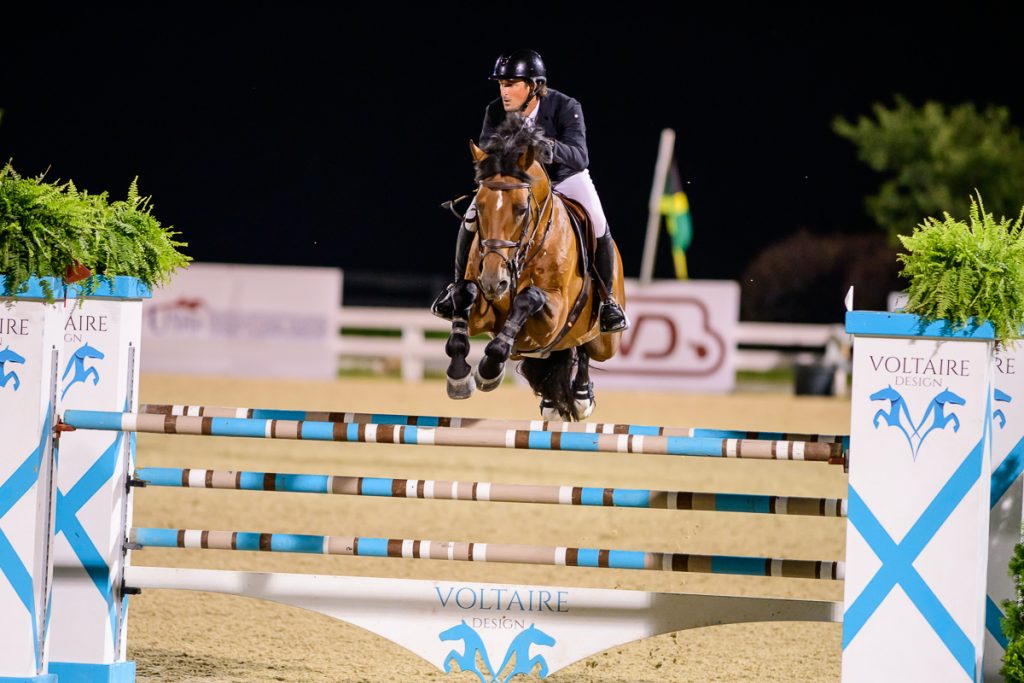
“There are just times when you jump into the water completely wrong, and you’ve got a fence in front of you, and you gotta get it done,” she said.
In that situation, the rider does not have the luxury of worrying about whether the recovery looks elegant.
“You’re always safer kicking on than, you know, again, being indecisive,” she said.
Perfectionism can make that harder because it changes the rider’s goal. Instead of asking, “What does my horse need from me right now?” the rider starts asking, “How do I make sure I don’t look wrong?”
Waldo sees that particularly clearly when teaching clinics. Riders become so concerned about looking awkward that they interpret awkwardness as evidence that they are doing something incorrectly. But when riders are learning, awkward moments are inevitable. If the entire goal is to avoid those moments, riders may become so cautious that they stop giving themselves the opportunity to learn.
That can be especially limiting when a rider is working with a young or inexperienced horse. The rider may feel responsible for never confusing the horse or never making a training mistake. Waldo described one teenage student who was so worried about “messing up” her young horse that the fear itself became a problem.
“She’s trying not to make a mistake as opposed to trying to succeed at something,” Waldo said. “And that caution makes it really hard for her to succeed.”
Trying to succeed requires directing your attention toward the task. Trying not to fail directs your attention toward every possible way the task could go wrong. One creates action. The other can create paralysis.
No rider should stop caring about accuracy, safety, or good horsemanship. The answer to perfectionism is not recklessness. It is accepting that good riding requires decisions before there is perfect information.
Sometimes you will make the wrong one. Then you make the next decision. That willingness to act, adjust, and continue may ultimately make you a better rider than trying to eliminate mistakes before they happen.
To hear the full conversation with Andrea Waldo and Tonya Johnston, listen to episode 492 of The Plaidcast. Subscribe and follow The Plaidcast on your favorite podcast platform for more conversations from throughout our industry.