
Brought to you by The Plaidcast
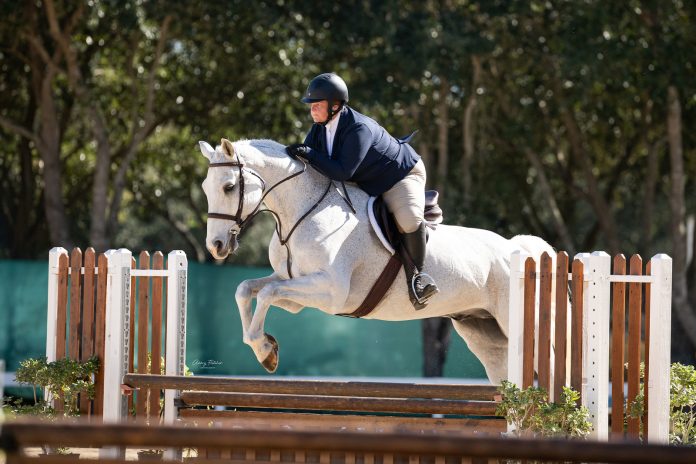
For years, lower-height divisions in the hunter ring were often viewed as a stepping stone. Or even in some cases, a place riders ended up rather than chose. But that perception is changing.
Across many circuits, 2’6” divisions are becoming deeper, more competitive, and more intentional. What was once considered a “step down” is increasingly becoming a strategic choice.
Jane Ehrhart, who runs River Hill Farm, a private training facility based in Wellington, Florida, has seen that evolution firsthand. Her customers have had major wins at USEF Pony Finals, Wellington International, all of the indoor national finals, as well as the Devon Horse Show.
“Once upon a time, the low adult division was not popular, not cool,” Ehrhart says .
Now, those same divisions are drawing top-quality horses and highly competitive riders. Classes are large, the under saddles are deep, and the level of riding continues to improve. “They are California split every weekend, and the under saddle is fierce,” Ehrhart explains .
Why Riders Are Choosing Lower Heights
The shift isn’t happening by accident. Riders are making more deliberate decisions about where they want to compete and what allows them to perform at their best. For many adult amateurs, that means choosing divisions that align with their goals, their schedules, and what works best for them as riders.
Instead of focusing only on moving up, riders are increasingly focused on finding the divisions where they can ride effectively and stay competitive.
What makes these divisions particularly interesting is that the level of competition is evolving with the change. “There are horses that cost gazillions of dollars… horse of the year champions at Devon doing those divisions,” Ehrhart notes .
That kind of investment raises the standard across the board. Riders are showing up with quality horses, strong programs, and clear goals. The result is a division where the overall level of riding continues to rise. The under saddle becomes especially competitive, and success depends on consistent, polished performances.
Removing the Stigma
One of the biggest changes driving this trend is the gradual removal of stigma. As more experienced riders enter these divisions, that perception is shifting. What once felt like a step back is now recognized as a practical, and often smart, choice. Riders are beginning to understand that height doesn’t define competitiveness. The quality of the ride does.
For many, the appeal of these divisions goes beyond ribbons. They offer a way to stay competitive while making practical choices about what works best for each rider. As riders balance careers, families, and long-term goals, flexibility in how and where they compete becomes increasingly important.
These divisions allow riders to remain engaged, challenged, and successful without forcing them into a one-size-fits-all model of progression.
What This Means for the Future
As participation continues to grow, lower-height divisions are likely to become even more influential within the sport. They are already attracting stronger horses, more experienced riders, and greater attention from trainers and judges alike.
And as that trend continues, the definition of what it means to be competitive in the hunter ring will continue to expand.
Want more insight from Jane Ehrhart? Listen to episode 476 of The Plaidcast and subscribe on your favorite podcast platform for conversations with the most influential voices in the equestrian world.