By SARAH WELK BAYNUM
FLAIR® Equine Nasal Strips are popular among top equestrians in both the sport horse and racing industries—proven to reduce airway resistance and improve conditions such as EIPH in equine athletes. And it all began when one veterinarian called another.
“Ed Blach called me one night and asked why no one had thought about a Breathe Right® strip for horses,” owner and co-founder Jim Chiapetta tells The Plaid Horse.
The two initially met in college and started in veterinary practice together. After many hours of lab research, they discovered the perfect placement of a nasal strip prototype on a horse’s nose to maximize airflow. Then, Blach and Chiapetta set a meeting with the human Breathe Right company to pitch them the idea.
“They weren’t very interested in working with us at first, and said they had talked to veterinarians before and that it would never work,” says Chiapetta. “I said, ‘Let me just show you.’ I even brought a horse skull into their office to demonstrate how it worked. The CEO sat up in his chair, looked at me and said, ‘Oh, nobody has ever shown me this—this will work!”
The two veterinarians speculated that with the correct placement and shape of their new nasal strip, they could improve breathing and reduce exercise-induced pulmonary hemorrhage (EIPH or “bleeding”) by improving airway resistance.
The commercialization process of the first FLAIR Strip began at Kansas State University with another veterinarian who looked the device over.

“He looked at a nasal strip and he just laughed. He said, ‘This isn’t going to do anything.’ However, he put it on seven horses that were known bleeders and it reduced bleeding in all of them,” says Chiapetta.
FLAIR Strips initially launched with the human Breathe Right company, but Breathe Right’s goal was to grow a human consumer product company, not an equine one, so the board advised the CEO to drop the product.
“So we crossed our fingers, mortgaged the house, started our company and product usage began to grow,” says Chiapetta.
Proven Effective
In 1999, FLAIR Strips were introduced at the Breeders’ Cup, and in 2000, they were being used by horses in the Summer Olympics in Sydney, Australia.
“Three of the eight races in the 1999 Breeders’ Cup were won by horses wearing FLAIR Strips,” adds Chiapetta.
FLAIR Strips don’t help horses breathe in more air—they allow horses to take in the same amount of air with less work. It’s similar to a human breathing through a stuffy nose versus a clear one. With congestion, the nasal passages are narrower, making it more difficult to breathe. In horses, the harder they breathe, the more their nasal passages narrow.
Being able to breathe easier benefits horses at all levels of fitness and in high-intensity disciplines maintain respiratory health and optimum performance. Many riders also report that horses wearing FLAIR Strips are more relaxed and focused.
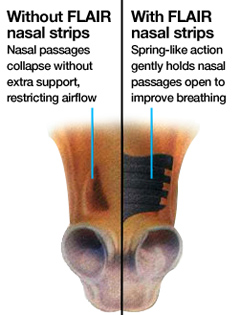
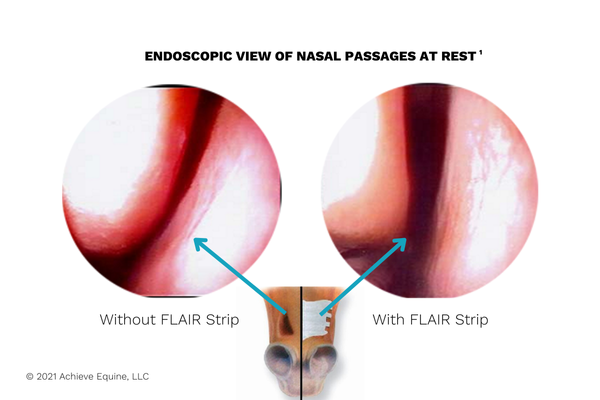
Horses are obligate nasal breathers. This means that unlike humans, they only breathe through their nose during exercise. All the air to power exercises comes in through the nose, travels through the upper airway, through the trachea, and then into the lungs.
“Think of the horse’s airway as a tube. What could happen if that tube is crimped or obstructed at any point? When you can alleviate that resistance, it allows air to move easier in the entire airway,” says Chiapetta.
The spring-like action of the FLAIR Strip supports the soft tissues over the nasal passages, reducing the tissue collapse that occurs during exercise. By improving airflow at the nasal passages, airflow is improved throughout the entire airway, from nostrils to the lungs.
“It supports that tissue over the nasal passages so they don’t get drawn in as much when the horse is breathing in. If you notice when a horse comes back from work and they’re breathing hard, you can see that tissue plain as day getting sucked in,” he adds.
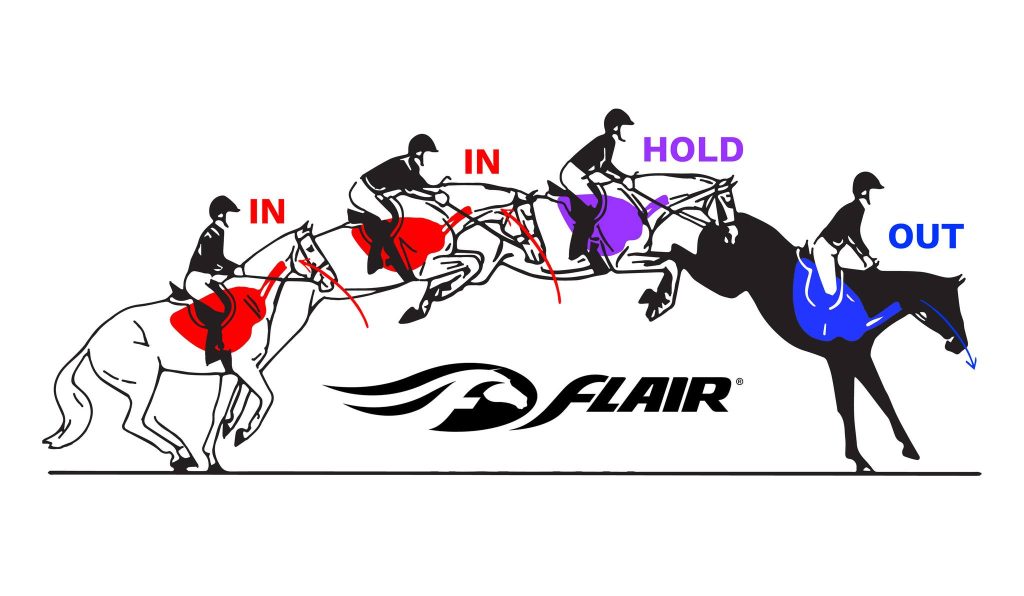
Horses hold their breath while they jump. By using a FLAIR Strip, it makes it easier for jumping horses to bring air in as they prepare to jump and when they begin taking in breaths again after they land.
Not only do horses breathe better, but they also fatigue less quickly when wearing a FLAIR Strip.
“One of the major causes of fatigue is the depletion of energy needed for the horse to perform. By reducing the effort needed to bring air into the lungs, horses get oxygen more efficiently when using FLAIR Strips,” explains Hanna Hartman, director of operations. “In fact, horses wearing FLAIR Strips use about 5-6% less energy.”
FLAIR Strips don’t just allow horses to breathe better during strenuous exercise, they also improve recovery, which is imperative for multi-day competitions.
“Supporting the nasal passages during recovery also makes it easier for horses to cool out and recover quicker, leaving more energy for tomorrow,” says Hartman.
“That’s why FLAIR Strips help during recovery as well, because they’re still supporting that tissue when the horse is breathing in hard, so the nasal passages don’t collapse. Supporting the nasal passages when horses are puffing post-exercise is important to continue reducing nasal passage collapse when they are trying to rebuild oxygen reserves and release carbon dioxide,” adds Chiapetta.
Reducing Equine Airway Condition Symptoms
In addition to providing benefits for all horses during intensive exercise, FLAIR Strips benefits horses with certain airway conditions. One of the more prominent benefits is for horses with EIPH.

Exercise-induced pulmonary hemorrhage (EIPH) is bleeding that occurs in a horse’s lungs and airways during or after strenuous exercise. EIPH is common among equine athletes, and is a silent injury that often goes undetected.
Numerous studies show that essentially all horses are affected to some degree by EIPH during intensive exercise. Only 5% of horses show blood in the nostrils, though. Lung damage from repeated EIPH episodes can even shorten a horse’s competitive career.
However, there is no known method to eliminate EIPH—only to reduce it.
Clinical studies have shown that EIPH is reduced in horses wearing FLAIR Strips. The only other clinically proven product to reduce EIPH is Lasix.
“Other conditions veterinarians recommend the use of FLAIR Strips for include roaring, DDSP, heaves, and asthma,” says Chiapetta.
“We receive testimonials from riders across the world in many equine sports about the benefits provided by FLAIR Strips,” says Hartman.
To learn more about FLAIR Equine Nasal Strips, visit https://flairstrips.com