How Emily Elek built one of America’s most influential pony programs through slower training, growing horsemanship, and asking more from kids.
BY PIPER KLEMM Ph.D.
In 15 years of both covering this sport and riding with Emily Elek, I have never written an article about her. To know her is to know that the journalism needed to capture her would be almost impossible. I’ve never been up for the challenge. I’ve tried to pay others to capture her, to see her in a certain light, yet all of those drafts have either never arrived or fallen lifeless on the page.
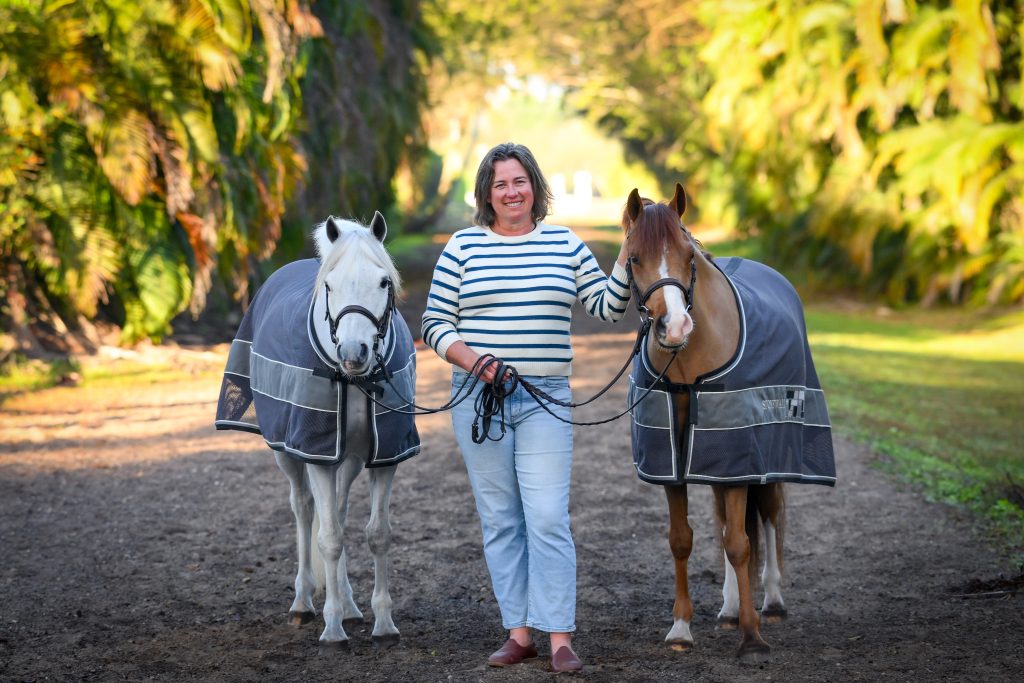
This was finally the year we got a photoshoot, and as I sit here worrying about whether I will get her right, I am reminded, with some relief, that she doesn’t care. She doesn’t care what this article says, what the internet says, or much of anything else happening in the world. All she wants to do is train ponies.
When I decided that we needed to give away a pony in an essay contest of the May/June 2026 issue of The Plaid Horse, I picked up the phone to make the obvious call to Elek, the owner of Stonewall Farm, in Ixonia, Wisconsin.
As a trainer who has qualified more than a thousand ponies for Pony Finals and built one of the largest pony breeding, training, sales, and leasing operations in the country, I asked Elek, “Can we give away a pony in any essay contest?”
“Yes,” Elek said without hesitation, before asking the only question that could possibly matter to her.
“Can I pick out which pony?”
That answer sums up Elek: her signature nervous giggle and an instant “yes,” followed by the insistence on choosing the right animal for the job. She’s built an improbable career around doing the right thing and giving back, a philosophy that has quietly made her one of the most influential pony trainers in America.
Seven Riding Lessons
“If you know me, I didn’t have a plan for any of this,” Elek says with a laugh.
She did not grow up in a horsey family. For her seventh birthday, her parents gave her seven riding lessons. It was a stretch for them, and the beginning of everything.
Elek grew up obsessed with horses in a middle-income Wisconsin household, the kind of kid who drew horses, wrote about horses, and once wore her breeches to school so she’d be ready for the barn afterward.
“I had a very supportive mother,” Elek says. “She loved the animals too.”
What followed was the older, scrappier kind of equestrian education: an eager kid who wanted nothing more than to be at the barn brushing ponies, riding ponies, hanging out with ponies, and spending time with the horse people who gave her one opportunity after another.
Elek has spent the second half of her career turning around to look back at the kid she used to be, admitting it is “kind of wild” that people now fly to her rural Wisconsin farm to try ponies.
“As I’ve gotten older and been able to give back more,” she says, “I look at all the opportunities other horse people gave me over the years. I ask myself ‘How can I help kids do more in the sport?’”
A Hundred Ponies and No Lesson Bill
The business Elek built to answer that question is, in her own words, “a little non-traditional.”
She doesn’t run a conventional lesson program or have students paying by the hour. What she has is ponies, around 100 of them, a number Elek tries, with mixed success, to hold the line at.
“The ponies have been so good to me and my business,” Elek says. “They’re responsible for so much of where I am right now.”
The kids come to the ponies, not the other way around, and on Elek’s terms, which are, by modern show barn standards, almost radical.
The ponies spend much of their time outside with friends in deep straw-bedded turnout shelters and plenty of hay feeders, because that’s what’s best for them and their mental state. The kids slog through the mud to catch them, pick dirty hooves, and tack up themselves.
“They don’t complain about it,” Elek says. “And if they do, they probably just won’t come back. And maybe that’s okay.”
That filter is the entire admissions system.
Stonewall’s recent open house captured it perfectly. It was posted publicly on Facebook, open to pretty much anyone, with Elek teaching for free for three days. Day one focused on groundwork and welcomed all ages. Day two covered flatwork, open to any rider who is pony-sized. Day three was for jumping and functioned as tryouts to join the riding team.
Students who make it ride a minimum of three days a week, year-round, no matter how hot, cold, or miserable Wisconsin decides to be.
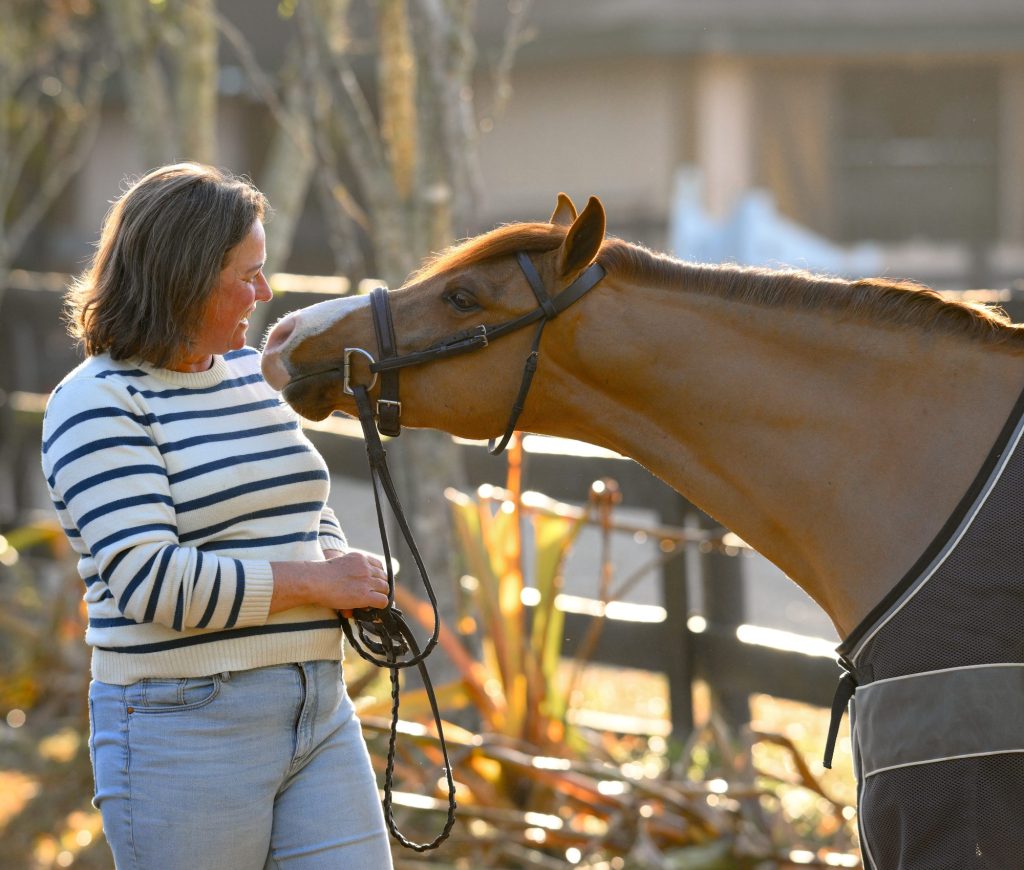
Elek doesn’t charge for the riding or the training, an old-fashioned bargain that comes from putting in the work. Ride consistently and well, and earn more time in the saddle, typically beginning at local shows. Continue to step up, and the horse shows get bigger. Over the years, Elek has helped students from working-class backgrounds compete at Pony Finals and the country’s largest horse shows against some of the sport’s most prestigious pairs.
But the students don’t dictate the program or pick their ponies, and nobody calls a child who stops showing up. The consequences are organic: you don’t get the horse show, you don’t ride the nicer ponies, you don’t jump as much. If a rider wants more, there’s always more to earn.
Opportunity is based on performance. Elek can check in on her barn and Ring cameras from any horse show and see who is riding without their stirrups, always noting who is asking for more ponies to flat or coming out extra days.
Elek laughs at the suggestion that any of this reflects managerial genius.
“I am definitely not a Type A person,” she says.
Instead of a clipboard, she spends time with the animals. After teaching more than 40 rides during the recent open house weekend, she lingered just to watch the mares explore a newly fenced field.
“At the end of the day, I’m just a little horse nerd,” she says. “That makes me really, really happy.”
Selecting for the Wrong Kind of Brave
There’s a subtler purpose behind the open-invitation model, and again, it goes back to the kid Elek used to be.
She was shy, painfully so. She found her people at the barn, but walking up to a famous horseman to ask for help was unthinkable.
“As much as the greats would have probably helped me, there was no way at 18 or 20 years old I would have walked up and asked,” she says.
It is one of the sport’s favorite pieties: I’m happy to help anyone who asks.
But are we selecting for the right things?
We’re selecting for people who are socially brave enough to ask for help. Does a kid who can’t work up the nerve to approach a legend love horses any less?
Someone once asked Elek what made her own business so successful. Her answer? The invention of texting.
She’s not entirely joking, and her open house model is the institutional fix.
Since everyone is invited—riders, auditors, trainers, parents, breeders, anyone—nobody has to be brave enough to ask, and this year’s event drew more outside trainers than ever before.
The kids Elek hopes to reach are the ones obsessed with horses who don’t have “the ask” in them, who don’t see the pipeline, who don’t know anyone who would ever let them in. She simply removed the door.
Teaching Thinkers
Spend any time around the sport’s perennial complaints and you’ll hear it: kids these days don’t tack up their own ponies, don’t do the work, and don’t know anything.
Elek responds with a question. “Do we give them the opportunity to do those things?”
Her conviction and spine of the whole program is the belief that kids can do hard things, and that this sport remains one of the greatest teachers of bravery and resilience.
“Somewhere along the line,” she says, “it became easier not to ask them. I just don’t want that to be me.”
At Stonewall, eight-, nine-, and 10-year-olds practice shoulder-in and leg-yield. Is it perfect? No. The point is helping them understand how a pony works.
Can you move your pony’s body parts? Where is his nose, his hindquarter, his shoulder? Why did that line become seven strides instead of six? Did your pony shift and become crooked?
Elek approaches training as a diagnosis. What is the problem, what are its parts, and how do we fix each piece. She wants kids thinking that way from the start.
“Turning them into thinkers,” she explains, “not just, ‘I was told to go do that, I’m on a pre-programmed animal.’”
The structure of her business makes this possible. A conventional barn is customer-based and the customer is always right, which quietly bends every decision toward short-term satisfaction. Elek’s riders are students, not customers, and their results come organically as the mostly green ponies improve, supplemented by the made ones, for sale or lease, that cycle through.
Made horses matter too. Kids need early-on revelations to be successful trainers and show riders in our sport.
“You need the kids to kind of go, ’Oh, right.’ This is what I’ve been trying to replicate when they’re riding green ponies,” says Elek.
But the green ponies teach something the schoolmasters can’t.
“You’re going to get off your training track a whole lot faster on a small green pony in my barn than you are on some made-up animal,” Elek says.
The made (and expensive) pony does its job. The green pony that has never been to a horse show and doesn’t like the far end of the ring forces its rider to think ahead and give it confidence. The kids who learn to ride through problems become the catch riders other trainers can call, rely on, and give opportunities to, from prepping ponies, to doing warm-up trips and helping qualify ponies for finals. Opportunities snowball and can quickly become a lifelong career.
Against “Just in Case”
The sport attracts Type A personalities, and in some of them preparation curdles into compulsion.
The pony gets lunged whether it needs it or not, the prep class entered whether it’s useful or not, the professional ring-riding the pony that morning, the flower box schooled, the lead change practiced one more time, and every contingency preempted. This leads to just-in-case training, which can push a pony past their natural limits and sensible physical and emotional boundaries.
“The level of training you sometimes see people do so that they never, ever have an issue puts so much more wear and tear on the horses and the people,” Elek says.
And it doesn’t necessarily teach anyone anything.
“You might win at the horse show,” Elek says. “But is your pony truly better trained for it? Has your kid learned something? Or have they just learned how to ride a course really well?”
Eventually, the fluke will come. Elek can tell you exactly what many riders experience during their first December at the Ledges Winter Series. You think you’re ready, and then the pony spooks at a number on the wall, or somebody walks down the stairs just as you’re jumping into the one-stride.
The temptation is to blame the environment and have “solutions” like, “Should we post a sign by the stairs?”
“No,” Elek says. “That’s not how we do things. I want this pony to go to Devon in five years and be totally fine when the strollers arrive and somebody opens an umbrella at the end of the ring.”
Instead, her kids learn to answer the questions the sport will eventually ask. What do you do when the pony spooks? When he lands and runs out? Slow down, sit up, correct with the right rein and the left leg, re-approach. Focus on the fix of the problem, which was the steering, not the speed.
Elek has watched top riders pull up and leave the ring the moment something goes wrong.
“I’m just like, wow,” she says. “Is this what we’re teaching?”
Her school teaches the opposite reflex: heels down, pick your head up, make a circle. Figure it out.
At the recent open house, none of it was perfect, which was the point.
Elek turned from one student to check on another, heard an “Oh,” and looked back to find a little girl in the dirt, literally spitting it out of her teeth. She got water, got back on, and rode transitions until she could ride them well. Then they talked through the mechanics of how she’d gotten ahead with her body, why the pony was behind her leg, and how to fix it.
You can teach that to a 9-year-old, Elek insists, if you’re not afraid to.
“This is why we buy ponies for kids,” she says. “They can learn to roll with the punches a little bit.”
And when a child is stuck at the edge of her own fear, Elek responds with the same clarity she’d offer a green pony.
While teaching a girl who was scared to canter and had settled into kicking and pulling at the same time, Elek finally told her she had two choices.
“You can canter this pony or not,” she says. “But you’re not allowed to kick him and pull on the reins. That’s unclear, it’s unfair to the animal, and we don’t do that here.”
The girl took a deep breath, grabbed a little mane, and cantered the pony.
American Pipeline
If Elek’s teaching philosophy is the heart of her program, the breeding operation is its masterwork.
Nearly every horse showing successfully in America today was bred in Europe, where it’s cheaper to produce them. The Europeans have the infrastructure for starting young horses, the professionals who know them, and centuries of purpose-breeding behind them.
Against that backdrop, what Elek has built in Ixonia is also a category unto itself: a complete, closed-loop American pipeline.
She breeds the ponies. American kids and young professionals start them under her supervision. They do their first shows, move up through the green divisions, and become pony hunters. At the peak of their value they go out on lease throughout North America.
And then they come back. Sometimes after a loss of confidence, an injury, or the occasional loss of reputation even the fanciest children’s ponies can face. They step down a level, and down again. Some mares become broodmares, while others retire at the farm. Many of the ponies Elek has owned since birth will remain with her for the rest of their lives. Even many of the ones she has sold have a way of finding their way home.
That stewardship model changes the training equation. When you’re bringing up a 4-year-old you plan to know at 17 and even 25, you think hard about the steps you skip knowing you’ll be the one paying for them. Train a pony to carry itself with sound biomechanics, and it can teach children well into its thirties. Skip the foundation, and the bill arrives with interest.
“I want to see my ponies in their 20s happily doing a job, whether they’re teaching a child to canter or helping teach the next generation of riders at the farm,” Elek says. “I don’t want to see ponies that got overfaced early, that lost their confidence, that dislike people or dislike working.”
The purpose-breeding shows. These are ponies that like working, like children, and enjoy jumping. They are the kind she can turn loose in the indoor and watch jump the outside line by themselves, just because it’s still set up.
What has changed over her career is her ability to give them the slow, boring layers of confidence and fitness. In her 20s, she needed to sell a pony at 4 or 5 to keep the farm going. Now, her homebreds often hit the circuit at 7, 8, or 9—older, stronger, and built to last.
Slower and Slower
None of that means Elek has embraced the current trend of leaving young horses untouched. Her views are more nuanced than either side of that debate, rooted in her own experience.
Both of her childhood ponies were purchased at 2 ½- to 3-year-olds and were showing in the green divisions before they were biologically 4. Horrifying, by current standards. Yet both had careers well into their 20s, and their bloodlines run through her breeding program today.
Her conclusion isn’t to start later, but lightly. She likes backing ponies at 2 ½ to 3, teaching them to walk, trot, canter, and pop over a few crossrails at 3. Then, crucially, not showing them on a circuit right away.
A pony that knows its job young spends less of its later life on the lunge line or being schooled into the ring. The economics reinforce the horsemanship: in today’s market a green pony isn’t getting a job until they are 6 or 7 anyway, so nothing is gained by rushing a baby to the ring.
Elek is also quick to acknowledge how much the sport has changed. The 1990s meant fewer shows, natural footing, and more turnout. Now, the sport has far more of the first and far less of the rest, which is precisely why she controls every variable she can.
She also has little patience for bargain-hunting on a young pony’s education. People regularly ask her why they shouldn’t simply free-lease a green pony.
“It’s a better investment to have it with the right people,” Elek says, “with everything done correctly up front, than to get greedy now.”
Lulu
Ask Elek how she evolved into a trainer who prioritizes a slow and steady approach, and the answer is not a theory. It’s a pony.
When asked which pony out of the thousands she has trained has truly taught her the most, one name stands out: Hillcrest’s Lorelei, “Lulu,” a small pony hunter who passed away recently and whose story Elek has carried for decades.
Lulu was exceptionally talented. She was a machine who won a lot, including indoors as a 7-year-old. She was also pushed too hard, too early, without the base of fitness she deserved.
The circumstances were human and ordinary. Elek bought her while pregnant with her younger son, Matthew, and couldn’t ride the pony herself, yet the shows kept coming. The pony was winning at the biggest shows in the country, and she could hear the whispers: keep going, keep pushing.
Eventually, Lulu developed behavioral issues from the pressure.
Elek owned Lulu for her entire life until she passed away earlier this year. The pony gave her two lovely foals and was still teaching kids at the end of her life, always well cared for. But Elek can’t shake the counterfactual.
“She could have been a different pony,” Elek says. “She could have gone on to teach more kids in the division if I’d taken my time a little more at the beginning and focused on fitness, balance, and teaching her how to manage her own emotions. I do feel like I let her down a little bit.”
Elek allows herself some grace.
“The horses don’t care where they’re winning,” she says. “That’s for us, a lot of times.”
But the lesson became permanent. Another year devoted to flatwork and strength would have been right for Lulu, and it’s a call Elek now makes without hesitation.
“Learning to tune out all of that external noise was one of the many things she solidified in me,” she says. “I wholly trust my experience when it comes to a pony’s timeline.”
The sales business often makes that discipline expensive. There is a peak moment to sell a pony, and taking your time can undermine its value. Some ponies can withstand being pushed to that peak; some can’t.
“And if they can’t,” Elek says, “maybe you made a lot of money, but have you set this horse or pony up for a harder life? I have to approach it in a way where I’m always trying to do better for the animals.”
The Promise
Of all the Emily Elek stories and moments I’ve collected over the years, what has always defined her for me is the trust, the preparation, and the faith in animals and people. No matter what has happened to her in the past, she enters every relationship with horses and humans anew, taking each one at face value and refusing to let someone else’s actions dictate the next interaction.
The first time I ever showed Reuben in the coliseum in Minnesota, I was terrified. He became our horse because he wasn’t always consistent or reliable, and I have always recognized my limitations.
Standing at the in-gate, shaking and already grabbing a chunk of mane, I asked Elek for the impossible.
“Promise me he’ll do it. Promise me he’ll go out there and jump the jumps and be good.”
A reasonable trainer hedges. Elek didn’t.
“I guarantee it,” she said. “He’ll do it.”
He did it. Years later, I asked the obvious question: “How could you promise that?” No one can promise that.
But the thing about Elek’s program is that the promise was never really a gamble. It was the visible result of years of invisible preparation. The foundation in the training, in the rider, and in the thousands of ordinary decisions made right so that, when faith was finally required, it had already been earned.
“I thought he was a good horse so that he would be a good horse,” Elek said.
No “just-in-case” training required or performed.
Which brings us back to the pony that started this story, the one Elek won’t name until she has read every essay and made the perfect match.
Somewhere out there is a kid who wears her breeches to school, who doesn’t know anyone in the sport, who would never walk up to a famous trainer and ask for help. The essay contest is for her and entry is open to anyone willing to put their love of horses into words.
And 20 years from now, if history is any guide, that pony will be in somebody’s wedding photos.