BY ALEXIS VON ZIMMER
As a NASA Safety/Risk Analyst (ret.), I understood that “safety” is a relative concept. There is no absolute safety, but we can all do what is reasonable in our sport to eliminate or mitigate known and credible risks. As we say in the risk business, using the risk iceberg analogy (see graphic), there will always be “unk-unks” or unknown risks that are not predicted and are thus not addressed. We all know that horses are full of surprises even when we think we’ve accounted for all contingencies!
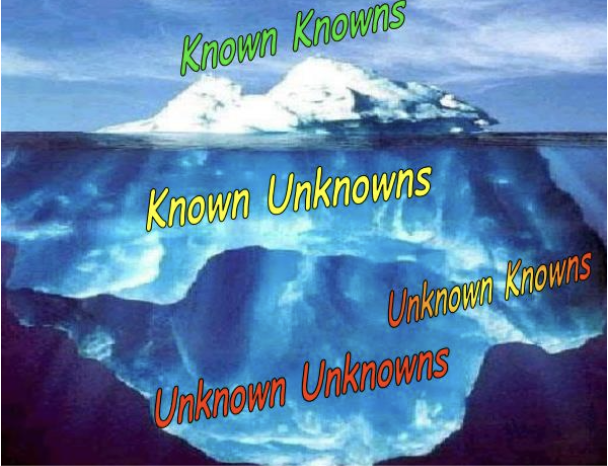
What we don’t know CAN hurt us!
We all started somewhere, and smaller/lower-level USEF/USHJA or unrated shows offer a place for green riders and green horses to learn in a less competitive, lower-cost, and more low-key and welcoming environment compared to larger rated shows.
But does the size or level of the horse show matter when it comes to safety? It shouldn’t! Safe is safe and smart is smart regardless of show size, rating, or level of competition. Unfortunately, for some shows, these factors include budget constraints, and there can be negative and unintended consequences.
An example of “Do the Right Thing” is exemplified at unrated but popular shows in Northern California at Bill Madden’s Brookside Equestrian Park. Well-known horse show manager (ret.) and Big R Judge, Peggy Fackrell, serves as the Technical Advisor and has been a key member of this team for many years. While not required, she would not lend her name to this show series without following USEF rules for common-sense safety, and frankly for liability.
Like all of Brookside’s unrated shows, the recent Fall Finale show with 175 horses followed USEF rules. While not required, this entire show series includes an on-site veterinarian, a USEF steward, a paramedic/EMT, and a farrier. From decades of show experience from coast to coast, Peggy’s position on having these essential support services is clear and non-negotiable. Here’s why these services are seen as critical:
Veterinarian
If a horse has an urgent medical need, there may be no time to waste trying to get an on-call veterinarian to the show. We have all known or experienced an injured horse or one that may even have needed emergency euthanasia to preclude unnecessary suffering. The USEF requires on-site veterinarians at competitions to register with the Federation and adhere to specific guidelines to ensure the health and welfare of the horses. These veterinarians are responsible for monitoring the horses’ conditions and ensuring compliance with competition rules.
Steward
While a steward may come with a price tag, Peggy knows from experience how the steward plays an essential role in ensuring the safety of horses and riders and ensuring adherence to rules and compliance monitoring. Even if a smaller/lower level or unrated show cannot afford a USEF steward, a “schooling supervisor” would likely suffice. The USEF rules for on-site stewards focus on ensuring compliance with competition standards, safety protocols, and proper conduct during events. Stewards are responsible for overseeing the adherence to these rules and facilitating a fair competition environment. They provide the important interface between competitors and the judge and are there to answer any rule-related questions.
Paramedic/EMT
Similarly, if there is a human medical need, minutes can be critical. Further, the Brookside showgrounds are within a few miles of a trauma hospital. This provides participants with the assurance that the show has their safety in mind and is well prepared for emergencies and medical needs. The USEF mandates that medical personnel at events must be readily identifiable, available, and mobile, with a strong recommendation for EMTs or Paramedics to fulfill this role. Compliance with these guidelines ensures the safety and well-being of participants during competitions.
Farrier
What is more frustrating than having a horse throw or twist a shoe and not have a farrier nearby before the next class? Rather than having an on-call farrier as some smaller shows do, Brookside has an on-site farrier to address any real-time concerns. The USEF rules regarding on-site farrier services stipulate that farriers must be licensed and adhere to specific guidelines set by the Federation. These rules ensure that all farrier services provided during competitions meet safety and quality standards.
Liabilities for Horse Show Organizers
While it may be the elephant in the room, the legal accountability and liability of horse show managers is important. Horse show organizers of any size or level face various liabilities, including injuries to participants, spectators, and animals, as well as property damage and negligence claims. It is not unprecedented that horse show managers have been held liable for both horse and human injury and even death if they are found to be negligent in their duties. While many states have laws that limit liability for equine activities, managers may still face liability if they fail to ensure safety or act recklessly.
There is no shortage of documented incidents that have led to legal actions in the equine industry and lawsuits filed against horse shows. In this day and age of Safe Sport and a strong emphasis on horse welfare, coupled with a litigious culture, the need for effective risk management is essential for safer equine events.
One of the most impactful and effective ways to minimize risks to horses, riders, spectators, property, and management of equestrian events of any size or level is to follow the USEF rules that include requirements for veterinarians, stewards, paramedics/EMTs, and farriers. Horse show organizers would be well advised to do the right thing!
Alexis von Zimmer, PhD/DHSc, is an amateur hunter rider who has had the good fortune to train with top professionals and to compete her beloved horses on both West and East Coasts. Now retired, but in her “real life” she performed complex system safety engineering and risk analyses of NASA Ames space life science payloads flown aboard the Space Shuttle and International Space Station, having been recruited following the Space Shuttle Challenger disaster.