
LISTEN NOW
To listen to the Plaidcast, you can use the player above, Stitcher, Spotify, iTunes, Google Play Music, or your other favorite podcasting app!

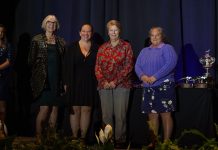
Piper speaks with two legendary horse women, Laura Kraut and Katie Prudent about the new nonprofit program, Road to the Top. Brought to you by Taylor, Harris Insurance Services. Listen in!
GUESTS AND LINKS:
- Host: Piper Klemm of The Plaid Horse Magazine
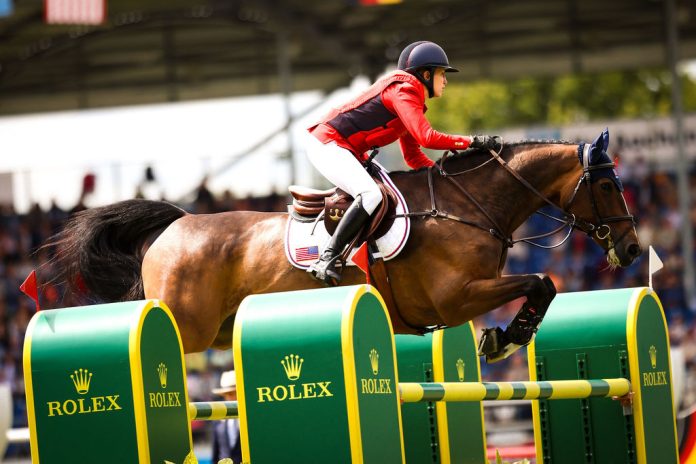
- Guest: Laura Kraut is a world-renowned showjumping grand prix rider and trainer. She is an Olympic and World Equestrian Games gold and silver medalist who was most recently went double clear to help Team USA win the Silver Medal at the Olympic Games in Paris, France. Laura’s competition record is immense and she also runs a sales, training and coaching business based in England and Florida with her partner Nick Skelton.
- Guest: Katie Prudent is a Olympic team member, three time American Invitational winner, USET Whitney Stone Cup winner, and a member of the Show Jumping Hall of Fame. A trainer of countless international level horses, Katie has also trained accomplished riders such as Olympic gold medal winner Beezie Madden, Olympian Reed Kessler, Kim Prince, Elise Haas, and Alison Firestone Robitaille. With husband Henri, she operates Plain Bay Farm in Wellington, Florida and Middleburg, Virginia.
- Photo Credit: Cassidy Klein Media
- Title Sponsor: Taylor, Harris Insurance Services, Taylor, Harris Insurance Services (THIS) was founded in 1987 to provide specialized insurance for all types of equine risk. THIS places their policies with the highest rated and most secure carriers, meticulously selected for reliability and prompt claims settlement. THIS is proud of their worldwide reputation for responsive and courteous service, and welcomes the opportunity to discuss your equine insurance needs and provide you with a quote.
- Subscribe To: The Plaid Horse Magazine
- Sponsors: American Stalls, Purina Animal Nutrition, LAURACEA, BoneKare, Show Strides Book Series, With Purpose: The Balmoral Standard. Good Boy, Eddie, HITS Horse Shows and Great American Insurance Group
This transcript was generated automatically. Its accuracy may vary.
Piper Klemm: This is the Plaidcast. I’m Piper Klem, publisher of the Plaid Horse Magazine, and coming up today on Episode 400, I talk with two legendary horsewoman: Laura Kraut and Katie Prudent. Laura most recently of the 2024 Olympics; and they are going to speak about their new non-profit program, Road to the Top. This episode is brought to you by Taylor, Harris Insurance Services.
Piper Klemm: Before we jump in with Katie and Laura, I want to tell a story that I think I’ve told on the Plaidcast before, but given that it is Indoors time, and its fall time, and there’s so many new people joining us all the time, I will tell it for the manyth time; my apologize to those who know it well.
When I came back to teaching, and I hadn’t taught in a number of years, we were sitting there and doing an orientation, and one of the people said, “you know, you really need to be careful with this generation. You don’t want to grade in red pen, they find it abrasive.” And I sat there, and because I’m contrary, the first thing I thought was “All I want to do is grade in red pen! If they can’t handle red pen, what is wrong with them?” And then the second part of my contrariness, I was like, “I want to use all the red pen in the world and make my class immune to red pen so they’re ready to take on the world!” As most people’s next thought is with pedagogy, “let’s prepare them for literally anything”.
The more I thought about the red pen, it doesn’t matter if you use red pen, it doesn’t matter if you use green pen, it doesn’t matter if you grade in soothing colors; criticism is hard, and criticism hurts, and learning is hard, and having learned is the best feeling in the world, and learning is awful, and frustrating, and exhausting, and all the things. I really started thinking about being a professor, and my relationship with the criticism I’ve received, and wanting to be a perfectionist in this sport.
I sat there throughout the next few days, and I thought about how little people are incentivized to tell you the truth–about yourself, about your riding, about your progress. Every situation in your life, just about, people are incentivised to say, “yeah, yeah, yeah that’s great.” There’s so much less work for them in that. If I just gave everyone in my class a 4.0, it would be so much easier. Everyone would like me, everyone would be happy with me, I’d get great teaching evaluations.
By giving them the actual grade, and holding them to standard, I’m dealing with them wanting to fight with me, and them hating me, and probably worse teaching evaluations, and maybe their parents calling me, and all of these things I’d never have to deal with if I just gave them an A. It’s always easier to hand someone an A. It’s always easier for your trainer to say, “yeah, yeah, yeah, you’re doing a great job.” It’s always easier to compliment you, and be really positive.
There’s really nothing in it to really educate, and really hold you to that high standard, and want it for you even more than you want it for yourself, and show you the pathway further than you can even see it. Any person in your life, who is genuinely knowledgeable, and genuinely gives you good feedback–correct feedback to advance you–is special in your life. Every single person who does that, cares about you; because there’s no other reason to do it. There’s no financial incentives, there are no emotional incentives, there are no time incentives.
Anyone who is knowledgeable, who gives you great feedback, and it’s hard to hear, and it’s brutal feedback, cares about you, loves you, and wants what’s best for you. And it’s hard to hear. You’re going to get feedback and you’re going to go into the bathroom and cry, you’re going to get off the horse and hide in a stall and cry , and you’re going to have moments. It’s so much, but you just need to deal with it. We all need to take a moment and thank, and remember, and respect all the people who give us the hard feedback. The knowledgeable people who want to make us better–the people who risk everything; their reputation, their time, you liking them–everything about themselves–to take care, to do one thing better for you.
They might not always say it correctly, and this is not an excuse to be abusive; this is not an excuse to be abusive to someone else; but they might get excited, they might get passionate, they might not quite fit into today’s world, and yet, they might have a ton of knowledge, and care so deeply for you, and try to grow you. I hope everybody takes a moment and thinks about that as we head into Indoors.
I hope they think about it as we think about the pedagogy of the people we have on the Plaidcast, I hope we think about it with our own trainers. If your trainer is being honest with you, and saying, “you’re not good enough at X,Y, or Z,” you’re training with them because you trust them, and you believe in their knowledge and vision, and you should listen to them, and you shouldnt fight them, and you should put in the work to be excellent, always.
Piper Klemm: Laura Kraut is a world renowned showjumping grand prix rider and trainer. She’s an olympic and World Equestrian Games gold and silver medalist, who recently went double clear to help team USA win the silver medal at the olympic games in Paris, France. Laura’s competition record is immense, and she also runs a sales, training and coaching business based in England and Florida with her partner Nick Skelton.
Katie Prudent is an Olympic team member, three time American Invitational winner, USET Whitney Stone Cup winner, and a member of the Show Jumping Hall of Fame. A trainer of countless international level horses, Katie has also trained accomplished riders such as Olympic gold medal winner Beezie Madden, Olympian Reed Kessler, Kim Prince, Elise Haas, and Alison Firestone Robitaille. With husband Henri, she operates Plain Bay Farm in Wellington, Florida and Middleburg, Virginia.
Piper Klemm: Road to the Top aspires to identify, train, and support talented young American riders, who have the ability and ambition to ascend to the highest levels of showjumping. Road to the Top mitigates a boundary of wealth, providing riders with education opportunities to ride for international caliber events on U.S. equestrian teams. Applicants of Road to the Top will be vetted by Olympians Katie prudent, and Laura Kraut. Once accepted into the program, they will be mentored by Laura, or Katie, through lessons and riding horse management, and business strategies. Road to the Top participants will be provided with horses to compete at major venues at a variety of levels. You can find more information on Road to the Top at roadtothetop.org, where you can find information about applying to the program, supporting the program, and more information about the board and the mission of supporting Road to the Top.
Piper Klemm: Welcome to the Plaidcast Katie and Laura!
Both: Thank you.
Piper Klemm: Laura, let’s start with you. You’re returning from a very exciting Olympic Games.
It seemed like earlier this year people were a little bit struggling to believe in team USA, and yet, of course, you pulled it out again for the silver medal. Can you talk a little bit about your experience leading up to it, and this year, and then the Games themselves?
Laura Kraut: I mean I would agree. It did seem like it came up quickly; this time we spent three years, normally it’s four, preparing for the Olympics. I don’t know, it just seemed like all of a sudden, there it was. I was very fortunate that I had Baloutinue up and running, and he was in great form, and I only competed him probably four or five times prior to Paris, but he was his usual perfect self, and was ready to go. The Olympics were amazing, it was beautiful. Versaille, I mean, it will be interesting to see what LA.. can do, because it’ll be hard to match Versaille. It was well run, the facilities were great, the course design was superior, the whole thing was just really, really good. And we were very happy to come out with a silver medal.
Piper Klemm: Awesome. Katie, last time you were on, we were just starting to talk about you and Laura’s program, Road to the Top. I got so much positive feedback from that conversation, and I know that the program has grown tremendously since then. Can you tell us a little bit about what’s evolved since earlier this year, and how the program’s looking?
Katie Prudent: Laura and I are very excited about this program, and we’ve gotten tremendous support. We’ve been able to raise enough money to basically support two riders, Laura has one and I have one, for this year and next year, on lets say, three to four horses. It has been a long process. I picked a boy from California, who sort of grew up in the equitation school. Laura picked a girl from out West, and she had had a great equitation background, but had also done some pretty low level junior jumper stuff.
It’s a long road, because what we have discovered, is that coming from the equitation school, now, in America, where they’re learning not to use any leg (you wouldn’t want the horse to show any emotion or energy), don’t move your hands, be very still–everything about the equitation right now, is exactly the opposite as what we need to teach for the jumpers. So there’s a whole kind of turn-around, transition period for these riders, who learn a different system. And our system, taking jumpers to the top, you have to be strong, you have to be accurate, you have to be quick in your responses, and it’s a little bit different than how these kids grew up.
So, we are enjoying it, and learning a lot, and I know I can speak for my boy, Trent McGee, he’s doing beautifully; the other day I was home, and Cat Driscoll, my other rider, and some of the other juniors, are gone, so he and one other rider were each riding 10 horses a day, and I said, “How are you doing, you two?” and they just beamed and said, “we are so happy, we just love riding 10 horses a day!” And I said, “Oh good, we’re going in the right direction here.”
Piper Klemm: I think about that, when I watch some of the equitation classes, because it does seem like, if you have a bending seven for example: it could be the right call in the jumper ring, to stay out and do the eight strategically sometimes, to do the seven strategically sometimes, but it seems like in the equitation, they’re always diving in and making a straight line and getting it in the six, and that’s just one of the many examples, from where the layperson/spectator view, the equitations has a little bit lost touch with the jumpers.
Katie Prudent: I couldn’t agree with you more, that’s a perfect example, because in the jumpers, you need to think more about your balance, you know, is the horse in a place where he can jump this high set vertical without touching it? It’s not so much about the numbers, and finding a distance, as it is about developing a way to make the horse jump well. That’s the part that they all have to learn.
Piper Klemm: Laura, tell us about how you chose Carlee to be a good fit for your program, and how that got started, and then what you’re working on with her now.
Laura Kraut: I chose Carlee, funny enough, many, many years ago, I actually trained her mother, Mandy. So, I have been following Carlee since she was a very young rider. I know the horsemanship background she comes from, which is something that I know both Katie and I are looking for, you know, young riders who aren’t just interested in getting in the ring and winning, but also the whole thing; the taking care of the horses, the learning how to handle clients.
Her family was in the horse business, so in a way I was cheating, because I knew she already had a leg up on all of that. But also, I think she has, from what I have been able to see and watch, she has an incredible feel, and she has enormous determination; but just as Katie was saying, this is going to be a process, because she was very, very successful in the equitation, which was great, but, a lot of what she did with that sort of was working against her for trying to learn how to ride young horses in the jumpers, or a cold horse in the jumpers, or a horse that wants to maybe stop, or wants to have a drift, you know, horses that need correcting. And because of all the training to sit there and actually do nothing, they’re a little slow to get physical, you know? To open their leg, or close their leg, to growl or cluck, or anything to get the horse where they needed to be.
So I’m very pleased with her progress. She’s had some really good results here in Europe, and you know, she’s going in classes against 80, 90, or 100 people, and I think that’s been eye opening as well, for her. We went to France and watched a 1.40 m class, and 50 of them are going faster than anything she’s ever seen.
I think it’s good for her to see that young people over here (Europe) don’t do the equitation, they go right in and learn how to win. I believe that yes, there is a place for the equitation, but I think that sooner rather than later, the kids, if what they want to do is move into the jumper ring, then I think that there should be a shorter time span in the equitation.
Piper Klemm: That was kind of going to be my next question for you and Laura, like should we be changing equitation to be a better pipeline? Is equitation almost like its own beast, and its own discipline at this point? Do we just accept that it’s not the track to the jumper ring like it was, let’s say, when you were growing up? Also, you’re going to be one of the judges for the Washington International Equitation Finals, what kind of lens are you bringing into presiding over that event?
Katie Prudent: I think there are many riders that, the equitation is what they want. Many of them are going to ride through their junior careers, and when they’re finished with that, they’re going to go to college, and then go off and do what they do in the world. So, for riders like that, it’s a wonderful discipline for them.
I think it is kind of its own beast. I was in Dublin, and I watched the 14.2 hh Pony Jumpers, and those kids rode beautifully. They were also very aggressive, very competitive, but stylish. And they don’t have equitation in Ireland–so I think we were sort of under the impression that the equitation gave us style, but the rest of the world has developed style–it’s not how it was 40 years ago, where the German rode German and the French rode French, everyone sort of is stylish now.
I think if a kid is driven to do more than just the equitation, I think it’s probably what can become a new sort of a beast, is getting these kids into the lower level jumpers, and teaching them how to do that well. I haven’t really spent a lot of time thinking about it, but I’m sure that there’s another way to develop a pipeline. Pony jumpers over there are huge.
As far as Washington, I’ve judged it before, and I really enjoyed judging it. I think I was saying to Sissy (Wickes), you know, the cream seems to always rise to the top. I think that you can really see, when you watch the two phases–and then they do the horse switch–you can really see the riders. I enjoy judging it. So we’ll see, hopefully it will go well.
Piper Klemm: Katie I think, you know, so many people give back to this sport, and give back to so many people around them, at the level that they are able, and I think that what’s so unique about this is the level that both of you are at; and when I talked to you earlier this year, because I do believe that we have a pipeline that if you don’t come from money, and maybe don’t come from incredible talent, that there are pathways to learning and becoming a respectable horse person, a respectable trainer, who maybe shows at the 1.25-1.30 m level has a bunch of clients, and I believe that that pathway is there.
I think we have a lot of great programs, like emerging athletes program, that really help that, and when I talked to you earlier this year, part of me, from a very base of the pyramid point of view, I think I said to you something to the effect of, “How is that not enough?” Like, isn’t that a good enough life, and your bills are paid, and you have a good job, and you get to hang out with horses all day, and train people and train horses. Is that not enough to aspire to? And I’ve been thinking about that conversation since we had it, in December or January, and just watching stuff over the year.
I don’t always spend my year on the track of high level sport, because there is so much more of the industry to cover from my perspective, and so many more people, at the lower levels, and so I’ve kind of just let that roll around when I go to the bigger sport, the bigger shows this year. Then John and Beezie Madden were on the Plaidcast earlier this year, and I forget which one of them, but one of them, said to the effect of, “People will always need a taste of the higher levels even if they don’t want it.” And that really stuck with me, too, because the more I’ve kind of tasted the higher level, the more I’ve been extremely interested, even just personally interested, and invested, and aspiring higher, and wanting bigger things, and it got me to think that we almost don’t give people a taste of it here.
Katie Prudent: Well, Laura said something interesting about the equitation, I forget her words, but that some people just want that–that’s all they want. And that’s fine, we love everybody who enjoys the sport, I do, at any level; I’m happy for them, because anybody that gets bitten by the bug of loving horses can enjoy it at many different levels. What we’re looking for is people who, at a young age, have already decided that there is nothing else that they want to do in their lives. That’s it for them. They want to do horses forever. And like you just said, there are some people who might not make it to the highest level, but will be very good hunter riders, or very good at 1.30-1.35 m, and become very good teachers, and they teach kids basics, and love of the horse, and care of the horse.
I mean, there are many levels that we want to be able to help, because not everybody we pick is going to make the olympics–that’s just not going to happen–but what we want to give them, like Laura said, the way to handle the clients, the way to care for the horses, the way to make sure that the care of the horse is paramount; and then once they know all that stuff, and if they want to stick with it, and keep trying, and keep pushing, and can get horses–there are many riders who have made it to the top who didn’t have a ton of talent, but they had everything else. They had great desire–and those are the ones that we’re looking for, and we’re willing to help them as far as we can take them.
Piper Klemm: And Laura, for you too, I mean, I don’t think the average horse person in America understands the gap between the emerging athletes program, finishing the equitation, and the National Grand Prix level; and then the whole other gap, that’s probably equivalent, to the International Grand Prix level. Can you talk a little bit about technique, and the expertise, and the milage gap between those two places; which to many Americans who participate in our sport, it’s just big jumps and bigger jumps. They don’t see that gap as quite big as I think it is.
Laura Kraut: Yeah, that’s a tough question. All of this is sort of in discussion with Road to the Top, so I’m going to speak about it in that way. You take a kid anywhere, weather it’s an Emerging Athlete, or in the equitation, or ponies, or whatever, and if that kid has the desire, to get to the highest level, let’s say, they want to go to the Olympics someday; I mean yes, from ponies, from young riders–it’s a massive gap, but there’s a process, there are the steps along the way. I mean, the Emerging Athlete has to continue to work, and get educated, practice their riding, practice their horsemanship, learn about the sport, learn about the people in the sport. Basically, become students of the sport.
If their desire is there, as Katie was saying, they will create their own opportunities. And what are those opportunities? The next step would be maybe to get a jumper, or get rides on someone’s jumper, then to learn to win, because, you know, if you can’t afford to have your own horses, then you need to be a winner so that people will say, “Hey I want that person to ride my horse.” That’s the next step. And you win on those horses, and then the next step is you learn to pick good horses, that’s another part of it–learning to see and spot, and pick out a very good horse, one that you think might make the next gap, or might put you into that next level, and it’s a long slow process.
If you’re talking, say, a 12-year old kid, if they can get to the international level before they’re 22-years old, that would be a miracle. So you’re looking at a minimum ten year plan. The root of it all is that they have to have the real desire. And not just the, “Oh yeah, I’d love to do that someday,” it has to be almost like a sickness, that you’re willing to put aside everything to achieve this “dream” and there’s nothing easy about it. If it’s what you want, then everyday is a great day, just as Katie was saying how excited Trent was to ride 10; you know, I’m 58 now, and that sounds horrible to me now, but when I was his age, that would’ve been my dream life, too. I don’t know how to better answer your question, but I think yes, there are big gaps, but depending on your desire, and determination, no gap is too big.
Katie Prudent: What we’re trying to do in the Foundation, is bring these kids in, and put them on many different types of horses. When you look at a Mclain, or a Laura, or a Beezie, or Kent–all the top riders have taken many different horses over their careers, and turned all of them into better horses. Most of them into winners. And these kids have to be able to ride any type of horse, like Laura said, a stopper, a spook, one that really drifts, one that wants to stand up and rear by the ingate. If you want to be great, there’s no way in your career that every horse is just going to be easy, you have to learn to ride everything.
When I got Trent, and first it all started with Cathleen Discoll, she had to ride every horse in the barn, and make it better. And so does he now, he has to ride every young horse, every horse in training, every difficult horse that’s sent to us because it has a problem; he’s gotta learn how to solve every problem, and turn these horses into winners. And you can’t be soft, you can’t be a baby, you can’t go, “Ah, he’s pulling me too hard.” Well, go to the gym, and work out, and get stronger. Each of our riders in the Foundation is going to learn how to solve problems, and be strong enough to do it.
Piper Klemm: Looking forward to the future of the Foundation, are you going to have, like, an application pool, or what’s kind of your plan for the next group, and collecting them?
Katie Prudent: Well, we finally got our website up and running, and the application is on the website. We’re waiting to see how that process goes, you know, if we’re getting a lot of people applying, if we sort through the applications, if we have to keep doing it like we did in the beginning, which was by word of mouth–professionals from around the country who have spotted potential candidates–we will get some people through the application process, and we’ll get others through having spotters.
Piper Klemm: Can you talk to us a little about, kind of, the similarities and differences–I think it’s so interesting that Laura’s doing this in Europe, and you’re doing this in the United States.
Katie Prudent: I think it’s much more beneficial to be in Europe. For me, as I was starting to really teach a lot of youngsters, starting with Alison Firestone–when she was little, I realized that when I took the kids to Europe, they progressed much faster than in America. And like Laura said, there’s 80 or 90 in the class, and the first thing I say to my students when I get over there is that everybody you’re competing against, in this class–of all the people you compete against, probably half these people, these men–feed their families with the prize money money they win at this show. So, there’s nobody in here going to school, going to canter around just for the heck of it, like we see a lot in America. It’s very competitive.
And I also, in Europe, make my kids go into the office and check out, and see how much it cost, and how much they won, and if they were able to pay for their entries. I love Europe, because I use it as more of an “old-times school,” where there’s not a lot of money in it, there’s not a lot of people at the show or in the class to have fun. It’s much more serious in Europe, I feel.
Laura Kraut: I would agree, and I think actually, even when I went the first time with Katie, I remember her saying, “So your goal is to never have to pay the horse show.” You’d try to win anything so you didn’t have to pay the entry fees, which, by the way, thankfully, are so much less than they are in America, which is also a nice factor. I think that it’s nice I can have her here in Europe, she’s getting that experience. America does have good shows too, and hopefully both of them are going to get the horsemanship experience, and the toughness that they need from us, wherever we are.
Katie Prudent: We’re laughing because it’s a really up-and-down experience, but, you know, America’s great as well, and it’s just going to take time. It’s going to take time to find the right people, and develop them, but what I’m sure of is that when they come out of our program, they are going to be way, way better off on their goal of being in horses for the rest of their lives. They’re going to have way more knowledge, way more confidence, way more credentials, and be ready to go out on their own, and be a good part of the horse show world. Our Foundation is going to give young riders a lot of great experiences and knowledge.
Piper Klemm: Katie, can you explain a little bit, I don’t think a lot of people totally understand how sort of, starting to wear the pink coat, and the smaller Nations Cups, and that pipeline a little bit, to riding on the bigger teams, and what that looks like?
Katie Prudent: When I was growing up, we had Indoors, where we had the Nations Cups; and it was at Washington, New York, and Toronto–so we got to experience Nations Cups in our own country and North America, but now, everything changed, and there’s so few Nations Cups, and I guess it’s turning around, in Palm Beach, in Florida, we have two or three Nations Cups. The thing I’m getting at is, to get comfortable riding at that level, or riding for the team, you have to do it many times, and we don’t get enough experience here.
I took Cathleen Driscoll to Europe a couple years ago, to do the Nations Cup in Spain and Portugal. It was a great experience. And those were 3* events. I wish I could have afforded to do that for her every year. Most days, I was paying the bills on all of the grand prix horses, and I’m just a professional horseman, I couldn’t afford to go to Europe every year, on my bill–and if the Foundation gets good enough, and supported enough–and we have the right riders in the Foundation–maybe we will be able to take them to Europe every year, and do more Nations Cups, so that when it’s time to go to Dublin, or Rome, or even Falsterbo, the 5* Nations Cups, the riders that we provide can have the experience, to be able to go there and say, “I’m sure I can go double clear.” You know, that sort of confidence.
We need to get our young riders, let’s not talk about the foundation for a minute, but all of our young riders, who are hopefully budding team riders; we need to get them more experience riding in Nations Cups. Laura, do you have any thoughts on that?
Laura Kraut: Well, the Federation has been trying to send teams over to do some of the Nations Cups. I think they did a few this summer, they’re looking to do the one in the fall. I think the problem that we see right now is that there’s a little bit of a lack of interest. Even at the 5* level, I’m sad to say that in the last five or more years, there’s not that many riders eager to go do it. I think that maybe it goes back to, they don’t get a good enough taste of it, so they don’t really know what they’re missing. And they think, “We’re going to go to Calgary, instead of Achen or Rotterdam.”
I think it’s educating them, it’s really creating patriotism in the riders, and showing them how exciting it is to ride for your country, what an honor it is, and that it’s less about the ranking points, and more about the great part of the sport, about doing the Nations Cups. I think that Anne Krusinski has been trying to get the teams to come over and do that, but I know she struggles with applicants, I don’t think she gets that many. I think it falls on the trainers, and maybe the Federation itself, to try and inspire these up and coming riders, and even the ones who have already gotten there, that they should feel privileged to get to go.
Piper Klemm: And a big part of all of this, especially with the younger riders, is figuring out the funding, and having the horses that can do this with them, which is a big part of Road to the Top. Katie can you explain how the funding goes to the horses, and the horse shows, and you and Laura donating all your time to this?
Katie Prudent: The Foundation pays for the expenses of the horses, Laura provides horses, and I provide horses; and the horses we provide have been sent to us to train, or to sell, or are owned by people who just want to keep horses in training. And the Foundation covers the expenses of those horses, and the expenses of the rider who’s in the Foundation. And up until now, Trent is now probably ready to get a horse that’s more able to do bigger classes. And that’s what we’re trying to get for him now.
I have some helpers, some of the people on our Board of Directors, actually, all of the people on our board are horsemen, and they put out feelers. We don’t take horses as donations, sadly, because I envision a lot of people would want to donate horses; but then when that horse’s career is over, we’re stuck with a bunch of old horses that we have to turn out. I’d rather get a horse sent to us for training, and the horse get its expenses paid, and the kid gets a free horse to train on. And Lauran and I, we volunteer our training.
Piper Klemm: It also keeps people more into that patriotism, and the team USA pipeline. I mean we have so many people who have lost that in this country, in owning many horses for other countries.
Katie Prudent: Yeah tell me about it, that makes me crazy, when I see Americans owning grand prix horses for other countries. We’ve got to make our pipeline create some great young riders where these owners want to support new young riders coming up the ladder.
Piper Klemm: So Katie, there’s a Fundraiser plan that Laura and others from the Olympics this year will be at in December, can you talk to us about that?
Katie Prudent: I know November 19, Lucy Davis and her family have offered to put on a fundraiser, I believe it’s the Tuesday before the World Cup Class at Santa Anita. I don’t think all the Olympic riders will be here, but once we get to December, at Thermal, all the Olympic riders will be there and Steve Hankin, who helps run the horse park, has so nicely offered to put on a fundraiser there, in the VIP tent for us. All the Olympians will be there, and everyone is totally behind our foundation; everybody is behind us.
Piper Klemm: So people will be able to meet the Olympians, get autographs, get pictures, and all that kind of stuff?
Katie Prudent: Absolutely, yup!
Piper Klemm: So, going into next year, what are some things that both of you might do a little differently with your next student or education? There’s always such a learning curve, and everytime you figure it out, the next generation changes, and it doesn’t work anymore. What are some changes you’ve already thought about optimizing or been excited to implement going forward?
Katie Prudent: Well, I know I’m taking my group to Europe right after Florida. Next year is a summer to be spent in Europe, and that will include Trent; and we are trying to organize, right now, we are thinking about the three horses that will be good enough to take over there, that he can go to Europe and have a great summer, being competitive against the Europeans.
Piper Klemm: And Laura, not being an Olympic year, your time is probably going to be focused a little differently; how is that going to change your schedule and opportunities for Carlee?
Laura Kraut: For sure, I was moderately preoccupied up until a few weeks ago, so I’m really looking forward to being able to be with her more, I mean I have a wonderful team; my sister Mary Elizabeth, Julie Welles, and then Nick–so, she’s had four people around her intermittently, but I’m very much looking forward to being able to spend more time in Florida with her, and then we will go back to Europe as well.
You know, developing a string for her, that can be competitive. I’ve very much enjoyed, and I’ve been very fortunate, that I’ve had some professionals in Europe give us horses for her to ride, and to train, and hopefully improve. This year I felt like I wanted to spend more time just getting her a lot of different horses to ride, but I think as we go forward, and she gets more educated, and more competitive, then I would agree with Katie, it’d be fun to have a good string that she could maybe stay consistent with for a bit, and try to do some winning.
Piper Klemm: I know we have a lot of young people who listen to the Plaidcast, who kind of aren’t eligible yet, but definitely Road to the Top is going to be on their radar. For people who have five, six, eight years before they’d be ready or eligible for a program like this, what advice would you give them, to kind of work on now, or how to shape this stage of their career as pre-preparing for big opportunities that are now available?
Katie Prudent: My advice to any young rider would be try to get as many different experiences with horses as you possibly can. Our showing today, for the kids that show hunters and jumpers, and equitation, it’s week, after week, after week, after week of the same ring, the same jumps, the same courses, the same classes.
Go to a Dude Ranch, where you go out on a cattle drive, you know, the cattle drive from Montana to wherever it goes. Go to the racetrack–if you know anybody at the track, and gallop some young horses. Get as many experiences with horses as you possibly can.
Piper Klemm: And Laura, what’s your advice?
Laura Kraut: Become a student of the sport; listen, pay attention, watch, when you’re not back at the stables looking after your horse, or in a lesson, or showing, pay attention to who are the top professionals, and watch them, and don’t be afraid to ask questions.
Kent Farrington–I knew him when he was young, because I was in Milwaukie, and he was growing up in Chicago–and for as quiet and shy as he was, there was never anyone who asked more questions than Kent. He’d ride up to you and say, “Why do you do that,” or “Why do you have that bit on?” I never met anyone who was as inquisitive about it, and look at where he is now. I agree with Katie, get as many riding experiences as you can, but if you can’t get that many riding experiences, then sit on the ground and pay attention.
Katie Prudent: A lot of other professionals are very interested, and very interested in being involved one day. Laura and I are very confident now that we can make a difference with our young riders, and we want to be careful, before we involve too many people, that it continues always to go in the right direction.
Laura Kraut: Well said.
Piper Klemm: Absolutely, and so Katie, for people who want to get involved and maybe helping with horses, helping with expenses, helping with young riders, or applying to be one of the next generation of young riders, where can they go to learn more?
Katie Prudent: I think Laura’s right–you’re so right Laura–Kent still asks questions; he really is a self taught guy, who, when he was young, did ride for many different people, got a lot of experience, but listen, sit on the sidelines and listen. Watch the various professionals school for the Grand Prix, and see what they do and how they do it. That’s an interesting and important way to learn.
Piper Klemm: Laura and Katie, thank you so much again for joining us on the Plaidcast.
Both: Thank you for having us!