
In Geoff Teall on Riding Hunters, Jumpers, and Equitation, Teall examines whether riders should learn in private or group lessons. Each format has distinct advantages, and the right choice often changes as your riding develops. What matters most, Teall reminds us, is understanding what you and your horse need at a given moment in your education.
Advantages of Private Lessons
Private lessons give riders the benefit of complete focus. In the earliest stages, Teall considers them essential for both safety and progress. “When you’re actually learning how to ride,” he writes, “I believe it is critical that you begin with private lessons.” A new rider simply doesn’t have the skill or awareness to manage a horse independently in a group setting.
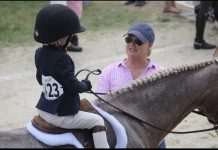
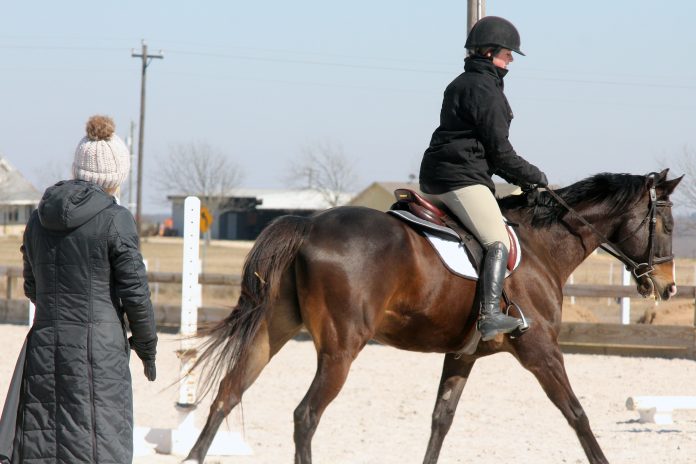
Teall prefers to start beginners ponying, where they are on a lead line while the instructor rides another horse alongside. “Ponying a beginner on another horse,” he explains, “puts the instructor in a situation where he can control and manage the whole learning process.” This close supervision allows a student to experience rhythm and balance safely, while the instructor can literally keep them upright and secure.
As riders progress, private lessons still have their place. They offer the space to tackle specific issues: fear, confusion, or preparation for an upcoming event. Some riders simply learn best when they can focus without distraction. When emotions are high or a particular challenge needs quiet attention, one-on-one time provides the calm, personalized feedback that larger lessons can’t match.
The Value of Group Lessons
Once a rider has mastered the basics, Teall believes group lessons become not only appropriate but invaluable. “One of the main reasons for this,” he writes, “is because you have the ability to learn from others.” Watching different horses and riders attempt the same exercise broadens your understanding far beyond what you could gain alone.
In a group, you benefit from observation as much as participation. You see others make mistakes you might soon make yourself. You notice how different aids affect different types of horses. You learn to compare, analyze, and internalize corrections even when they’re directed at someone else. This kind of vicarious learning is one of the most efficient ways to grow.
Group lessons also replicate the mental pressure of competition. Teall points out that performing in front of others “teaches you to perform on command.”. When the instructor calls your name and everyone is watching, you must focus, act, and execute. That discipline of timing and confidence carries directly into the show ring.
There’s a practical benefit, too. While another student rides, your horse gets a break. Both you and your mount gain endurance and patience while still absorbing information. And for many riders, the camaraderie of group lessons adds joy to the process. Shared laughter, friendly rivalry, and collective learning make the sometimes-serious sport of riding feel like a community effort.
When to Choose One Over the Other
Teall doesn’t prescribe a single formula. Instead, he encourages riders to assess their goals, temperament, and stage of learning. Beginners and nervous riders often need the reassurance of private sessions. Advanced students, preparing for show conditions, benefit from the structure and accountability of groups.
However, flexibility is key. Even an accomplished competitor may need private time before an important event, or when troubleshooting a specific problem. Likewise, a confident novice might thrive by occasionally joining a small group to build independence and social motivation.
Regardless of the format, Teall insists that the rider’s attitude determines the outcome. In both private and group settings, progress depends on showing up early, prepared, and ready to work. Discipline, he writes, “gets you what you want.” Riders who use lesson time efficiently by listening, watching, and practicing with intention advance far faster than those who treat instruction as routine.
Building the Complete Rider
Ultimately, private and group instruction are two halves of the same whole. Teall’s goal is to create thinking riders. He wants students who can evaluate what they see, learn from what they feel, and apply those lessons to new situations. Whether in a one-on-one session or among peers, the purpose remains the same: to keep learning, improving, and honoring the horse through better communication.
Read more of Geoff Teal’s riding philosophy in Geoff Teall on Riding Hunters, Jumpers and Equitation: Develop a Winning Style on Audible and Kindle.