
Brought to you by The Plaidcast
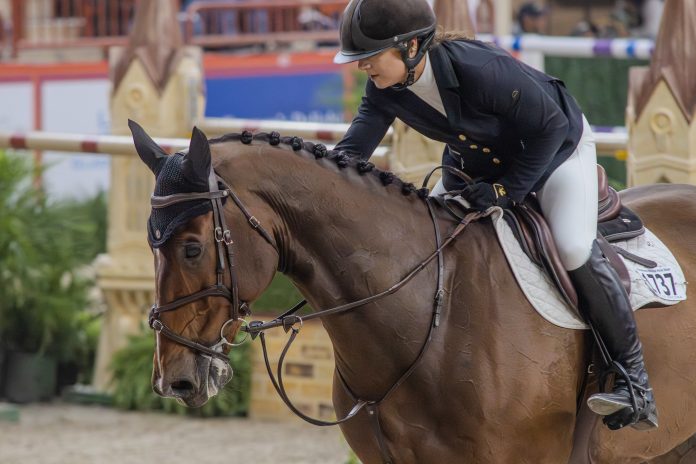
Riders love to talk about goals. What division they want to move up to. What class they want to win. What needs to happen by the end of the season. But in Tonya Johnston’s conversation with Keri Potter on a recent Plaidcast episode, one idea comes up again and again: before goals, before divisions, before long-term plans, success starts with the relationship between horse and rider.
That relationship, Potter makes clear, isn’t a soft or sentimental concept. It’s practical. It’s functional. And in a sport built on variables, it’s the one constant riders can rely on when everything else shifts.
“This sport is so fascinating,” Potter said, “because it’s not like you’re dealing with a tennis racket. You’re dealing with a living animal. That’s your partner. There are so many factors.”
Unlike other sports where progress can be mapped cleanly, equestrian success is influenced by soundness, confidence, environment, timing, and the horse’s mental state on any given day. When riders anchor their mindset in the relationship, they’re better equipped to handle that uncertainty.
The Plan Matters—But the Horse Executes It
Potter is methodical about preparation, but she draws a clear distinction between preparation and over-control. Riders often mistake early planning for readiness, rehearsing courses hours before they ever step into the ring.
Tonya Johnston describes riders who memorize a course early in the day and mentally replay it over and over, long before they need to. Potter agrees that this can pull riders too far ahead of the moment.
For her, the course doesn’t really begin until she’s walking it in person.
“Once you’re actually out there on the ground,” Potter said, “you’re walking up to each individual fence, you’re looking at the color, the filler, the height, the line, the angles. That’s when it all starts for me. That’s when I’m methodically making a plan for each jump and each line.”
But even then, the relationship with her horse is the centerpiece.
“Once I get on and start my warm-up, I kind of get in a zone,” she said. “I really just focus on my horse and myself and the relationship we have between us—making sure that bond and communication is there so we can do this job together.”
That focus doesn’t eliminate mistakes. It doesn’t guarantee perfect rounds. But it creates a framework riders can return to when things don’t go exactly as expected.
Connection Creates Stability When Things Change
One of the most important themes in this conversation is how Potter links connection directly to mental stability. Riders often talk about confidence as something internal—something they either have or don’t. Potter frames it differently.
“First making sure that connection between your horse and yourself is really rock solid,” she said, “can make those move-ups and changes feel much more seamless. That becomes the foundation for mental stability and change stability going forward.”
Change stability is a phrase that resonates because it describes what riders actually need. Horses change. Schedules change. Plans change. Riders who ground themselves in the relationship are better able to adapt without spiraling when adjustments are required.
That stability doesn’t come from ignoring goals. It comes from prioritizing what makes those goals realistic.
When Divisions Take Over the Conversation
Tonya Johnston raises a concern many riders quietly share: the fixation on divisions can override the reality of the horse underneath them. Riders can become so focused on where they think they should be that they stop listening to what the horse is telling them.
Potter agrees that it’s easy to lose perspective.
“People get really caught up in what division they’re in,” Tonya notes during the conversation, “instead of putting the relationship first and letting the choices and goals come second—what actually makes sense within that partnership.”
That reframing doesn’t lower ambition. It redirects it. Instead of asking, What should I be doing by now?, riders start asking, What does this horse need in order for us to do this well together?
Potter emphasizes that when the relationship is solid, decisions become clearer. Riders aren’t guessing. They’re responding.
High Performance Still Depends on Feel
Potter’s perspective carries weight because it doesn’t come from someone arguing against competition. She rides and trains at a high level, producing horses over time and managing complex demands. Her emphasis on relationship is what allows her to be precise under pressure.
She describes each horse as requiring a specific plan: how they drift, how they read certain lines, how they jump one direction versus another. Those details matter. But they only work when communication is clear.
The relationship, in that sense, isn’t separate from high performance. It’s what supports it.
When riders prioritize connection, they’re better able to adjust without force. They stay present instead of rigid. And when the horse feels supported rather than managed, performance becomes more consistent.
One of the quieter takeaways from this conversation is that success isn’t announced in advance. It’s built ride by ride, decision by decision, relationship by relationship.
Potter doesn’t talk about chasing outcomes. She talks about building something reliable with the horse she has in that moment. When that foundation is strong, goals stop feeling urgent and start feeling attainable.
In a sport defined by movement, pressure, and constant change, the relationship becomes the anchor. Not it gives riders something steady to return to when everything else is in motion.
Success, Potter suggests, doesn’t start with the scoreboard. It starts with the partnership underneath you.
Hear the full conversation with Tonya Johnston, Keri Potter, and Weatherly Stroth on The Plaidcast, where they explore intention, performance, and staying grounded in the middle of demanding seasons. Want more insight like this? Subscribe to The Plaidcast for conversations with the most influential voices in the equestrian world.