
After months in storage, your horse rig can hide more problems than you expect. Before the first spring show, a careful inspection ensures the trailer is safe, road-ready, and comfortable for every steed inside.
Quick Reference Horse Trailer Maintenance Checklist
You may check whether your barn is rodent-proof and well-ventilated, but forget that a horse rig can host a few critters and mold, and that it can develop mechanical issues from infrequent winter use. A thorough vehicle check before the first spring show’s travel protects both equine and driver on the road.
| Component | What to Check | Frequency |
| Horse trailer tires | Pressure, tread depth, sidewall cracks, spare tire | Pre-trip |
| Brakes | Test brake assist and controller | Seasonally |
| Floorboards | Lift rubber mats, inspect for rot or soft spots | Seasonally |
| Hitch and coupler | Secure connection, rust, proper tongue weight to prevent sway | Pre-trip |
| Lights and wiring | Running lights, brake lights, turn signals | Pre-trip |
| Axles and bearings | Lubrication, smooth rotation | Start of season |
| Ramp and doors | Hinges, latches, and nonslip surface | Monthly during show season |
| Interior hardware | Tie rings, dividers, padding, and hay net hooks | Start of season |
Get Licensed and Insured
Mechanical readiness means little if the trailer cannot legally travel on the road. Confirm that all paperwork is up to date before the first competition trip. Having a valid registration and license plate is vital.
Note that insurance coverage for both trailer and towing vehicle may be mandatory in some states, and ensure your rig passes state inspection requirements. Being prepared prevents impounding if you get pulled over.
Know Your Rig Type
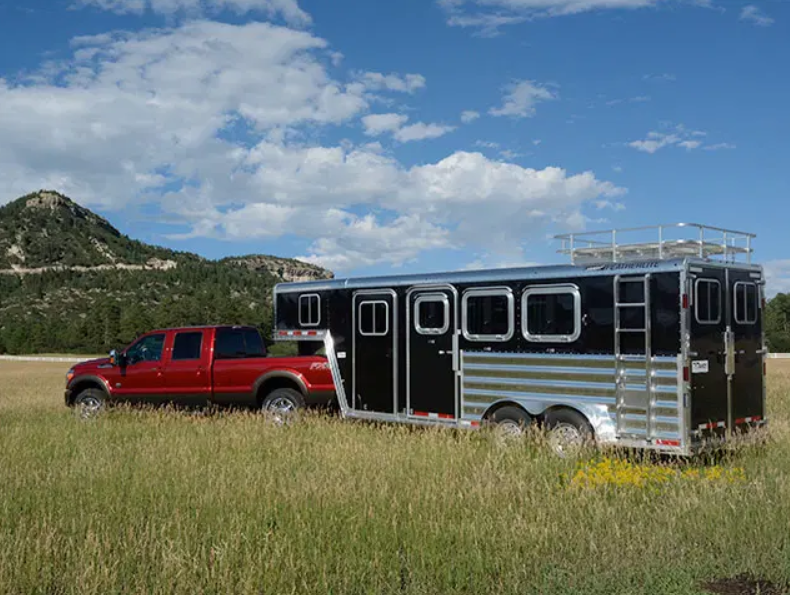
Image source: Custom trailer from Maxey Trailer Sales.
Trailer upkeep starts with understanding the equipment. Two designs dominate the industry—bumper pull and gooseneck. The bumper pull connects to a hitch mounted to the rear frame of the tow vehicle. Gooseneck types attach to a coupler mounted inside a pickup bed. Both types have their own unique maintenance checks for the hitching points.
Pre-show inspections should include the trailer and vehicle. You must pay special attention to the gooseneck and bumper-pull hitch mechanisms to ensure the safety of your steed and yourself on the road. If these are rusted or worn, professional service and repair are nonnegotiable before you even think of loading.
Walk Around for an Exterior Review
Start your spring show season with a thorough inspection of the outside of the vehicle. A systematic check reveals issues, and even minor damage requires attention. Horses may rub against walls, dividers, and window frames, so small, sharp edges can quickly become injury hazards during travel.
Areas to check include:
- Frame and welds: Look for rust, cracked welds, and bent supports. Structural fatigue develops slowly, but can have disastrous effects.
- Ramp and doors: Test hinges, springs, and latches. The ramp surface should provide firm traction so horses feel secure stepping on and off.
- Windows and vents: Open and close each one to ensure correct airflow. Ventilation keeps animals cool and reduces heat buildup.
- Roof panels: Inspect seams and seals for leaks.
Remember Floor, Tires and Brake Checks
Some of the most important horse trailer maintenance tasks involve out-of-sight components like the floorboards. Rubber mats trap moisture and urine, which can quickly rot away wood and steel reinforcing. Lift the mats completely and evaluate each board carefully. Soft wood, discoloration or sagging indicate weakening structural support that may not manage the weight of your 1,200-pound thoroughbred or 2,200-pound draft.
Tires can degrade during lengthy storage, so check tread depth, inflation pressure, bald spots, and valve stems. Wheel bearings and axle damage may require prompt horse trailer repair to prevent further issues on the road.
Trailer brake inspection should include the vehicle brakes and brake assist systems, ensuring these are in optimal condition. Take the rig for a test-drive on the type of roads you’ll encounter to test brakes at speed and over rough terrain to ensure you can stop without skidding.
Ready for the Season Ahead
A well-prepared rig supports safe travel, confident towing, and relaxed, show-ready horses on arrival. Ensure you check the exterior components, hidden brakes, axles and floors, and hitching equipment.
Take your time with a horse trailer inspection for spring. Ensure each haul is stress-free and efficient, whether you’re unloading on a farm road or at World Equestrian Center.