
By STEPHANY FISH CROSSMAN
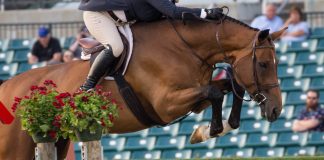
When I look at horse and rider combinations, whether it is a dressage pair or a jumping pair, I see the two parts of the whole as a separate sets of levers and pulleys. How one set of levers and pulleys is working inevitably affects the way the other set of levers and pulleys is working, and the best set of levers and pulleys (top riders) make the mechanics look effortless. A good measure of harmony is how you land after a fence. If you struggle with organization and getting lead changes after a jump, improve your landing by improving your rider biomechanics!
Recognize that your body, while only a fraction of the horse’s weight, has an effect on your horse’s balance. They feel the smallest change in you. Being straight is not simply riding a straight line–it’s more about having your body well balanced over the horse’s body, so that you are creating the least amount of imbalance possible. When working with my dressage riders, I talk about basic straightness and advanced straightness in the horse. For our purposes, we will focus only on advanced straightness in both the horse and rider. Think of advanced straightness as the horse carrying 50% of its body weight on either side of its spine–at all times. This allows the horse to go straight to the fence, jump the fence and land and continue on either lead (with a cue from the rider). The cue can be the rider properly asking for an organized lead change on landing, or a change in their rein position or leg pressure in the air–but it should not be a shift of their weight.
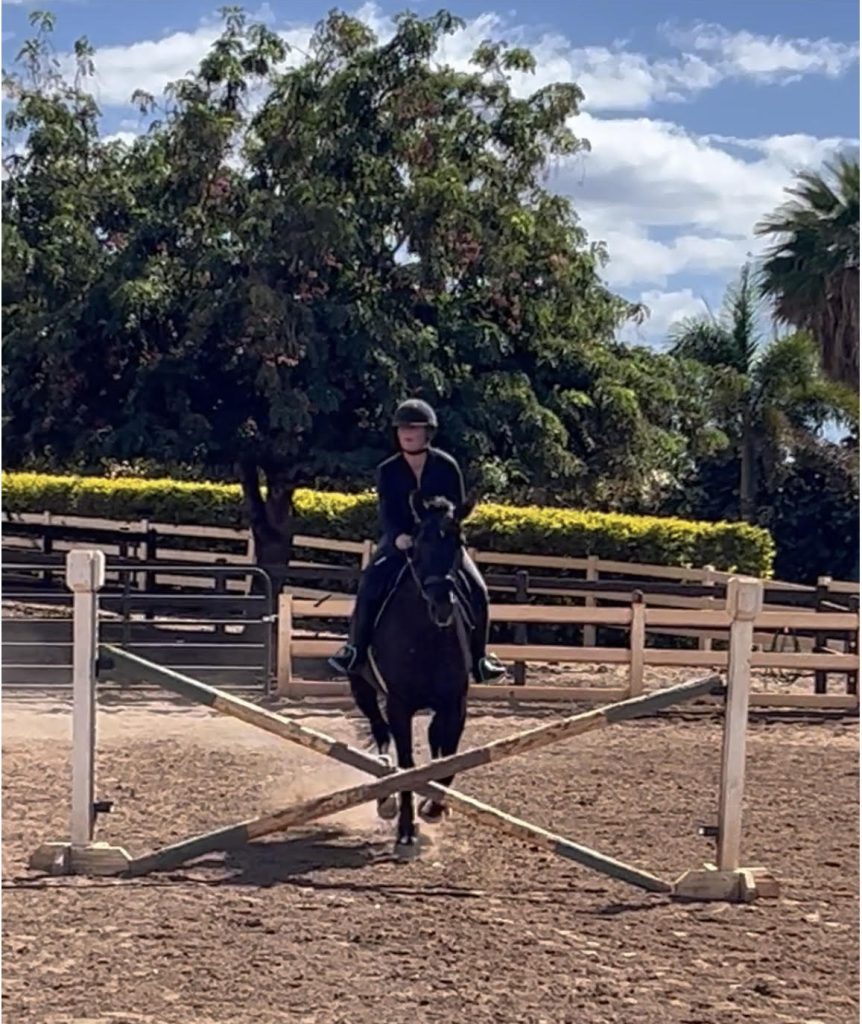
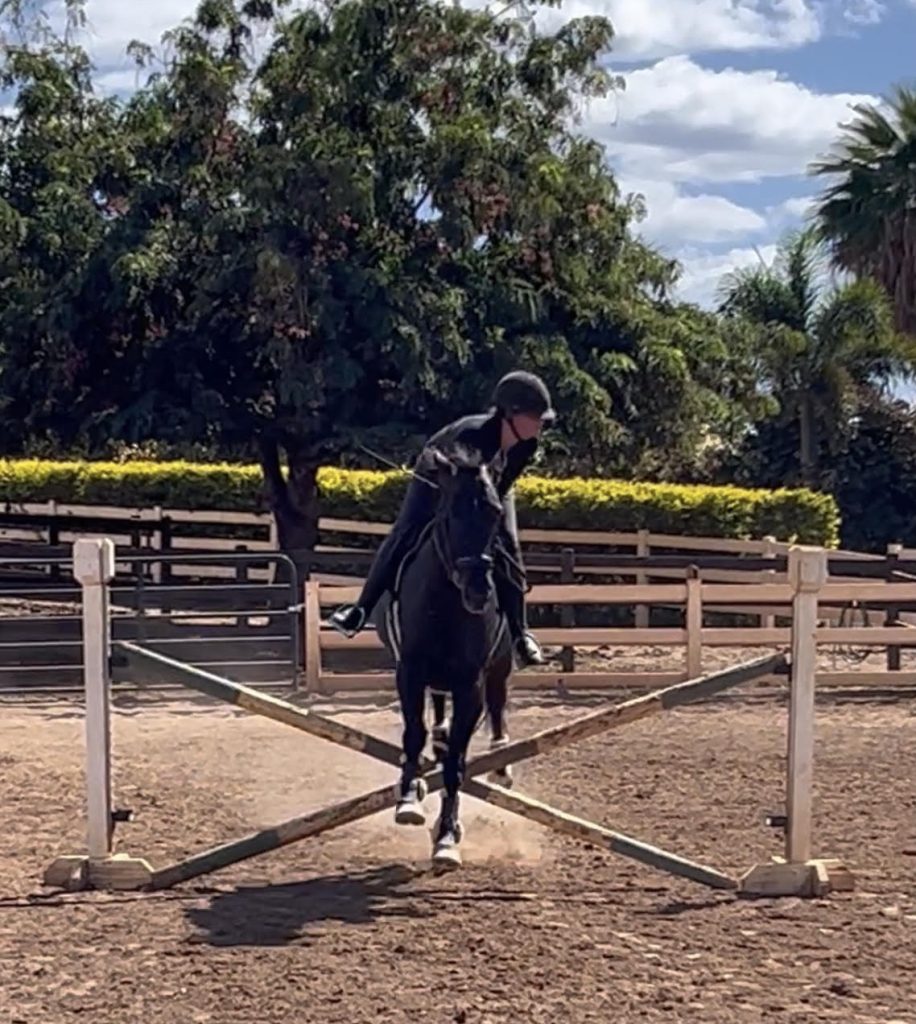
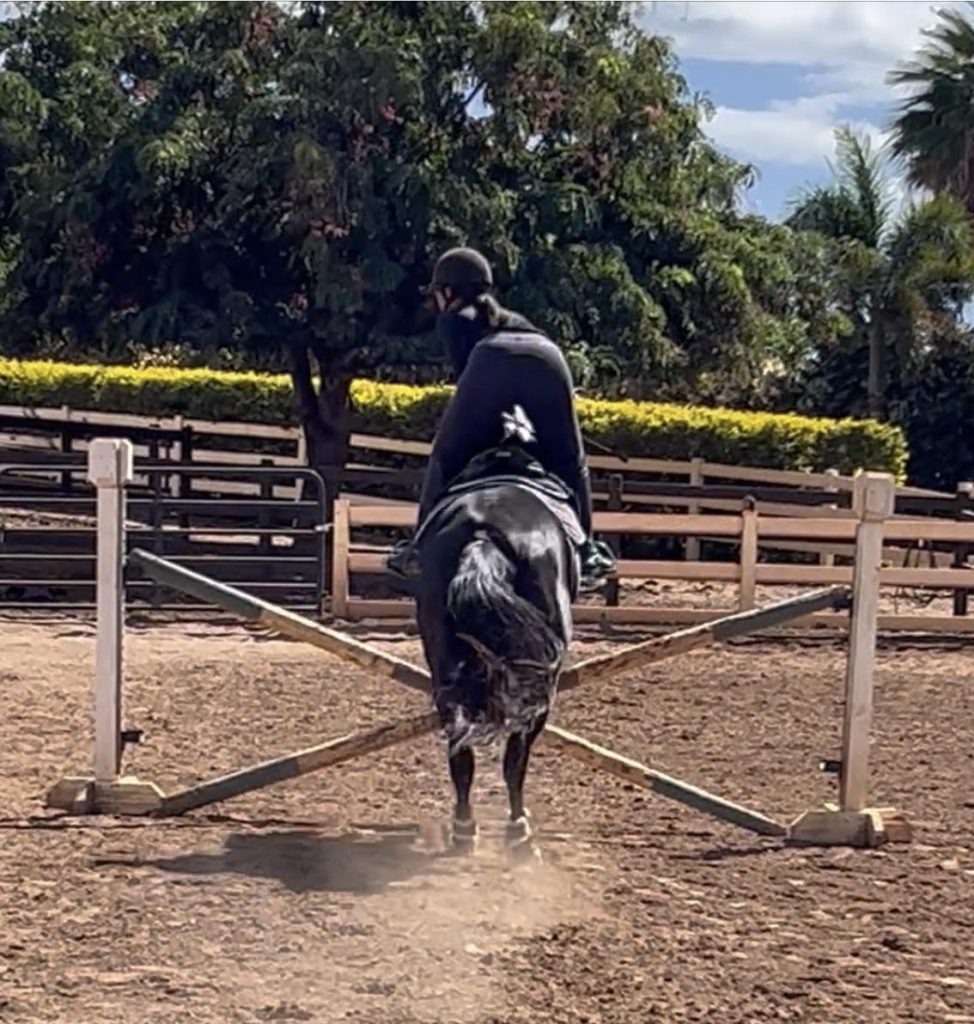
A shift of your weight puts you, the rider, out of advanced straightness–you are no longer carrying 50% of your weight on either side of the horse’s spine, which causes the horse to have to adjust to stay balanced under you. This can cause a confusion of aids, and therefore cause a confusing result–like missing a lead change, or landing in the cross canter. As riders go through a turn, some will overweight their outside aids, while others overweight their inside aids. Changing your shape is a commonly used correction (“sit up”, “sit to the inside”, “step into that stirrup”), but those are suggestions that each rider may answer differently, so they get a different answer from their horse as a result.
The fix? Work on developing your understanding of when you are equally balanced in the saddle and when you are not, so that you can start to define your “50/50,” as I call it. Notice where you put your weight on straight lines, in corners, and on the approach to your fences. Try to keep your weight as evenly distributed over the horse’s back as possible, so that your aids for the lead change become an answer to an aid, rather than a loss of balance. You will hit your changes with much greater regularity when you become the ask, not the aid itself!
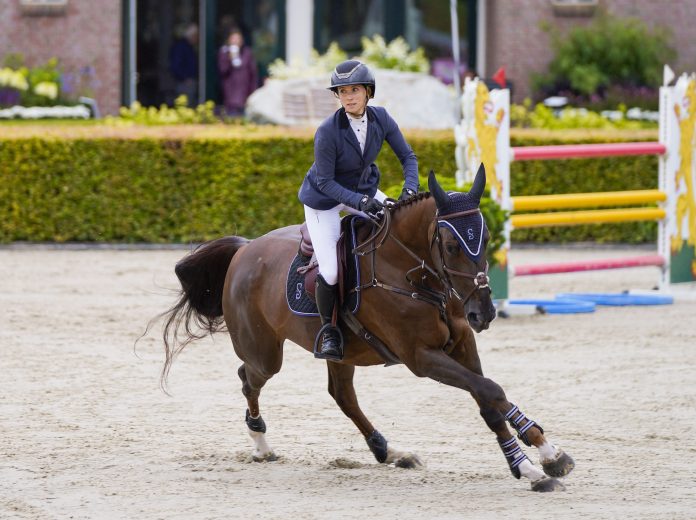
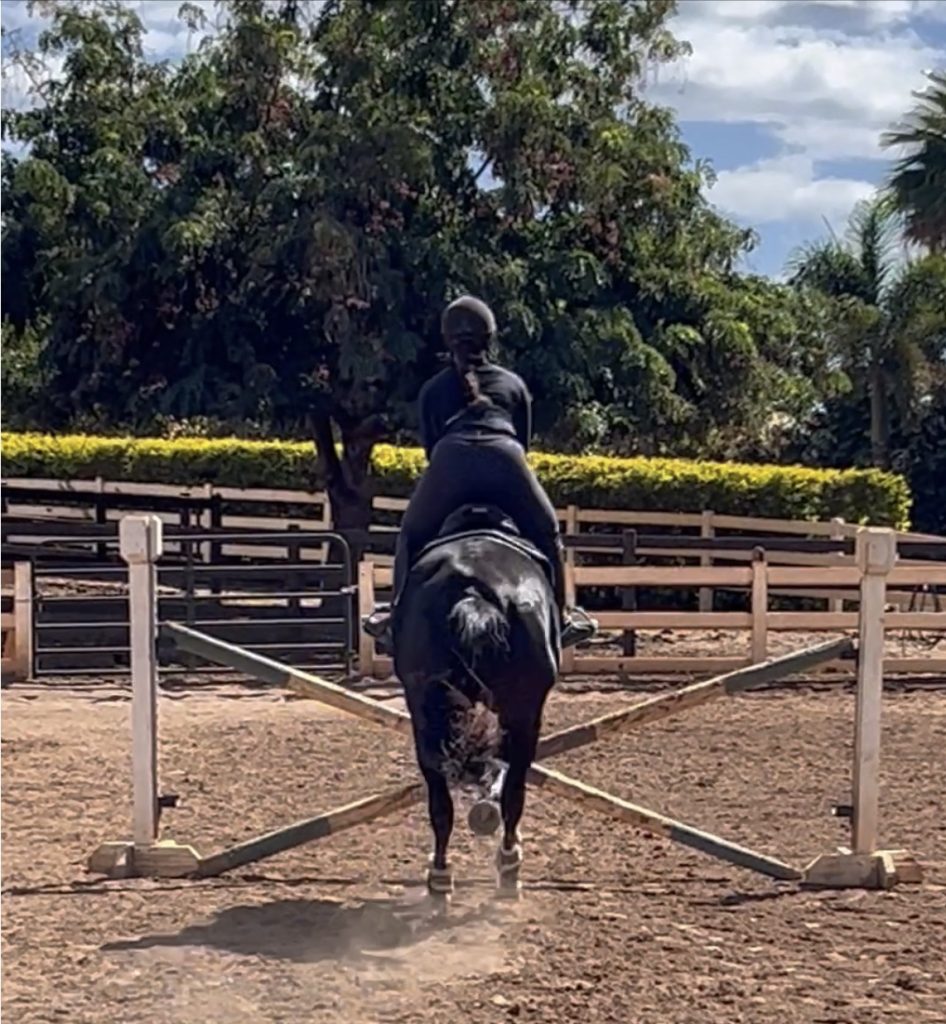
See below for visual examples of what to do and what not to do:
Correct Examples of Advanced Straightness
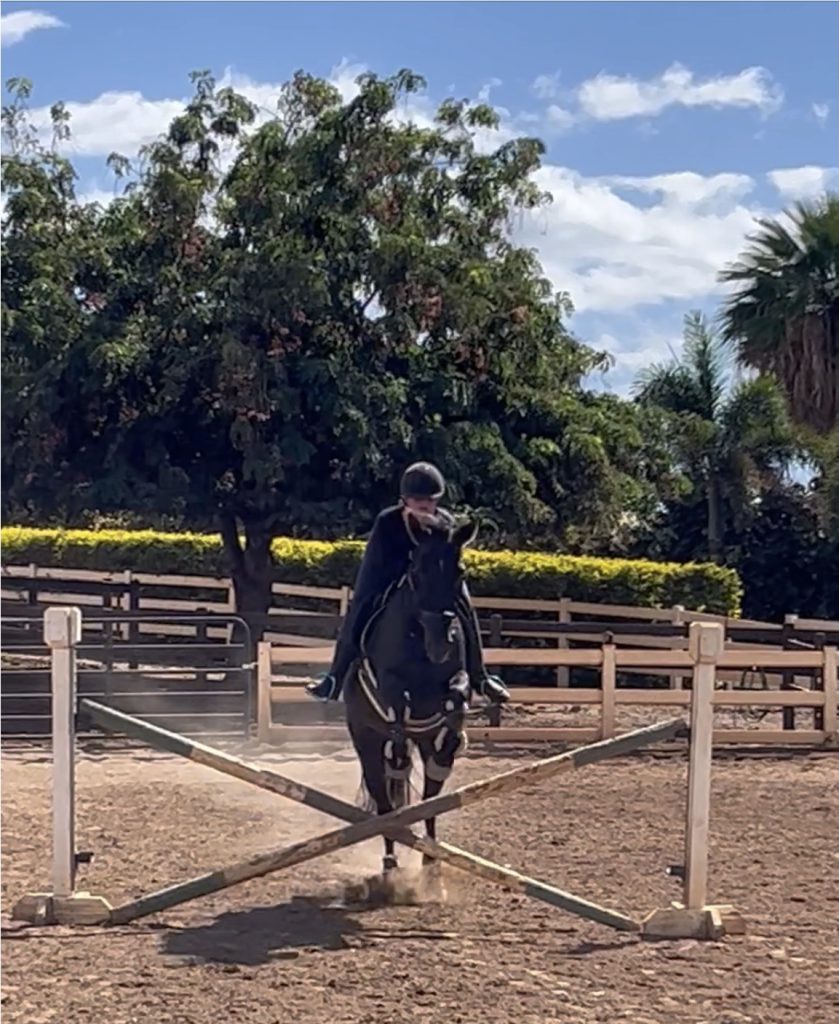
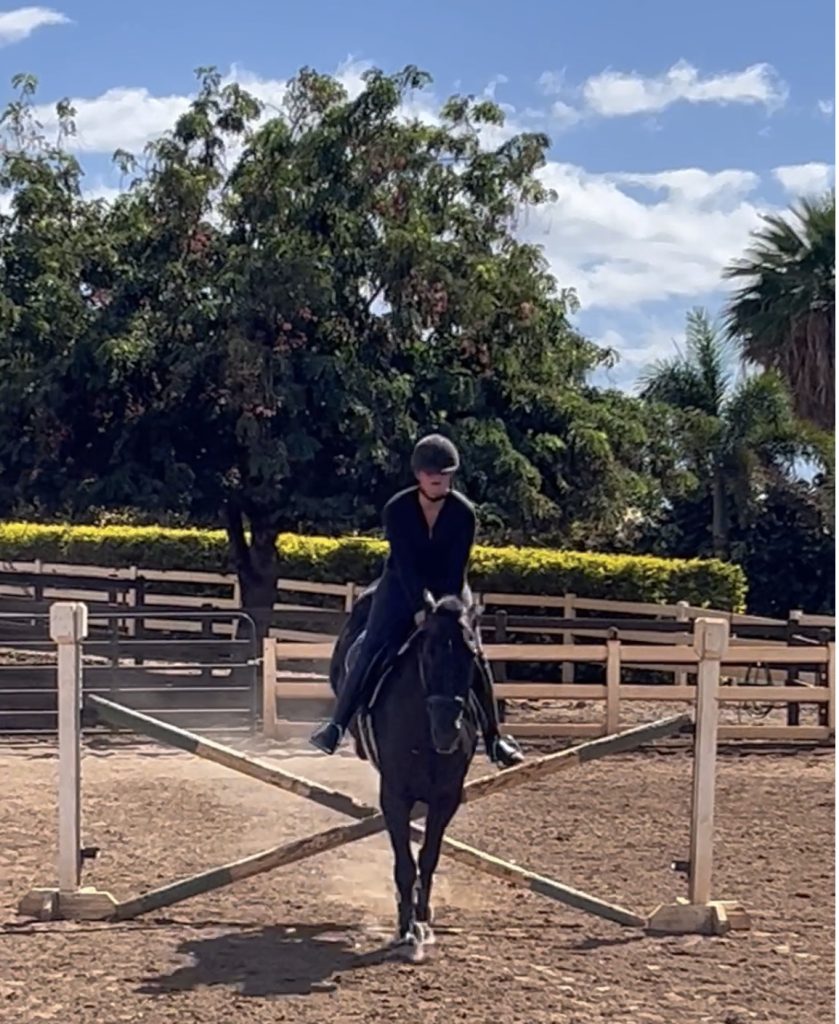
Incorrect Examples of Shifting Weight
About the Author
Stephany Fish Crossman is the founder of Serendipity Dressage, and a Rider Biomechanics specialist accredited through Mary Wanless’s Ride With Your Mind system–one of 5 level two coaches in the U.S. She’s based in Okeechobee, FL but travels across the country training horses and riders through lessons, clinics, and competitions. Stephany believes every rider and horse can shine with fair, firm, kind and clear direction.
Contact Stephany or learn more about her program by clicking here.