
Brought to you by The Plaidcast
In an industry that moves faster every year, “old-school” has quietly become a loaded term. It’s often used as shorthand for outdated systems or resistance to change—something to outgrow rather than something to study. But listening to trainer Jennifer Edwards describe how she has built and sustained her program for more than four decades, it becomes clear that what we often call old-school is, in fact, intentional.
“I’m glad I stayed small,” Edwards says. “I’m glad I didn’t get the assistance. I’m glad that it was just us.”
At Belleame Farm, Edwards and her husband, Rob, have made choices that run counter to modern pressure points. They teach every lesson themselves. They don’t rely on assistant trainers to manage riders. They don’t scale their program beyond what they can personally oversee. And they don’t apologize for it.
Edwards makes these decisions for care, and long-term sustainability—for riders, horses, and the people doing the teaching.
Staying Small on Purpose
Over the years, Edwards has considered expanding. She’s thought about hiring assistants, adding grooms, and running a larger operation. She understands why many trainers do.
“Would it make my life easier? Probably a little bit,” she says. “But then you start losing control.”
That loss, for Edwards, is about the missed details—the child who’s struggling quietly, the horse that doesn’t quite feel right, the barn dynamic that shifts when too many voices are involved. When responsibility is delegated too far, accountability thins.
“We didn’t let it get so big that we lost things in the shuffle,” Edwards says. “Too big would not have been healthy for anybody.”
Quality Over Quantity
At Belleame Farm, fewer riders means deeper relationships. Edwards typically brings about ten riders to horse shows at a time. It’s a number she feels good about, because it’s manageable.
“I can spend quality time with them,” she says. “I can do a really good job with all of them.”
That philosophy extends beyond competition. Riders are taught from the beginning, often on school horses, and many stay in the program for years—sometimes decades. Edwards has riders who leave for college, return as amateurs, and continue riding well into adulthood.
Longevity, in her view, is not an accident. It’s the product of consistency, restraint, and attention.
Holding the Line While Evolving
Calling Edwards’ program old-school doesn’t mean it’s static. Over the course of her career, she has adapted—especially as her own life changed.
When her children were young, Edwards scaled back travel and focused locally. Later, when they were older, she expanded again, showing more nationally while knowing her husband was home maintaining the same standards at the farm.
“I didn’t want somebody else raising my kids,” she says. “I was going to raise my kids.”
That willingness to adjust without abandoning core values has allowed the program to evolve without losing its identity. Growth, for Edwards, has always been measured by readiness rather than pressure.
“I would rather not do it if I couldn’t do it my way and be very connected,” she says.
Horses Built for the Long Term
The same philosophy applies to the horses in Edwards’ program. Many stay sound and competitive across multiple rider stages, because they are managed aggressively and patiently.
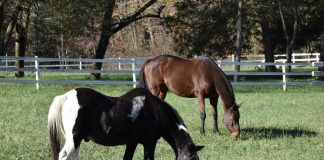
Turnout is non-negotiable. Horses go outside daily, often in groups. Veterinary care is conservative. Injections are used thoughtfully and not preemptively. Time off is seen as maintenance, not failure. “There’s only so much horse you have left,” Edwards says. “You don’t want a Band-Aid.”
That mindset stands in contrast to a system increasingly driven by short-term performance. Edwards is clear: if she had to compromise horse welfare to keep up, she would choose something else.
Why It Still Works
What makes old-school training endure is clarity. Edwards knows what she is protecting: time, relationships, and responsibility. She knows what she is willing to give up in return: scale, speed, and sometimes profit.
In a sport that often equates success with size, her program offers a reminder that effectiveness is not the same thing as expansion. Teaching works best when it is personal. Horsemanship works best when it is slow. Horses last longer when they are treated as partners rather than assets.
“I don’t need a lot,” Edwards says. “I need ones that really want to do a great job, and I am all there for them.”
Old-school, in this sense, is refusing to trade what works for what looks impressive. And for Edwards—and the riders and horses who have grown up in her program—that choice continues to pay dividends.
Want more insight from Jennifer Edwards? Listen to episode 469 of The Plaidcast and subscribe on your favorite podcast platform for conversations with the most influential voices in the equestrian world.