

Online gambling is now a global industry worth over $90 billion a year. But not every type of betting is regulated in the same way. Online roulette and horse race betting follow very different rulebooks.
The difference shows up in regulation.
Online roulette often appears in formats like roulette with live dealer. A real croupier spins the wheel on camera, and players see everything happen live. It feels closer to a physical casino, just through a screen. Even so, it still operates under online gambling licenses and digital compliance rules.
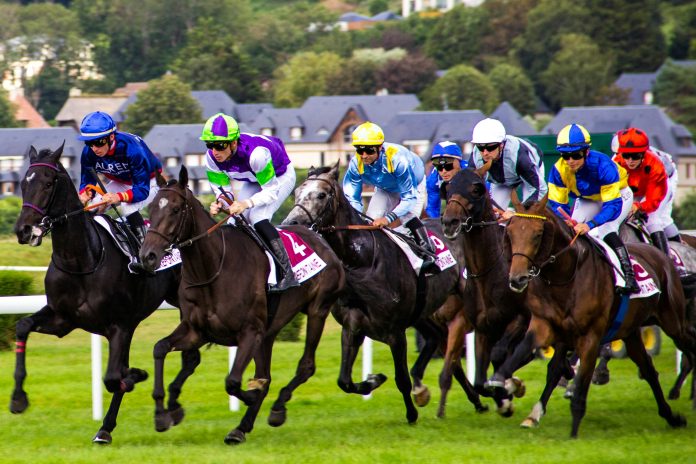
Horse race betting has a longer regulatory background. In countries such as the UK, France, and the United States, racing has been supervised for decades by official bodies. These authorities oversee not only betting, but also race organization, horse inspections, and official results.
So which one is more regulated? It depends on what we mean by regulation.
Who Watches the Watchers? Licensing and Oversight
Online roulette falls under general gambling laws. Its regulation depends heavily on jurisdiction. In the UK, for example, operators must be licensed by the UK Gambling Commission (UKGC). In Malta, companies are supervised by the Malta Gaming Authority (MGA). These bodies enforce strict compliance and player protection rules.
Live dealer games are also monitored through technical audits. Independent testing agencies such as eCOGRA verify random number generators (RNGs) for digital roulette. In live formats, the wheel itself must meet certified standards, and studios are regularly inspected.
Some platforms even offer localized options, such as allowing users to play roulette with a Hindi dealer, targeting specific language groups. While this is mostly a user experience feature, it still operates under the same licensing conditions as other live dealer games.
Horse race betting follows a different path. It is often regulated not only by gambling authorities but also by racing commissions. For example:
- In the UK, the British Horseracing Authority (BHA) regulates the sport, while the UKGC oversees betting operators.
- In the US, each state has its own racing commission, alongside gambling control boards.
- In France, Pari Mutuel Urbain (PMU) operates under strict state control.
This means horse racing has dual oversight — one for the sport itself and one for wagering.
Regulation in Practice: A Simple Comparison
Here is a simplified overview:
| Aspect | Online Roulette | Horse Race Betting |
| Main Regulator | Gambling authority (e.g., UKGC, MGA) | Gambling authority + Racing authority |
| Game Fairness | RNG audits or live wheel inspections | Track integrity and race monitoring |
| Age Verification | Mandatory KYC checks | Mandatory KYC checks |
| Transparency | RTP percentages published | Odds fluctuate until race start |
| Historical Regulation | Mostly 1990s–2000s onward | Over 100 years in many countries |
Horse race betting clearly has a longer regulatory history. Organized racing in the UK dates back to the 18th century, and formal oversight structures developed in the 19th century. In contrast, online roulette regulation only became structured in the mid-to-late 1990s, when online casinos began licensing through jurisdictions like Gibraltar and Malta. But history does not always mean stricter control today.
Consumer Protection: Where the Lines Differ
Another clear difference is transparency.
In online roulette, the math is fixed. European roulette, for example, has a 2.7% house edge because of the single zero on the wheel. That number doesn’t change, whether the game is digital or live. The structure stays the same every time the wheel spins.
Horse race betting works differently. Odds move. They change depending on how much money is placed on each horse. Bookmakers adjust prices right up until the race starts. For someone without experience, it can feel less predictable.
But roulette is based on set probabilities, while horse racing odds are shaped by the market and betting activity.
Player protection is now a basic requirement for licensed online casinos. Tools like deposit limits, loss caps, and reality reminders are standard. Industry platforms such as Roulette77 often point out which operators hold recognized licenses and follow compliance rules.
Horse racing operators also follow responsible gambling policies. The difference is that enforcement can vary depending on the country. In the United States, for example, gambling laws are set at the state level, so oversight is not always uniform.
So, What’s More Regulated?
The short answer is simple: both are regulated, just in different ways.
Horse race betting has history on its side. In many countries, it’s controlled not only by gambling authorities but also by racing bodies. There are track inspections, animal welfare rules, stewards on race day, and clear procedures if something looks suspicious.
Online roulette — especially live dealer formats — is supervised in another way. The focus is on digital security, licensed software, payment monitoring, and strict compliance checks. Everything happens online, so the control is technical rather than physical.
Horse racing has deeper roots in regulation. Online roulette, however, often faces tighter day-to-day digital monitoring.
In the end, the main factor is the country, not the format. In places like the UK, strict rules apply across the board. In less regulated markets, oversight can be weaker, no matter the game.
That’s why it’s misleading to treat all gambling products as the same. The rules behind them can be very different — even if the experience feels similar on the surface.