
By KIMBERLY LOUSHIN
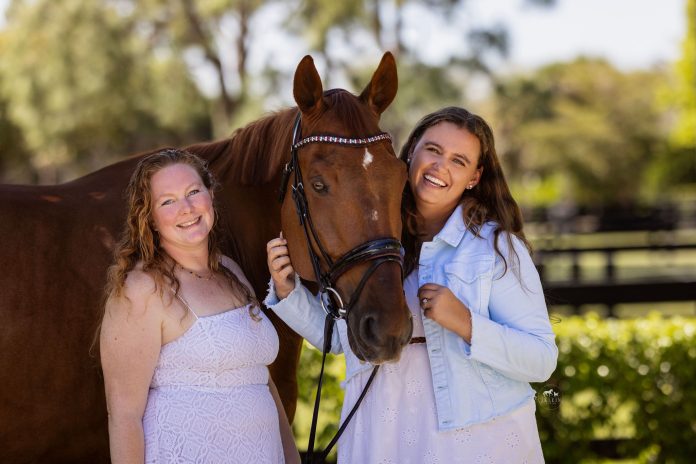
In a world where there’s horse shows nearly every week of the year, it can be easy to get caught up in the never-ending grind of showing week after week. Without a natural “off-season,” it’s incumbent on riders and trainers to make the right decisions to prevent both equine and human burnout, and it’s something Elizabeth Cohen prioritized when she established her business Williams Sporthorses in 2022.
“Our philosophy is there’s always another horse show, there isn’t always another horse,” she says.
That philosophy guides every aspect of her business and is influenced by her time riding in England during college.
“We run our barns more like a European yard, where the horses 100% come first,” she says. ”We do things more towards the European style where we prioritize things like taking them hacking and getting them out of the ring and having them be well-rounded individuals, rather than just show horses. Yes, they do show. They’re amazing; they’re wonderful, but it’s really about being aware of their programs and making sure they have time to be horses. We normalize giving them at least a month off after the winter show season and at least a month off after the summer shows. That’s non-negotiable.”
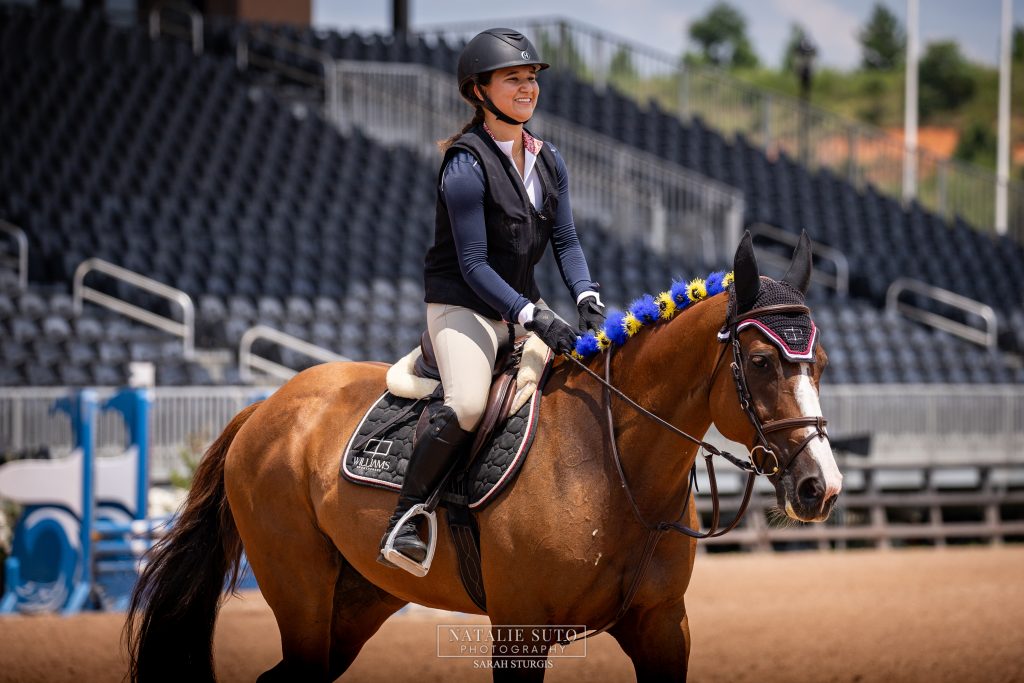
Williams Sporthorses boasts 15 continuous acres and 51 stalls, though to keep things at a manageable level for her and her life partner Meghan Olcott, they typically only have about 30 horses at a time.
“I don’t really want to go any bigger than that, just because I don’t know if I could lay hands on the horses every day and in a way where I can be involved in the day-to-day as much,” she says.
While space is at a premium in Wellington, Florida, Cohen’s farm was meticulously designed to ensure the comfort and safety of the horses in her care. Lush turnout gives the horses an oasis of relaxation while they’re on vacation, and while in work, state-of-the-art rings, a grass derby field, gallop track and walkers provide everything they need for peak performance.
Safe and Fun
Cohen, who grew up in Manhattan, first swung her leg over a horse while visiting her aunt on her ranch in Texas. From there she attended pony camp over the summer and spent the school year participating in soccer and tennis, which didn’t pique her interest nearly as much. Eventually, her parents agreed to sign her up for regular lessons, first in Long Island, and later in Bedford, New York, where she rode with Frank Madden and then Peter Leone.
Upon graduating high school, Cohen enrolled in college and studied psychology, picking a school that would allow her to stay close to home due to her father’s Alzheimer’s. After he died her freshman year, she took a hard look at her path, and after discussing study abroad options with her mother, she chose Riddle University in England, studying bio-veterinary science, aiming to become a small animal veterinarian with an orthopedics specialty.
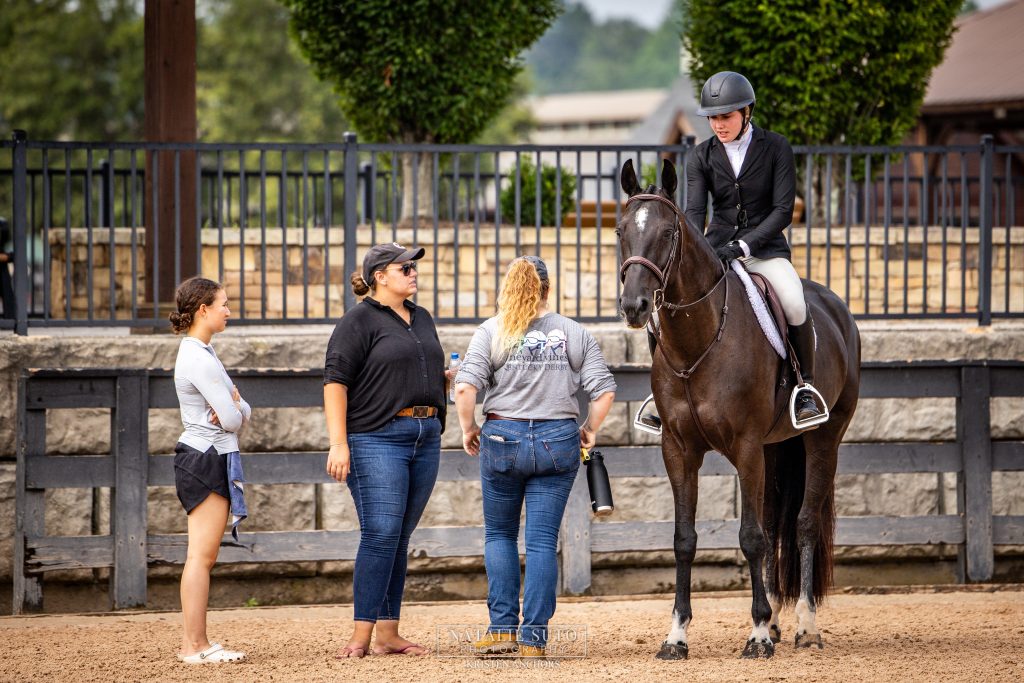
Though she’d grown up competing primarily in the hunters and equitation, moving to England opened up the opportunity to explore the jumpers more, as she rode with first the Breens and later with Zoe Warren when the 2-hour drive to Dartford became too time consuming.
“It allowed me to see a different side of the industry,” she says. “I am definitely more into producing horses. I love the process; I love the adventure. It allows me to stay a little more centered in how I naturally am as a person.”
When the COVID-19 pandemic upended the world, Cohen returned to the States. With help from family she found a property to purchase in Wellington. Between purchasing the farm, which was bigger than needed for her small string of horses, and selling an equitation horse for a profit, Cohen decided to turn it into a business, and with that, Williams Sporthorses was born. The name is in homage to her father, who was a realtor and ran Williams Real Estate before selling it to Colliers International. The farm’s logo is the same one he used, so she carries him with her wherever she goes.
While some Grand Prix horses have come through her barn, Cohen’s primary focus is on producing safe-minded amateur horses for the backbone of the sport.
“Our goal is to produce amateur-minded horses that are safe and fun,” she says. “Of course, we love producing Grand Prix horses, we love producing equitation finals horses, all of the above, but our primary goal is just safe horses for the everyday person. I feel like there’s a pretty big gap in the market because everyone’s like, ‘Oh I want a Grand Prix horse.’ You don’t need or really want a Grand Prix horse for someone jumping the .60s. You want something that’s safe and reliable and will do their job day in and day out and is going to be loved by their person, so that’s primarily what we focus on.”
A Happy Atmosphere
When it comes to the business, Cohen’s focus is training and managing the horses’ schedules, while Olcott manages the logistics and organizational side to keep the business running.
“We’re all very passionate about it,” says Olcott. “We all have a lot of drive, and we all strive to keep a positive and happy atmosphere in the barn.”
They also employ Misty Loggins, who works as an assistant trainer. Loggins came to Williams Sporthorses looking to increase her education, and she found a barn and employer who prioritizes her health and wellbeing right alongside the horses.
“I think the best thing is the people,” Loggins says. “In this industry, unfortunately a lot of people are just out for themselves. It’s a dog-eat-dog world, and they are not like that. They are very much, ‘How are you doing? How is the horse doing?’ It’s almost like a family here. These people have done so much for my riding, for my education, and also my physical health.
“There’s never been a day where the horses haven’t come first,” she adds, saying that she feels she is their second highest priority, whereas at other barns, it was about exploiting her and getting as much labor out of her as possible.
“They take it really slow and focus on development,” Loggins says. “They focus on each individual horse, because at the end of the day, one program is not a one size fits all. There’s a lot of different programs they cater to each individual horse.”
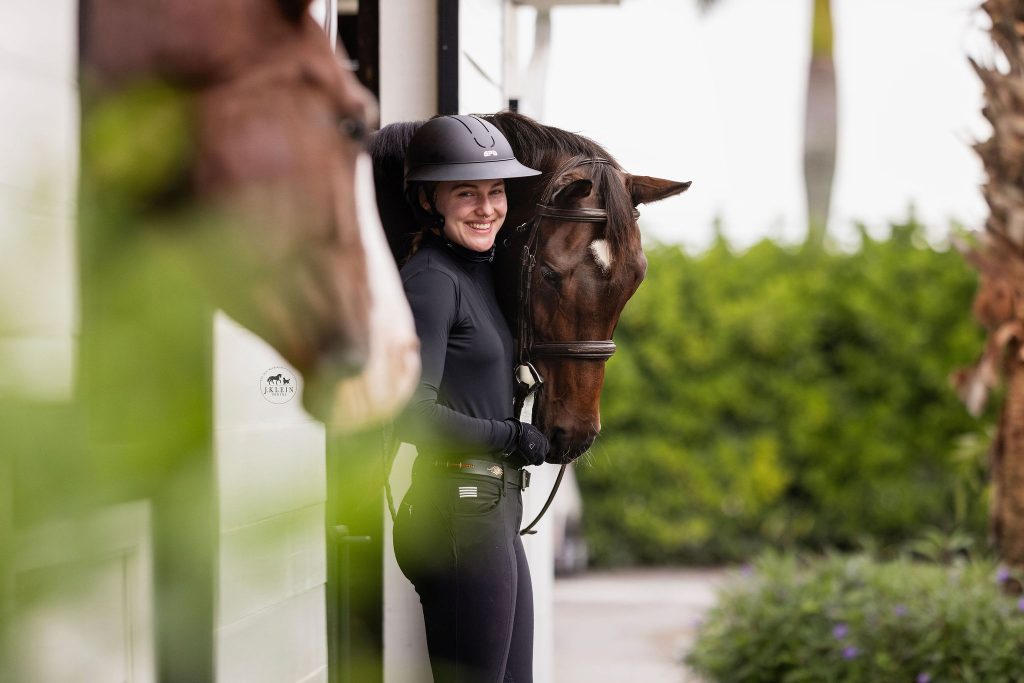
In addition to their show horses, Cohen has gotten into breeding and enjoys bringing along young horses. While she doesn’t start horses as much anymore, it’s a skill she learned while attending boarding school in Montana, and she firmly believes that learning it has made her more well-rounded.
“I think it’s a really important skill for people to have, because I don’t feel there are enough young horse producers in the States right now,” she says. “I think importing is wonderful; it’s a great tool, but I think with COVID, we didn’t have access to the same amount of horses, so we were selling what was available and the market was lacking.”
She also brings extensive flatwork knowledge to the table, in part due to picking up dressage after sustaining a back injury in a fall a few years ago. While she’s returned to jumping since then, the skills she attained are invaluable.
“Flatwork is really important because the flatwork between the fences really does make the difference between having a rail or not, shaving time off in your jump-off, having a good quality canter in a hunter, having a true frame rather than a false frame in the equitation,” Cohen says.
“All of those things make what would seem to be very small differences [but are important.] We have very adjustable, rideable horses, having good lateral movement, all those things make our lives so much easier, and that really comes down to the flatwork.”
It’s looking to be a big year for Williams Sporthorses, as Cohen and Olcott are expecting their first child, and professionally they’re continuing to improve, renovating the property to better serve the horses in their care. Because for them, the horses are the priority.