

Equestrian Sport and Casinos: Unexpected Parallels Between Riding and Risk
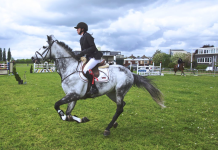
Equestrian sport has long been associated with discipline, precision, and a deep bond between rider and horse. Yet anyone who spends enough time around stables or competitions quickly realizes that uncertainty is always part of the equation. No matter how well-prepared you are, there’s always an element of unpredictability—and that’s where an unexpected connection to the world of gambling begins to emerge.
An experienced rider carefully evaluates every decision: Is the horse focused today? How will it respond to a new course? Interestingly, this mirrors how players approach gambling when they look into reliable options and strategies. As one German industry analyst once put it: “Beim Thema ‘online casino echtgeld deutschland’ geht es nicht nur um Glück, sondern um Kontrolle, Disziplin und die Fähigkeit, Risiken richtig einzuschätzen.”
This idea becomes even clearer when dealing with uncertainty. Anyone who has tried to calm a tense horse before entering the arena knows that control is often temporary. The same applies to gaming—where even the best preparation cannot guarantee outcomes. Still, many players seek to improve their chances. As another German expert noted: “Online Casinos mit schneller Auszahlung sind besonders gefragt, weil Transparenz und Vertrauen für Spieler entscheidend sind.” Resources likethis this growing demand for reliability and fast payouts.
Strategy Over Blind Trust
In equestrian sport, beginners often make the mistake of relying entirely on their horse. More advanced riders understand that technique, training, and analysis play a crucial role. The same logic applies to gambling.
There are several clear similarities:
- Preparation matters: riders train daily, while players study games and probabilities
- Emotional control is key: nerves can lead to mistakes, whether in the arena or online
- Long-term thinking beats short-term gains
Anyone who has watched a seasoned trainer remain calm while a young horse becomes unpredictable will recognize that success rarely comes from impulsive decisions.
Risk Is Inevitable—But How Much Is Too Much?
There is a moment before every jump when everything seems to pause. A split second where rider and horse must decide: go forward or hold back. Players experience a similar feeling when deciding whether to increase a bet or step away.
The difference lies in the type of risk. In equestrian sport, the risks are physical. In gambling, they are financial. That’s why managing limits and budgets is essential.
Common mistakes in both worlds include:
- Trusting too much in the “perfect moment”
- Ignoring warning signs
- Overestimating personal control
An experienced rider knows when a horse is not performing at its best. A smart player knows when it’s time to stop.
The Role of Experience and Intuition
Some skills cannot be taught—they develop over time. In riding, people often speak of having a “feel in the saddle,” an intuitive understanding of the horse that only comes with experience.
In gambling, a similar intuition can develop. While outcomes are often based on chance, experienced players become more aware of patterns, risks, and their own behavior.
This doesn’t guarantee success—but it leads to more conscious decision-making.
Between Passion and Discipline
Both equestrian sport and gambling share one powerful trait: they can become deeply engaging, even addictive. And that’s where balance becomes critical.
A rider invests time, money, and emotional energy into their horse. A player can become equally absorbed in the rhythm of the game. In both cases, maintaining perspective is essential.
Some practical principles include:
- Set clear limits—both financially and in terms of time
- Reflect regularly on your decisions
- Learn from mistakes instead of repeating them
Conclusion: Two Worlds, One Principle
At first glance, equestrian sport and casinos may seem worlds apart. But look closer, and the similarities become striking. Both demand discipline, strategic thinking, and the ability to deal with uncertainty.
Perhaps it is precisely this balance between control and risk that makes both worlds so compelling. And maybe that’s why, after a long day at the stables, some riders seek not just rest—but a different kind of challenge.
In the end, one truth remains: whether in the saddle or at the screen, those who make thoughtful decisions are the ones who stay in the game the longest.