
BY PARKER WORTHINGTON
There is a conversation that happens in barn aisles, at horse shows, and over dinner at circuit gatherings with remarkable frequency, and it usually sounds something like this: “She’s incredible, but she’s a mare, so it’ll be harder to sell her.” Or: “The x-rays aren’t clean, so we can’t really call her an investment.” Or, most commonly: “I want something that holds its value.”
These are not unreasonable things to think about. Horses are expensive, and the financial dimension of ownership is real. But there is a growing conflation happening in the amateur and junior hunter-jumper market between two goals that are related but fundamentally different: winning in the show ring and optimizing for resale, and the consequences of mixing them up can quietly cost people the very thing they came into this sport to find.
Let’s be precise about what each goal actually demands.
What Winning Requires
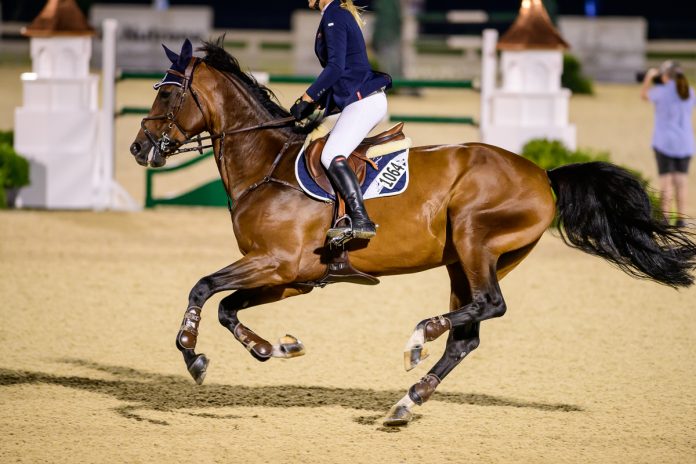
Winning in the show ring requires a horse that is right for the job on the day, right for the rider in front of it, and able to perform consistently at the level being contested. It requires talent, a beautiful jump, a good brain, a trainable nature, but it also requires a suitability match that has very little to do with market appeal. The horse that makes an amateur feel like a million dollars in the equitation ring might be a 16.3 hand chestnut mare with kissing spines on her X-rays and a strong personality that makes novice buyers nervous. She might not sell quickly. She might not sell for more than you paid. But she might win every big equitation class she walks into.
Many of the most competitive horses in the hunter-jumper world are mares. They are frequently more responsive, more attuned to the job, and more talented than their gelding counterparts. They are also, by conventional investor wisdom, harder to move. Sellers know this. Trainers know this. And so there are clients who never seriously consider a mare and therefore who rule out extraordinary animals before they ever try them because they are optimizing for a resale conversation they may never actually need to have.
What Resale Requires
The resale market, by contrast, rewards conformity. It rewards clean x-rays, geldings, warm colors, recognizable bloodlines, and a profile that appeals to the widest possible pool of buyers. It rewards horses that photograph well and try-well, meaning they look the part immediately, for a range of riders, on a short timeline. It rewards predictability.
None of these attributes necessarily correlate with success in the show ring. A horse with the most pristine x-rays and the most marketable profile on paper might be a perfectly adequate competitor who never finds that championship gear. A horse with changes on her hocks and a complicated personality might be, in the hands of the right rider, completely unbeatable.
The equine veterinary community is thoughtful about this distinction. X-ray findings are one data point among many, and experienced veterinarians will often note that certain findings that create concern from an investment standpoint, including incidental changes and minor conformational adaptations, have no demonstrated correlation with competitive longevity or performance at the levels most amateur clients are competing. A horse who has been competing soundly and successfully is providing real-world evidence that goes well beyond what a radiograph can tell you. And yet the investor mentality often treats the x-ray as a verdict rather than information.
The Statistical Problem
Here is where the conversation becomes particularly important to have out loud: many of the people making resale-oriented horse decisions own one, two, or three horses. And they are applying (or having applied on their behalf) logic that only makes statistical sense at scale.
An investor who buys and sells twenty horses a year can legitimately talk about mares being harder to move as a category, because they have enough volume for that pattern to express itself meaningfully. The mare they can’t sell is absorbed into a portfolio. But a family who owns two horses is not operating in a statistical world. They are operating in a specific world with their specific horse, their specific situation, their specific rider, their specific goals. The category-level analysis does not apply to them in any meaningful way.
When that family passes on an extraordinary mare because of resale concerns, they are not making a statistically sophisticated decision. They are making a fear-based decision dressed up in the language of sophistication.
The Question Worth Asking
Before the next horse purchase, it is worth sitting quietly with a single honest question: what am I actually here for? If the answer is competitive success, joy in the ring, and the best possible partnership for this rider, then build the search around that. Find the horse that fits. If she is a difficult-to-sell chestnut mare with complex X-rays who makes your rider feel extraordinary, that horse might be exactly right.
The resale conversation can wait. Your ribbons are waiting for you.