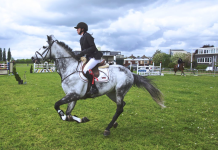

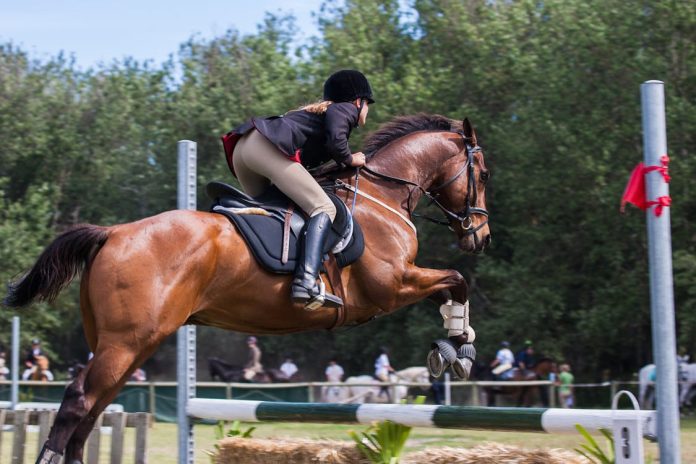
There is a particular kind of emotional damage that only a riding video can provide. You finish a lesson thinking you were soft, balanced, elegant even. Then someone sends the clip, and there you are: leaning, bracing, tipping, pumping, collapsing through one hip, or making a perfectly innocent horse look like it has been asked to decode tax law. However, after the initial trauma, videos are one of the best weapons a rider can arm themselves with. It provides the rider with a perspective that can not be obtained from the saddle. It makes visible habits that are not felt at the time. Takes vague trainer statements such as sit taller and turn them into something that is clearly understood.
What matters is that riding video is not a measure of failure, ability or value. It is evidence, and it does require some interpretation. When used appropriately, video can demonstrate posture, rhythm, timing, straightness, release, balance and progression through time. It can show the rider if he/she is really riding with the horse or is constantly interfering every 3rd stride. But abused, it is another source of pressure: another clip to judge, crop, polish, post, compare and over-think. It is a sincere camera, but not a complete one. It can display exterior of the ride. It cannot demonstrate feel, context, pressure, intention, pain, fear, confusion, etc., or the horse’s history.
How the Camera Can Outdo Taste.
There are many self deceptions involved in riding. If a rider feels straight while seated heavier to one side, the seat height might need to be adjusted. Holding too much in one’s hands may cause them to feel soft. They feel safe behind fence, while their lower leg quietly emigrates. They may feel that they waited well, and in the video, they appear to have jumped the gun on the obstacle as if it had offended them personally. That’s where video really comes in handy. It provides the rider with an outside line of sight. It allows them to visualize patterns and not just through feeling, memory, or after the lesson, thinking to themselves.
Several Points to Remember
- Video is most effective in training when objectives are specific. It is a quick way to despair to watch a whole lesson and work out how to do everything better next time. It’s far more helpful to observe one transition, one line, one approach, one landing or one repeated habit. A rider can ask themselves: did I stay even through both seat bones? When I pulled back did the horse lose rhythm? Was I too quick to cross my hip before fencing? Did I actually ride the turn, or did I simply arrive there through hope and geometry? This type of targeted review makes video a teaching tool instead of a punishment tool.
- It can also assist riders and trainers to see changes over time. One day’s clip is only one moment. Development can be seen in several clips over the course of a few weeks or months: a more consistent canter; a quieter hand; a more confident horse; a rider sitting deeper without gripping; a line that used to be exciting but has become so boring it’s good.
That’s where simple editing really comes in useful. Riders can get a free online video creator tool, a browser-based tool akin to Clideo, to reduce long footage from lessons into short useful clips, write notes or captions, slow down a segment of a video, compare an old video to a new one, or create a clean video and send it to a trainer to review. The intention is not to film the ride. The idea is to get the useful part of the thing easier to be found. - Video is also valuable because riding is not only about how the rider looks. It is about how the horse responds. A clip can reveal whether the horse braces after a certain aid, drifts after landing, loses rhythm in one direction, hollows before transitions, rushes after fences, or changes expression when the rider gets tense. These details matter because the horse is not a prop underneath the rider’s improvement story. The horse is part of the system. If a rider repeatedly sits crooked, lands heavily, or pulls unevenly, the horse carries that pattern. In that sense, video is not vanity. It can be part of better horsemanship.
What Riding Videos Cannot Tell You
Despite its utility, video, is still a flat account of the three dimensional, physical, emotional and ever-changing experience. It depicts what took place from one viewpoint. It doesn’t tell all the reasons why it happened. A horse tossing its head may be responding to the hand, the bit, the saddle, some discomfort, confusion, expectation, weakness, freshness or something which has happened before the camera has begun to film. The rider who is making an awkward correction might be having a green moment, losing their balance, missing an aid on a lighter horse, or have been taught by the trainer a certain aid and that’s what is causing the issue. A 10-second video of the symptom can be exhibited. Does not always identify the cause.
A feeling of the horse is crucial in the sport of the horse. No camera can ever demonstrate the amount of pressure in the reins. It can’t tell if the horse was nervous in the saddle, if the rider relaxed at the proper second, or if the exit looked like a normal exit but was a big stride for that horse. It doesn’t reveal the horse’s full training record, the nerves of the rider, the weather, the footing, the warm-up or the vet’s context or the fact that everyone was doing their best on a bizarre Tuesday.