
BY HOLLY HUGO-VIDAL
Anyone who knows me, or has spent time in my program, knows I am a strong advocate for the basics. I teach the proven, classic fundamentals of horsemanship, always beginning with the rider’s position and emphasizing purpose and functionality. I often say, “functional follows form.” Position is not just about aesthetics. It directly impacts communication, effectiveness, and ultimately, the horse’s comfort and performance.
Over the years, I have written extensively and created countless videos on correct rider position. It is a topic widely discussed in our industry, and for good reason. However, in this article, I want to shift the focus slightly and highlight something I believe is just as critical, and often overlooked: true horsemanship.
Horsemanship goes far beyond maintaining a proper heel position or a quiet upper body. It requires a deeper understanding of the equipment we use, the horses we ride, and the responsibility we carry as riders.
Understanding equipment is an essential part of this foundation. Riders should not only know what bit is in their horse’s mouth, but also understand its proper name, how it functions, and why it was chosen for that particular horse. This includes understanding how different bits apply pressure, how that pressure affects the horse’s mouth, and why certain bits are appropriate—or not—for specific disciplines.
At a horse show, knowing what equipment is permitted in each ring is equally important. A gag bit, for instance, is not appropriate for the hunter ring. These are not minor details. They are fundamental knowledge points that shape a rider’s effectiveness and professionalism.
Correct hand position is another area where fundamentals matter tremendously. Maintaining a straight line from the rider’s elbow to the horse’s mouth is not simply for appearance. It ensures the bit sits comfortably in the corners of the horse’s mouth, encouraging acceptance and softness.
A common instinct when a horse raises its head is for the rider to lower their hands in an attempt to force the head down. While this may feel intuitive, it actually applies pressure to the bars of the horse’s mouth, creating discomfort and resistance. This is a perfect example of why explanation matters. Riders need to understand not just what to do, but why they are doing it.
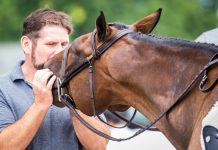
Knowing how to properly bridle a horse and understanding each component of the bridle is foundational horsemanship. Every piece has a purpose, a correct placement, and an appropriate fit. Take the throat latch, for example. Many riders are surprised to learn that it should be looser than the noseband.
There is also the familiar scenario of the well-intentioned rider who takes apart a bridle the night before a horse show for a thorough cleaning, only to struggle putting it back together the next morning. It underscores the importance of understanding your equipment before you need it under pressure.
Beyond the bridle, riders should be confident in a full tack-up, including proper saddle placement, correct girth tightness, and overall fit and safety. No matter who tacks your horse, the rider is always responsible for ensuring it is done correctly.
Horsemanship also means understanding the horse itself. Riders should be familiar with the basic anatomy and develop awareness of health indicators such as signs of colic, lameness, or swelling.
As riders progress, their education should expand to include practical skills such as wrapping legs. They are part of a well-rounded foundation. The beauty of this level of education is that it does not require a complete overhaul of a lesson program. These concepts can be seamlessly incorporated into daily rides and routines. The basics are the foundation for everything.
Holly Hugo-Vidal is a nationally respected equestrian professional, trainer, clinician, judge, and author based in Milton, Georgia. Originally from Bedford, New York, she operates Pacific Blue Training Stable and teaches at Michael Britt-Leon’s Windsor Stables. With decades of experience in the hunter, equitation, and jumper disciplines, Holly is known for developing confident, well-rounded riders through strong fundamentals, a thoughtful horse-first philosophy, and a focus on building both skill and confidence. A sought-after clinician, she has taught throughout the United States as well as internationally in New Zealand and Panama, and is the author of the bestselling book Build Confidence Over Fences, praised for its practical guidance on riding, mental strength, and partnership.