
BY NANCY K. CAMP
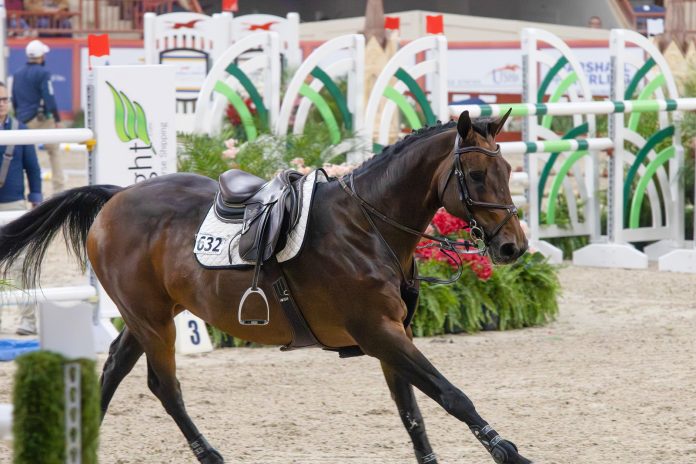
Picture this: You’re at a schooling show. Your horse spooks at the in-gate, and before you know it, you’re sitting in the dirt… in front of everyone. Chaos surrounds you as your trainer signals from the rails, people chase your horse, and a concerned individual hovers over you, asking if you’re alright. Every instinct tells you to jump up and get back on.
But what if waiting is the smarter, braver choice?
We’ve all heard it: “Get back on!” Advice intended to mark you as an accomplished horseman, but this guidance overlooks the immediate physical and emotional aftermath of a fall for both your horse and you. What’s more, this pressure often stems from external influences like peer expectations, competition, trainer directives, or the fear of appearing weak in front of others. But true horsemanship means resisting that pressure when your horse’s welfare and your own safety are on the line.
What’s Going On Inside You and Your Horse
A fall triggers shock in both horse and rider, and this is where the “get back on” reflex can make things worse.
For the rider, shock can show up as a racing heartbeat, shallow breathing, confusion, or disorientation. The signs of a concussion aren’t always dramatic. The USEF rules for rated shows have a fall protocol in place because riders might not accurately judge their own condition after a fall. Your judgment may be impaired at the very moment you need it the most.
For a horse, the sudden loss of a rider’s weight combined with the commotion of a fall triggers a deep, instinctual response rooted in his nature as a prey animal. He may spook at things he’d normally ignore or shy away from contact. Extreme situations may lead to defensive responses such as striking or rearing. These aren’t character flaws. They’re survival mechanisms, and they’re temporary. Disciplining him or climbing back on before he has settled can deepen his anxiety and damage the trust you’ve worked hard to build.
Recognizing the need to rest for a bit is not a sign of weakness.
The Partnership Perspective
At its heart, this is about how we view our relationship with horses. When we see our horses as partners and teachers rather than tools to be conquered, our entire approach shifts. A fall becomes an opportunity to strengthen trust, not to prove dominance. Choosing not to immediately remount is an act of respect and humility. It acknowledges that your horse has needs and experiences worthy of consideration, and that true partnership requires patience, not ego.
This perspective transforms how you handle the aftermath. Instead of asking, “How do I regain control?” you ask, “What does my horse need right now? What do I need?” The answers often require time.
What to Do Instead
Before you even think about remounting, run through this quick evaluation:
Check yourself… honestly.
- Are you breathing normally?
- Do you know where you are and what happened?
- Any pain in your head, neck, or back?
- If there’s any doubt, don’t get on.
Check your horse.
- Is he settled, or still anxious and unfocused?
- Run your hands along his back and legs, feeling for tight or knotted muscles, heat, or swelling.
- Look for signs of distress or behavioral changes.
Check the tack.
- A fall can shift equipment in ways that aren’t immediately visible. A twisted saddle pad or loose girth creates a fresh problem the moment you put weight in the stirrup.
If something feels off, trust that feeling.
Try Groundwork First
One of the best tools in your post-fall kit is groundwork. Before remounting, spend a few minutes doing calm, familiar exercises on the ground to help your horse relax and refocus. This offers your horse a reset. It lets him find his feet again, and it gives you a moment to check in with your own body and composure.
Groundwork also serves another purpose: it rebuilds the emotional connection between you and your horse. It’s a way of saying, “We’re okay. Let’s start over together.” When you do get back on, you’ll both be ready.
A Note for Junior Riders
Stepping up to say, “I need a minute,” or speaking up for your horse’s needs requires genuine courage. Your body’s signals are key to improving riding safety, skill, and the trust you share with your horse. The riders and horsemen we most respect are the ones who make wise choices under pressure.
The traditional advice of immediately remounting after a fall comes from a place intended to show resilience and heart. But resilience means being smart enough to assess the situation and confident enough to act on what you find.
Take the minute. Check things out. Then decide. That’s riding with your head and your heart, and your horse will be a better partner for it.
Nancy K. Camp has spent decades with horses, rethinking everything she thought she knew about training. She is the author of In It for the Horses: A Journey from Whips to Whispers and co-author of Connect with Your Horse from the Saddle with Peggy Cummings. Based in Idaho, she challenges traditional training myths through writing and advocacy grounded in empathy and a spiritual connection with horses. Learn more at www.wholehorsetraining.com