Brought to you by The Plaidcast
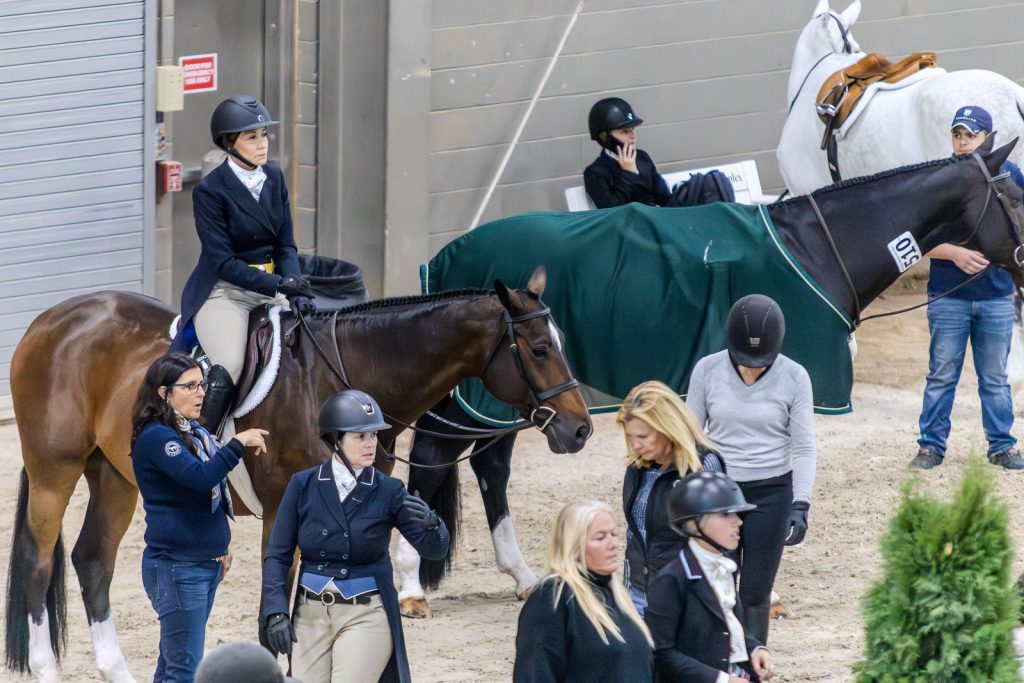
Watching other competitors can be a valuable part of preparing for a class, but at what point does watching become more distracting than helpful?
For some riders, spending too much time observing the competition can create unnecessary pressure and lead to second-guessing their own riding plans. Mental skills coach Tonya Johnston believes the answer isn’t necessarily to stop watching other rounds altogether. Instead, riders need to understand how observing competitors affects their individual mindset and performance.
For Junior Hunter Finals West grand champions Hailey Eynon and Sophia Donald, learning when to step away from the ring has become an important part of their mental preparation.
When Watching Turns Into Comparing
At major competitions, it’s easy to become absorbed in what everyone else is doing. Riders watch competitors navigate the course and mentally calculate what they might need to earn to move up in the standings. While that information may seem useful, it can also shift a rider’s attention away from the things they can actually control.
Eynon recalled that earlier in her junior career, hearing another rider receive a particularly strong score could immediately change her mindset.
“Sometimes I would feel the pressure; if someone went before me and they had a really good score, I’d be like, ‘Oh, I have to get this score to win,'” she explained.
The result was often increased nervousness rather than improved preparation. Johnston describes this as moving from an action-oriented mindset into one focused on comparison.
“I would say for the majority of people, watching too much is mentally fatiguing,” Johnston explained, adding that it can put riders in “a real comparison frame of mind instead of an action frame of mind.”
Rather than focusing on how to ride their own horses effectively, riders begin measuring their performances against rounds they haven’t even completed. That pressure can introduce hesitation, self-doubt, and unnecessary adjustments to a plan that was working perfectly well before they started watching.
Learning When to Walk Away
For Donald, managing the time before a major championship class involves being intentional about how much she watches. At Junior Hunter Finals West, she was particularly mindful of her mental preparation before the handy round. She entered the class leading the standings, a position that could easily have intensified the pressure to protect her advantage. Instead of remaining at the ring and watching every competitor, she followed a familiar routine.
“I actually only watched like two rounds, and I just kind of treated it like a normal day,” Donald recalled.
After walking the course, she left the immediate competition environment and found other ways to occupy her time. That approach helped her avoid becoming overly focused on the significance of the class or the results she hoped to achieve.
Eynon has developed a similar approach. Rather than staying at the ring and watching every round, she sometimes spends time with friends or hand walks her horse while waiting for her turn.
“I just need to have a good round, just ride my best, and not focus on other people in my division,” she explained.
Not Every Rider Needs the Same Routine
Although limiting the number of rounds they watch works well for Eynon and Donald, Johnston emphasizes that mental preparation is highly individual. Some riders gain confidence from observing numerous rounds. They may feel reassured by knowing how the course rides or enjoy gathering as much information as possible before entering the ring. Others become overwhelmed when they watch too much.
A routine shouldn’t be adopted simply because a successful rider uses it. Instead, riders should consider how they feel and perform when they follow that routine. Does watching another round provide useful information, or does it introduce new concerns? Does hearing a high score motivate you, or does it make you question your ability? Do you feel more prepared after watching, or more nervous? Those answers can help riders determine whether they should remain at the ring or step away.
Trusting Your Preparation
One of the biggest challenges in high-pressure competition is trusting the work that has already been done. Riders spend weeks, months, and sometimes years developing their skills and partnerships with their horses. But when they arrive at a major championship, the temptation to gather more information or change their strategy can become difficult to resist.
Johnston noted that knowing when to stop watching can also demonstrate a rider’s trust in herself, her horse, and her team. Rather than continually gathering information or questioning her preparation, a rider can rely on the system she’s developed and focus on executing her own plan.
Johnston described the confidence behind that approach as a rider being able to tell herself, “I’ve got a system, I don’t need to, like, overwatch or overthink.”
That trust recognizes that additional information isn’t always necessary to produce a successful performance. For Eynon, that confidence includes reminding herself not to abandon her plan simply because another rider performed well. “Don’t focus on the other people. Don’t change your plan,” she said, describing the reminders she uses before competing.
Finding Your Own Sweet Spot
Developing an effective pre-competition routine takes practice. A rider who typically watches every round might experiment with watching only a few before stepping away. Someone who feels unprepared without observing the class may find that watching more is beneficial.
At its best, watching other riders provides useful insight into the course and the challenges ahead. But once that information begins encouraging comparison or self-doubt, it may be time to redirect your attention.
To hear more about the mental strategies Hailey Eynon and Sophia Donald use to prepare for major competitions, listen to their full interview with Tonya Johnston on The Plaidcast. Subscribe and follow The Plaidcast on your favorite podcast platform for more conversations about riding, mental skills, and success throughout our industry.