LISTEN NOW
To listen to the Plaidcast, you can use the player above, Stitcher, Spotify, iTunes, Google Play Music, or your other favorite podcasting app!

Piper speaks with internationally known FEI Level III course designer Anderson Lima. Justin Garner, the Senior Director of Hospitality Operations and Marketing at World Equestrian Center in Ocala, Florida, also joins to talk about the upcoming Longines League of Nations™ event and new developments at WEC. Brought to you by Taylor, Harris Insurance Services. Listen in!

GUESTS AND LINKS:
- Host: Piper Klemm of The Plaid Horse Magazine
- Guest: Anderson Lima is an FEI Level III course designer from Brazil. Anderson is well known for his course designs at the 2003 Pan American Games in Santo Domingo, Dominican Republic; the South American Games in Sao Paulo, Brazil; Spruce Meadows in Calgary, Canada; and multiple FEI World Cup Finals in Las Vegas, Nevada. Anderson also designed the track for the famed $226,000 Sapphire Grand Prix at the 2023 Devon Horse Show.
- Guest: Justin Garner is the Senior Director of Hospitality Operations and Marketing at World Equestrian Center in Ocala, Florida. Justin has been an integral part of the WEC brand since the opening of the Ocala facility in 2020. Justin has led a team that has grown from four to over 700 and contributed to establishing World Equestrian Center – Ocala and The Equestrian Hotel as top destinations in Florida and beyond. Though he’s not a lifelong equestrian, Justin embraces the WEC values of Quality, Class, and Distinction.
- Title Sponsor: Taylor, Harris Insurance Services, Taylor, Harris Insurance Services (THIS) was founded in 1987 to provide specialized insurance for all types of equine risk. THIS places their policies with the highest rated and most secure carriers, meticulously selected for reliability and prompt claims settlement. THIS is proud of their worldwide reputation for responsive and courteous service, and welcomes the opportunity to discuss your equine insurance needs and provide you with a quote.
- Subscribe To: The Plaid Horse Magazine
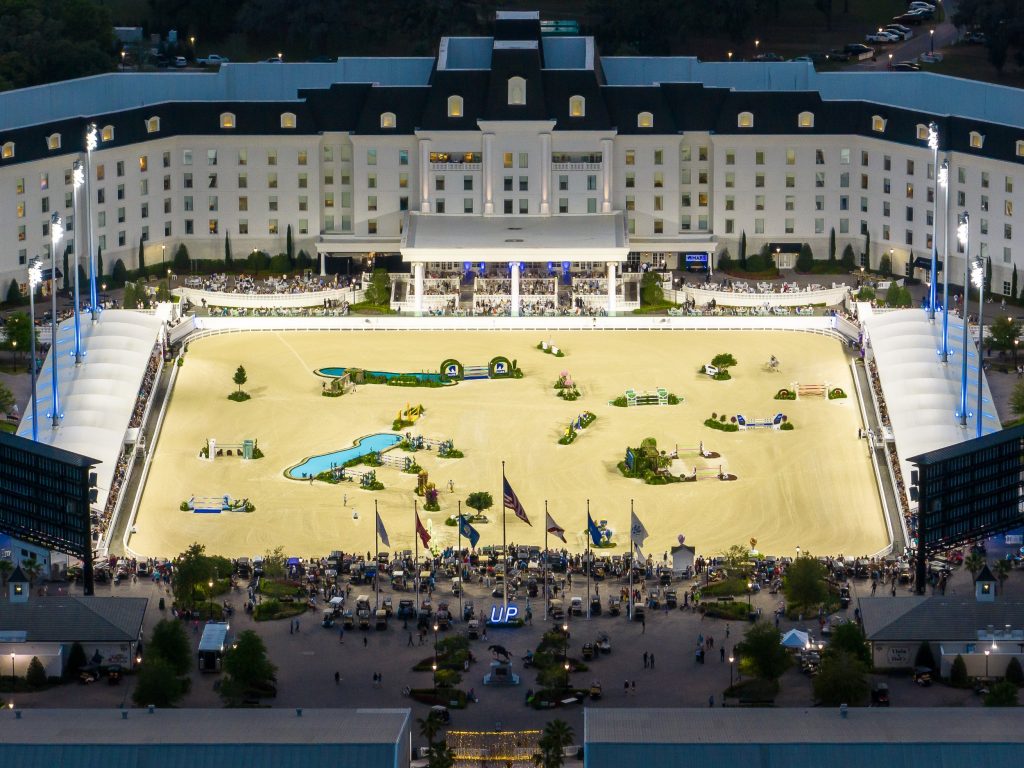
- Photo Courtesy of World Equestrian Center
- Sponsors: American Stalls, Purina Animal Nutrition, America Cryo, LAURACEA, Wordley Martin Premium Equestrian Surfaces, BoneKare, Show Strides Book Series, With Purpose: The Balmoral Standard, Good Boy, Eddie and World Equestrian Center
This transcript was generated automatically. Its accuracy may vary.
Piper Klemm: This is The Plaidcast. I’m Piper Klemm, publisher of The Plaid Horse Magazine. And coming up today on episode 371, I talk with internationally known FEI Level 3 horse designer, Anderson Lima. And then I will be speaking with Justin Garner, the Senior Director of Hospitality Operations and Marketing at World Equestrian Center in Ocala, Florida, about the upcoming Longines League of Nations event and new developments at WEC. This episode is brought to you by Taylor Harris Insurance Services. Anderson Lima is an FEI Level 3 course designer from Brazil. Anderson is well known for his course designs at the 2003 Pan American Games in Santo Domingo, Dominican Republic, the South American Games in São Paulo, Brazil, Spruce Meadows in Calgary, Canada, and multiple FEI World Cup Finals in Las Vegas, Nevada. Anderson also designed the track for the famed $226,000 Sapphire Grand Prix at the 2023 Devon Horse Show, and most recently was designing at World Equestrian Center Ocala. Welcome to The Plaidcast, Anderson Lima.
Anderson Lima: Hi, thank you very much for having me here.
Piper Klemm: Can you tell us a little bit about your passion for horses and how you started course designing?
Anderson Lima: Yes, for sure. So, I started a long, long, long time ago. I come from a horse family. Back when I was a kid, maybe I don’t know, 12, 13 years old, I would always live in the farm. And I just remember when I started riding at that time, together with my dad, Paulie, my dad, around. And he was watching his videos, competing, and I was sketching, drawing on napkins, on papers. And I just went back to him, just like, look, this is your course, this is what you’ve been jumping. And that was pretty much when I started to get interested for course designing.
Piper Klemm: I think a lot of people look at the courses and the disconnect when I talk to people is they don’t always understand how much the course designers play a role in the development of horses and how much responsibility is on your shoulders, especially in a young horse class where you’re setting to really grow the horses and make them better and help them achieve their goals. And even if they have four or eight faults, help them learn to be better competitors, the horses.
Anderson Lima: Yeah, I mean, it is very difficult to present that week by week and class by class, especially with the young horses, suit the class, suit the course for the class for the young horses. It’s very difficult because we’re not there to over test in them or do something that they’re not ready for or they’re not prepared for. So for sure, in the same class, we have horses that are a little bit more developed than the others. So we need to find the right lines and the right balance between jumps. So they can keep developing the career and find the right color for a combination or the right line, the right fence. It’s very complicated. And we’re really pleased when we see a horse that sometimes is not around. So they have four faults or eight faults, but they still walking out of the ring on a good pressure from the riders.
Piper Klemm: Can you talk to us about some of kind of the training questions you ask in courses or some of the questions you like to ask? You know, for example, we see in a lot of Grand Prix classes, you have something like a triple bar or a very wide jump and then, you know, have to shorten up to a very upright, tall vertical. Like, what’s that asking of the horse? What’s that asking of the rider?
Anderson Lima: Yeah, today, I think on today’s courses, we pretty much are testing more riders than the horses. I think we’re not, I mean, I don’t like to be tricky. I don’t like the tricky word. I like to be fair. I like to be fluent between jumps and lines. I think we have a group of questions. They are very over-testing sometimes. As you said, like the triple bar to a skinny or this is, those tests are very difficult for a group of horses. And I mean, like for me, I like to create nice lines and pretty much jump in front of the others. But do a nice balance between forward distance and a little bit short distance and normal size jumps. I like to create, for sure, when you talk about grand prix, we like to create the right dimensions, the proper dimensions. But I like to do tests with colors, with some jumps with a little bit more open space, and some jumps with a little bit more solid, to have a little bit more planks and walls and some of those elements that we create in the course. And we like to keep testing the riders that way.
Piper Klemm: So you just recently set for the World Equestrian Center in Ocala, which is a massive ring. I want to talk first about courses you did last year, which you set for the Sapphire Grand Prix at the Devon Horse Show. Can you talk about why Devon’s kind of uniquely challenging the Dixon Oval is not very big? And I can’t really think of another ring in the country where spectators can stand quite so close to the jumps. I mean, there are people truly on the rail all the way around that ring.
Anderson Lima: Yes, that ring is very special. I did know that because I was there many, many, many years ago. I did crew there for, I think, one year or so. That was doing crew for me was part of my degree on my school, on my course designing career. And I was back Devon last year. I was really pleased to be there to do the courses for the Sapphire Grand Prix. And the atmosphere, it’s just incredible. Like the venue and have that. I don’t know how many people was there, but every single horse, they cheered for everybody. And being a course designer for that event, it was very special for me. And you can truly feel the tradition at the venue and the Grand Prix. It’s just an incredible feeling. And on the other hand, doing WEC, it is one of the greatest venues that we have today. And the variety of material that we can have there, it’s very pleased to be a course designer on an event like that.
Piper Klemm: So that’s the complete opposite. You have the most absolutely massive ring. How do you set differently there? You have so much access to decorations. I’m sure they’ll probably build you anything you want. And how do you set a different course there? What questions you ask the horses that are different? You both have a massive crowd, but it feels, it has such a different feel to the ring and to the horses.
Anderson Lima: Yes, as you said, they’re completely different. On that one, you use every single inch of the ring, every single centimeter of the arena, to place the jumps there to make the connection between jumps, to not be too aggressive or to not even hide the jump behind the others. So it’s quite a challenge because you have the decorations, you have the jumps that you need to place, you need to place the decorations. So to create the lines, you really use every single inch of the arena. And on the other hand, you have the WEC arena, what’s a really big arena, that you can use anything as a decoration. The jumps are big and a single wing or a single standard inside that ring doesn’t look good. So you need to have extra wings or extra standards to use as a side decoration. So the horses feel that jump more welcoming, just a single skinny jump there just in the middle of the arena. So there are two different awards for course designing and I love both.
Piper Klemm: What looks like a successful Grand Prix class to you? Do you aim for a certain number in the jump off? Do you want like a certain percentage of the class? I know that most of these classes pay out till 12 and people, you really don’t want more than that because people want money if they’re going to prize money, if they’re going to jump off. How do you balance the course being too hard, too easy? What’s a good number for the crowd to jump off and have that excitement, but not get too fast and too drawn out?
Anderson Lima: Yeah, it’s, I mean, on today’s sport, I think it’s hard to say the right number. I mean, like my opinion for sure, any number between 6, 8, 10, it’s a good number. Some places suit for a 6, some places suit for a 10, some places suit for a 12. Like, okay, you have, for example, you have the Sapphire Grand Prix and you have that amount of people and you want to place them with more than 3 clears, more than 4 or even more than 6. But at the other hand, you have the riders that they don’t want to compete over 12 horses because they have to go too fast or too easy to that. So I think it’s, I mean, the right number, it’s hard to say one number, but I think any number between 6 to 10, it’s a good number. But some places the 12 is a great number and some places the 3 is a great number. So it’s difficult to say, but a good Grand Prix with a good jump off, sometimes you have a 3 and that’s a good, it’s a great class. And sometimes you have a 10, it’s a great class. But I think the riders, they will always find a different opinion than yours.
Piper Klemm: Well, you only make one person happy every time. That’s in the job description.
Anderson Lima: Yes, correct. And it’s not easy because for sure we try, I mean, I think you can ask every courses on it. I mean, we just try to do our job and find the right class for the right horses or for the right place that we are and to test the riders. And it is very difficult week by week. We’re trying to do our best. It’s not easy. We have so many elements that influence that. The weather, the sun, the arena, the wind, the material, the footing. So everything, it’s not plain. It’s not like a plain against us. But we have to use and take care of all those elements when we design a course and when we design the Grand Prix. So we’re just trying to do our best. And sometimes you get it, sometimes we’re missed.
Piper Klemm: Talk to us a little bit about different footing and designing for different things. I know that you’ve designed at Spruce Meadows. Tell us what it’s like up there for the people listening who haven’t been there. I mean, the fields are absolutely massive. The crowds are massive. And again, you have so many options with all that space. How do you set good tests for horses jumping on grass?
Anderson Lima: Yeah, I love grass fields. I mean, I think that is where I… Not that I enjoy the most, but I think when you have those grass fields and you open up the tracks or the course between jumps and see a horse galloping, I mean, that for me is just a pleasure because I’m passionate for sport and I love horses and to see a horse jumping in the grass field and a big wide open grass field, I just enjoyed that a lot. In Spruce, it is unique and you have all those arenas and the tradition that they have there. As you can see, every year they keep creating new improvements and facilities. They just did remodellation on the whole Canada Ring. I’ll be back there this year for the summer series for the North American Week and for the Masters also, helping Leo there. As Spruce and I’m here in Mexico this week, and in a few weeks I’m going to do the 5-star in Jalapa, that we have another big grass field that is just amazing. I was in Wellington a few weeks ago doing the 4-star at the grass field there, and I enjoy it a lot. All those big grass fields venues, you can create a different sport, like the speed and the jumps and the distances, and even the material they use. It is a different sport, and I really like it. We enjoy it.
Piper Klemm: Speaking of creating a different sport, I think the materials and the jumps you all choose have such a big impact on the breeding and the training of all these horses. And you almost get into this weird position where people want similar to what they’ve been seeing. So you probably almost get this pressure to not be too creative or too outside the box. But then when you do something that’s too similar and too consistent, the breeding and the training skews towards that so much that you kind of get these so extremely purpose bred and purpose trained horses. How do you kind of balance being creative, asking new questions, and kind of that backlash of people who want it to be how it was?
Anderson Lima: Yeah, I think when you talk about creating a new sport, it’s like, sorry, create a new course or trying to be different. I think, I mean, with me in my courses, I’m not trying to create the wheel or reinvent the wheel. I mean, I think my opinion about my courses, I’m pretty boring because I think my tracks are very similar. For sure, I try to create different things inside my style. I’m not trying to reinvent different things over my courses, over my style that I do my courses. But for sure, I always try to create new lines under my style. I have some certain things that I like to do, and I think that’s what brought me the course design that I am today. So I have no reason to change it, and I think that’s why people like my courses, why people are still interested in my courses and skills. So to present those tests on different venues, like for sure on the grass field, you just have to work with more space. You end up creating new things where you have more space to do your courses. And when you go to the indoor field, you have less space to create those lines. So you have to adapt and recreate your course designing skills into that arena. So I think that’s a little bit of how you try to create new things on your course design style. So it’s hard to keep it up and not go outside the box and try to create the wheel on a different way.
Piper Klemm: For listeners that are kind of involved in different areas of the sport and maybe not as familiar with FEI, what would you say differentiates the three star from the four star from the five star? Like, how are the courses built? How are the questions asked to make it more challenging and to have it be that increasing level of difficulty?
Anderson Lima: Yeah, I think, I mean, today, when we go to the three star, like from a five, let’s go backwards, a five to a four to a three. When you go a five and a four star today, you have a certain requirements that if those Grand Prixs are qualifiers for World Games or for the Olympics or for any of those huge meter 60 classes, we have now, the FEI put some rules that we have a certain amount of jumps on the certain heights that we have to present the course. So sometimes the difference between a four star and a five star today in the meter 60 Grand Prix, it’s very little because a meter 60 Grand Prix and a four star in the meter 60 Grand Prix and a five star, they have pretty much a minimum of requirements that they are the same over a meter 60 Grand Prix. So for sure, you create a little bit. The lines are pretty similar on a meter 60 Grand Prix from a four or a five. But, I mean, height wise, the difference is small. But when you go to three star, you have one step down that you can have the Grand Prix meter 55 or meter 50. But you still have, when you are at the meter 55, you still have those requirements that you have a certain amount of jumps that you have to have on a height. But when you go to a three star meter 50 Grand Prix, height wise, you can go more soft on the heights. But the technicality of the course on the meter 50, three star, it’s a more pleasant Grand Prix designing, Grand Prix drawing than from a four or five star.
Piper Klemm: And what is that kind of technicality? We hear a lot of people say that all the time, but what does that mean to you? Is that width? Is that questions asked? Is that striding questions? Is that combinations?
Anderson Lima: Yeah, I mean, it’s a group of elements that you present in the course. OK, when you’re like in the three star, one meter, 50 Grand Prix, like the width, you don’t need to go all the way to the maximum width on every single jump in the course. The lines, for sure. I pretty much use normal distance between jumps, and I try to present a little bit more tests with the elements that I can use at the jump, the color of the poles, a little bit more solid jump to a little bit more plain open space and jump. You can do, like, I don’t know, a line. You connect one combination to a line, and then you do a line to a combination. You create elements in the course that you can test them on a nicer way than the three-star, than the four, than the five.
Piper Klemm: Tell us about some of the courses that really stand out over your career that you designed that really you walked away from and were like, wow, and what made them so special?
Anderson Lima: This is a very difficult question because, oh, wow, I don’t know. It’s not just about designing big grand prix’s or big classes and have a good result. I don’t know, this is my dream job, like I live in my dream now and I have chances to be in the places that I am now and that I’m designing in some shows that I’m doing now. I put the same effort every single week for every single class. Doesn’t matter if a little small class or a five-star grand prix. I have some shows and some classes that I’ve been designing that I never dreamed that I was able to do that. And I think everyone is pretty special to me.
Piper Klemm: Are there any riders that walked out that you really remembered, you know, like loved the course? I feel like when I talk to Hunter riders like about their favorite trip or something, like they always know who is judging. They always know, you know, it’s that human component too that makes things special.
Anderson Lima: I have one, but I think it doesn’t suit with that. But I did the two-week show here in Mexico. I was doing the national championships. And I did the first week, I did the Grand Prix at the main arena. And the second week, I went to do the 0.80s class. So I was walking the course in Chuck in the Arena early in the morning, and a trainer and a student and the kid, he was walking by me in the training. And he came to salute me and say, Anderson, good morning. How are you? And then he stepped out. And then the kid, I was already one step in front of them. And I heard the kid asking him, so that’s Anderson? He did build the Grand Prix last week, and he’s building my course this week? Wow. So I think that was pretty sweet from the kid. And I felt really nice on that.
Piper Klemm: I love that. Anderson Lima, thank you so much for joining us on The Plaidcast.
Anderson Lima: Thank you so much. Thanks for having me here.
Piper Klemm: Justin Garner has been an integral part of the WEC brand since the opening of the Ocala facility in 2020. He has led a team that has grown from four to over 700 and contributed to establishing World Equestrian Center Ocala and The Equestrian Hotel as top destinations in Florida and beyond. Though he’s not a lifelong equestrian, Justin embraces the WEC values of quality, class, and distinction. Welcome to The Plaidcast, Justin.
Justin Garner: Hi, good morning.
Piper Klemm: One of the few consistent things at World Equestrian Center is that there’s always construction. There are always new things. Can you tell us a little bit about some of the new projects that are getting finished up right now that we can enjoy soon and then kind of some of the longer term projects that are still happening?
Justin Garner: Yeah, I mean, I guess the two soon projects that will finish the soonest will be the new hotel, the Riding Academy, which will open in end of March, hopefully in time for the League of Nations event. But that’s available now for booking, so we’re excited to see that. That’s 390 rooms, plus great pool, outdoor spaces. We’ve got most of those rooms are actually doubles, and they’re one-bedroom suites. So of the 390, about 250 of them are actually suites, so people can really spread out and enjoy. It’s a really great product. We’re excited about it, so that’s come along really well. And then our new dressage venue at the back of the property and indoor Arena 6 will come online, hopefully, beginning of April, so right about the same time. So we’ve got all of the new north area that’s been developed over there with the new outdoor rings. We’ve got seven total on the north side now, which will all be lit so we can go all day and evening, which is going to be great. But we’re really excited about Arena 6 coming online in the back, and that’s going to be a great venue for us to continue to grow Dressage. So those are the two projects that are probably the most exciting that will happen the soonest. A little more further out into 2025, we’re excited about the event center. We’ve got a huge building, 180,000 square feet, has some traditional meeting space in there. We’ve got an 8,000 square foot grand ballroom, a total of about 80,000 square feet of indoor meeting space and function space for parties and group meetings and concessions and things like that. “And then we’ve got some really cool outdoor space at that building as well for, again, weddings and really fun outdoor parties. And then with that building, we also have four new restaurants that will be coming, two of which are rooftop venues. So we’re excited to have some more casual dining options with a great view of WEC from the rooftop. And then we’ve got a retail coming. So the retail village will start a little bit later this year, hopefully opening in late 2025. But we’ve got 21 outdoor retail shopping venues right on site. So you can ride all day and shop and eat and drink all night. So we’re really excited about the venue enhancement. The venue enhancements coming in the next two years. “And then we’ll start work on the polo fields sometime late this year. So those will open in late 25 or early 26, depending on the growing and how the turf comes together. But we’re really excited about continuing those developments.
Piper Klemm: I was just reading about how the US has actually the most high-level dressage events in the world. And World Equestrian Center is a big part of that kind of shift over here.
Justin Garner: Yeah, it’s really exciting to see. We’ve seen in the last three years our shows definitely getting bigger. So it’s really exciting to see us adding the number of shows in the US, but also the involvement and the entries of each of those shows growing. So it’s exciting.
Piper Klemm: One of the things people always tell me, no matter how many times they’ve seen the pictures, and they’re so excited to go that the food options at World Equestrian Center are so much more than what they imagined. Can you tell us a little bit more about the food that’s on site now and what the different restaurants are, and for people who still haven’t come, what they can expect? And as you said, you have four new restaurants opening.
Justin Garner: Yeah. Well, I think a couple of fun stories on that. One, we jokingly say on the hospitality side that I was employee number four, and the first three employees were all chefs. So our executive pastry chef, Johan, and then our previous director of culinary, Riker Brown, were all hired first to open the hospitality side. So that’s how important the restaurants were to ownership from the very beginning. And the planning that went into those. So yeah, the food options are plentiful, for sure. And you can do everything from our quick service during the day. So when our riders, competitors are here, or visitors, and spectators, you can grab quick service at Filo’s and do a build your own burrito or salad. So the Mexican Cantina, we’ve got Viola and Dots, which is our quick service Italian. So you can grab pizza by the slice. You could build your own salad there as well, or build your own pasta dish with homemade meatballs. So that’s a really good grab option. Those move really fast, so the riders can get in and out quick. Ralph’s Burgers and Sandwiches is another great option out on the property. That’s a lot of fun. You’re going to get an amazing house burger in there. We’ve also got Tilly’s, so we’ve got ice cream and fudge shops. So if you have your sweet tooth, we have the Big Marion County Daddy Daughter Dance this weekend, and that’ll get overrun with kids getting ice cream. So we’re excited for that. And that’s outside on the property, out and around the barns and the show arenas. And then in the hotel, you’ve got Yellow Pony, which is our pub and garden, some great outdoor space, live music, great bourbon selection, a really eclectic menu, everything from burgers and nachos to sushi, great salads, more healthy options in there, just a really great menu in there. And then stirrups, obviously, is kind of our peak dining experience overlooking the Grand Arena. So you get that great view and that southern-inspired steakhouse, so Prime Steaks and the chefs in there really have a great time with the menu and rotating that through. And then we’ve got amazing wine lists. So we have a Master Sommelier on staff. For those Eno files that are out there, we’ve got an amazing wine list. I think we’re well over 6,000 bottles in the cellar now and really building some great verticals there. And then you’ve got the retail options on top of the restaurants. So we’ve got, you know, Lugano. We just finished opening three additional stores in the hotel. So we’ve got John Craig, which is Men’s Clothier, Jay McLaughlin, which is a national retailer. We opened the Equestrian Collection, which is our home store. So all the finishes and custom furniture that we did for the hotel, for the Equestrian Hotel, are available for purchase. And then we opened Rooney’s Boutique, which is a high-end women’s clothe carrying some more custom brands. In addition to all the Ariat and all of our great tax stores, and we’ve got tons of options now. We just had Lemieux just opened their first flagship store in the US here, so we’re excited to welcome them in December. So the retail options are fun, the dining is great, and of course the sport aspect of it is top-notch as well.
Piper Klemm: I think it’s been a really interesting change from, you know, people used to go to horse shows for a fewer number of days per week, and then there was kind of, you know, we’ll call it grudgy food, which is fine if you’re doing it occasionally, but we moved in this lifestyle to being at the horse show all the time or going for 12 weeks straight. And these kind of old patterns, they just don’t, you can’t eat those options for 12 weeks. And our sport was, I would say, a little slow in catching up with this, so I think having all the healthy options, it makes such a difference because this is people’s homes now. It’s their home for three, six, 12 months a year.
Justin Garner: Yeah. I think especially as we look towards the three new full-service restaurants that will be in the event center, and then the fourth restaurant will be another bakery and pastry shop to go with Emma’s in the hotel, so really focused on. We’ve got our signature dining experience at Stirrups, and so we’ve got to kind of fill in that gap. That’s one of the feedbacks we hear, especially on the weekends here, is there’s not enough casual dining, and the way to Galluponi gets a little long, so more of those types of restaurants will be coming. I can’t say too much about the concepts yet, but one of the rooftops will definitely be a sushi restaurant, so we’re all very excited about that here in Ocala, even selfishly do that for ourselves. I think that’s part of what World Equestrian Center has started to change in the industry, is becoming that full-time venue that’s here year-round. People can come for a couple weeks or come do the Florida circuit for the winter and spend some time at Terra Nova for a week and be down in Wellington for a couple weeks for FEI, and then come to Ocala and be within a three-hour drive of all those great horse shows.But the fact that we run year-round and we’ve got the summer circuits now and more of the Western saddle stuff coming back this year and kind of those shoulder months where we don’t have 100 jumper, it’s really exciting and it’s really opened the sport, I think, a little bit to more casual spectators at the facility, and certainly that was one of the goals of the facility was to really expose this amazing sport and this really exciting sport and the different elements of the sport to a bigger audience. So a lot of our day trippers and visitors that are starting to come in from some of our marketing efforts from the villages, from Tampa, from Gainesville, Orlando, some of the drive-in markets where people come out for the day and get to watch some amazing competition and shop and eat and really enjoy the facility or make it in overnight and stay in one of the hotels or the home away from homes and I think that’s been one of the great kind of unintended or intended consequences of a facility is, you know, we have these permanent retailers. A lot of our retailers have decided they can, instead of following all these horse shows and moving around the country, they can set up shop in one pace and there’s a nice balance to that where people get to live in one place for a little while and raise families nd, you know, it’s been interesting to see kind of WEC change that aspect of the industry a little bit.
Piper Klemm: And speaking of high-level sport, coming right up, we have the League of Nations. Can you explain to us what that is and why everyone’s so excited for it?
Justin Garner: Yeah, you know, it was really interesting when FEI put out a bid last year and they’re really looking at that, you know, 15-year-old Nations Cup model of, you know, competing around the world and trying to make sure that they had created a new excitement around that international team competition and making sure that we get the best riders at the best venues around the world. So they switched from 15 events in the Nations Cup down to five. So there will be four qualifiers around the world. The first one kicks off in Abu Dhabi next weekend. It will be the first qualifier and then Ocala will happen at the end of March, March 23rd. And then they go to St.Gallen and Rotterdam and then the final will be in Barcelona in October after the Olympic break. So I think it’s going to force or encourage the higher level riders. And obviously the timing for us here in Ocala works out great because we have some of the top riders already here in Wellington and here in Ocala competing. So I think we’re going to see some great sport. “But going to that one day, two round competition and really focusing on the top 10 jumping nations in the world, they’ll go to two rounds. First round will be all teams, four riders. And then they’ll go to a second round with eight teams, three riders. And they’ll walk away with some great prize money from those events. So we’re really excited to be involved with the Longines League of Nations event. We’re really excited to host our big first international team competition here. So we’re very excited. And we’re going to couple that obviously with our five star on the Thursday night of that week as well. So we expect many of those riders to have second horses here and compete in the five star. So it’ll be a really exciting week of show jumping and coming off of the Live Oak International the weekend prior. It’s going to be an exciting week here in Ocala.
Piper Klemm: Where can people get tickets? What can spectators look forward to? How should they be planning for this event?
Justin Garner: Well, they should first be planning to be here, enjoy our hotels and all the hospitality options. But most of the information can be found at WEC, W-E-C, longinesleagueofnations.com. So WEC, longinesleagueofnations.com. And that has all the ticketing information. There’s preserved seating available for multiple events throughout the week. The Grand Prix on Thursday night that I mentioned, the Friday Night Futures Prix, and then the Saturday event. So all the Longines team event will be one day on Saturday the 23rd. So all that information can be found there.
Piper Klemm: Thank you so much. Have a great day, Justin.
Justin Garner: You too!
Piper Klemm: To learn more about anything we’ve discussed on today’s show, visit theplaidhorse.com. You can find show notes at theplaidhorse.com/listen, follow The Plaid Horse on all the social medias. You can subscribe to the print edition of The Plaid Horse Magazine at theplaidhorse.com/subscribe. Please rate and review The Plaidcast anywhere you listen to it. And if you enjoy this episode, please share it with your friends. I will see you at the ring!