By REESE GALLAGHER
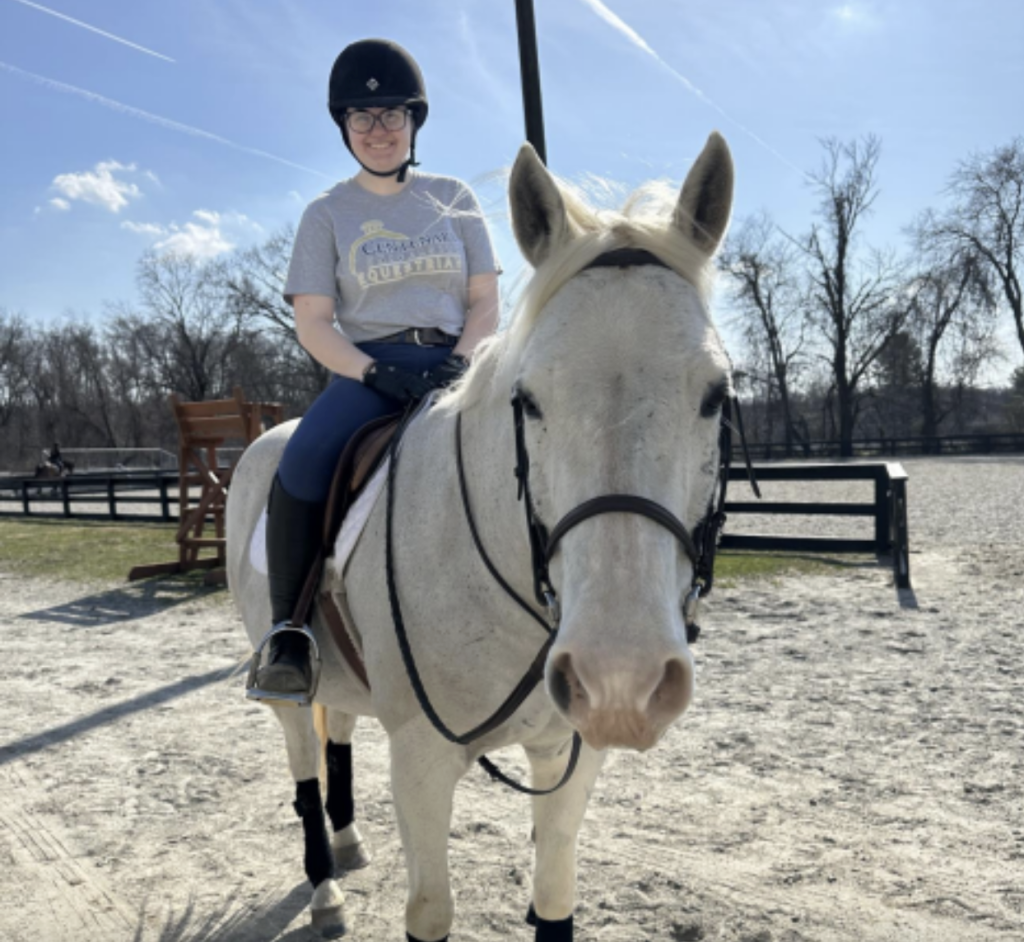
In my career, many of the horses I’ve had the privilege of learning on have been donated. This has created a productive learning environment for me and has created a more accessible way of learning for me as someone who is not financially able to have a horse of my own. As a result, I’m spreading education and awareness and becoming an advocate for donating horses as a form of rehoming; I want it to be an option that comes to people’s minds before they try to sell their outgrown horses.
The benefits of donated horses in collegiate equestrian programs span far and wide, like acting as athletes in IHSA and NCEA horse shows, but one that is overlooked is the part they play in shaping our industry’s future professionals outside of the competitive aspect.
Making Our Industry Stronger
Many collegiate programs do not have the funds or resources to purchase reliable teaching horses, which is what causes them to rely on donors in the community. More and more, professionals in our industry are choosing to donate their horses after they have had a successful career, paid their dues, and are ready to step down. Someone may choose to donate a young horse that has not shown an aptitude for horse showing, or an older horse that requires maintenance and cannot hold up to the job being asked of them.
Without the quality donated horses at my school, I would not be able to ride and learn to the level that I do today. It is likely that college, which is already financially draining for many people, would become more inaccessible for people who wish to take equine classes and/or compete on a team.
Keeping equine education affordable is crucial to the development of our whole industry–riding, horse care, and more. Without those programs, there would be a shortage of qualified, college-educated individuals. While a portion of today’s professionals may not have been college educated in equine studies specifically, it is becoming an increasingly popular route in our profession, in part thanks to the opportunities that donated horses open up. Some colleges have upwards of 50 animals in their program, and having so many different horses to ride and work on creates diversely experienced and well-rounded equestrians–both of which are traits that are sought after in our sport.
Giving Back
Whatever the reason for donation is, a college program will always have a place for a horse, even if they can’t be used for as high a level as they once could.
Many of our emerging professionals have donated horses in thanks for their foundation, in and out of the saddle.
College horses have many responsibilities inside the ring, but their jobs don’t start or end there. All the horses act as teachers in the barn as well, whether that is allowing an aspiring show groom to perfect their basic skills such as standing wraps and grooming, or acting as a teacher for your future vet to practice their joint injections and physical exams. Every horse has a lesson to teach, whether that lesson is learned in the barn or in the ring depends on the task at hand.
After graduating from college, many of these horses’ students are recruited by established professionals because of the connections and experience they have gained. Working with retired show horses and having the opportunity to perfect skills on patient teaching horses gives students a head-start in the equine world, and creates a highly capable and competitively educated individual.
Financial and Emotional Gain
Understandably, many people are initially hesitant to donate their horse. The main reason people choose to sell a horse as opposed to donating them is because they believe that the financial gain of selling a horse is better than donating one. They might also see the donation as a “waste” of a nice horse. Both can be untrue. Any certified equine appraiser can provide proof that the horses are high-performance sport animals, and the owners of said horses can gain a significant tax write-off from their donation. Many horse donations are charitable and tax deductible, and it can also be easier and quicker to rehome a horse through donation instead of weeding through the tire-kickers and truly interested buyers.
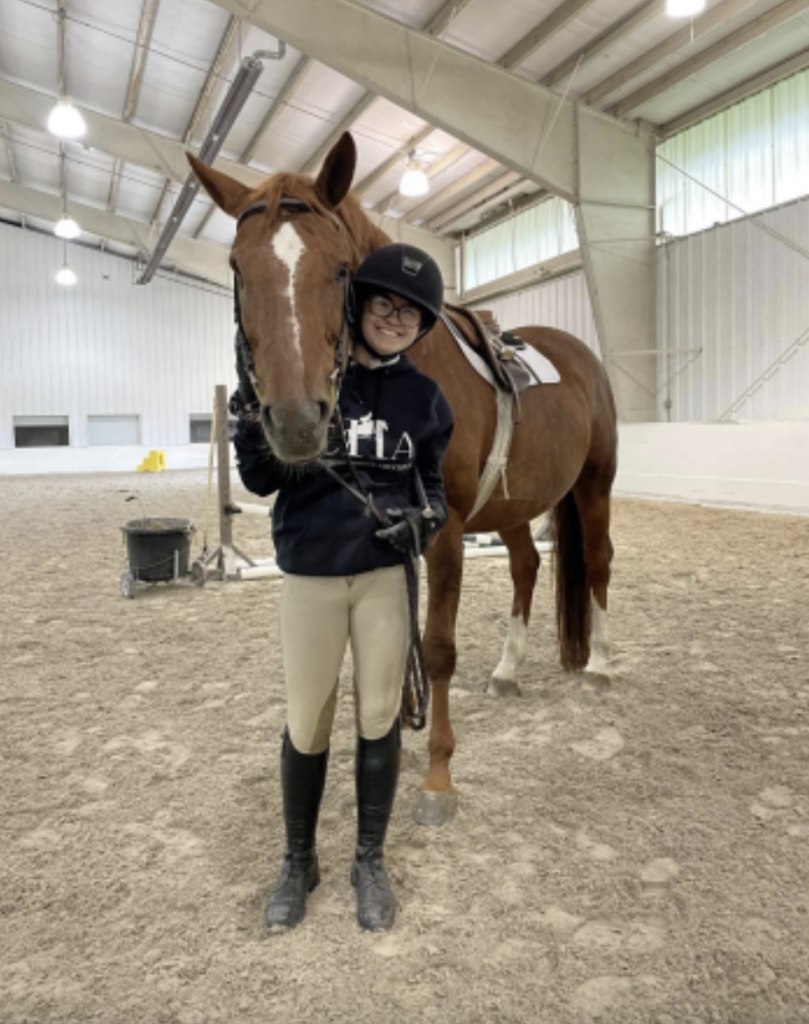
Additionally, many horse owners are skeptical about the care the horses will receive, and how long the horses will be of use to these programs. The simple answer is most horses will have a home for life! Horses can spend decades in a college program, working their way down from the open levels, where they are being ridden by lifelong riders–to the lowest levels, where they are showing the newest members of our industry the ropes. After spending only a year and a half in a college program, I have watched multiple horses find their place in lower-level riding classes after spending years as a top-level jumping horse and a top pick for intercollegiate horse shows. Many schools have vets working on-site every day, using the problems presented by program horses to create a hands-on learning experience while also alleviating the horse’s issues.
Without horse owners that are willing to donate their horses, we cannot create a productive learning environment for our emerging professionals. The young equestrians who will learn from your horse might one day be the leading equestrians and horse people of the world. In order to teach, schools need horses that will tolerate and have the experience to offer helpful and safe input. Many people don’t even consider donating their horses before trying to sell them, but it’s something that should become more normalized.
My hope is that every college that offers equine classes can have the number of diverse teaching horses that typical lesson programs provide by being able to purchase their own horses. Many people are familiar with donation but rely on the assumption that others are providing enough horses to help these programs run efficiently.
The concept of donating horses can be scary to horse owners, but I encourage everyone to do their research and weigh the pros and cons, and to consider the impact you are having on the future of the equine industry when you decide to donate your horse. The future is in your hands, and it is up to you, the current pros and owners, to create the future professionals that you want to see in the world.