We Are All Responsible for Making Our Sport More Accessible—The Future is at Stake
By RENNIE DYBALL
Just a few miles from my childhood home, up a windy road through the woods, a large riding facility perched atop a grassy hill.
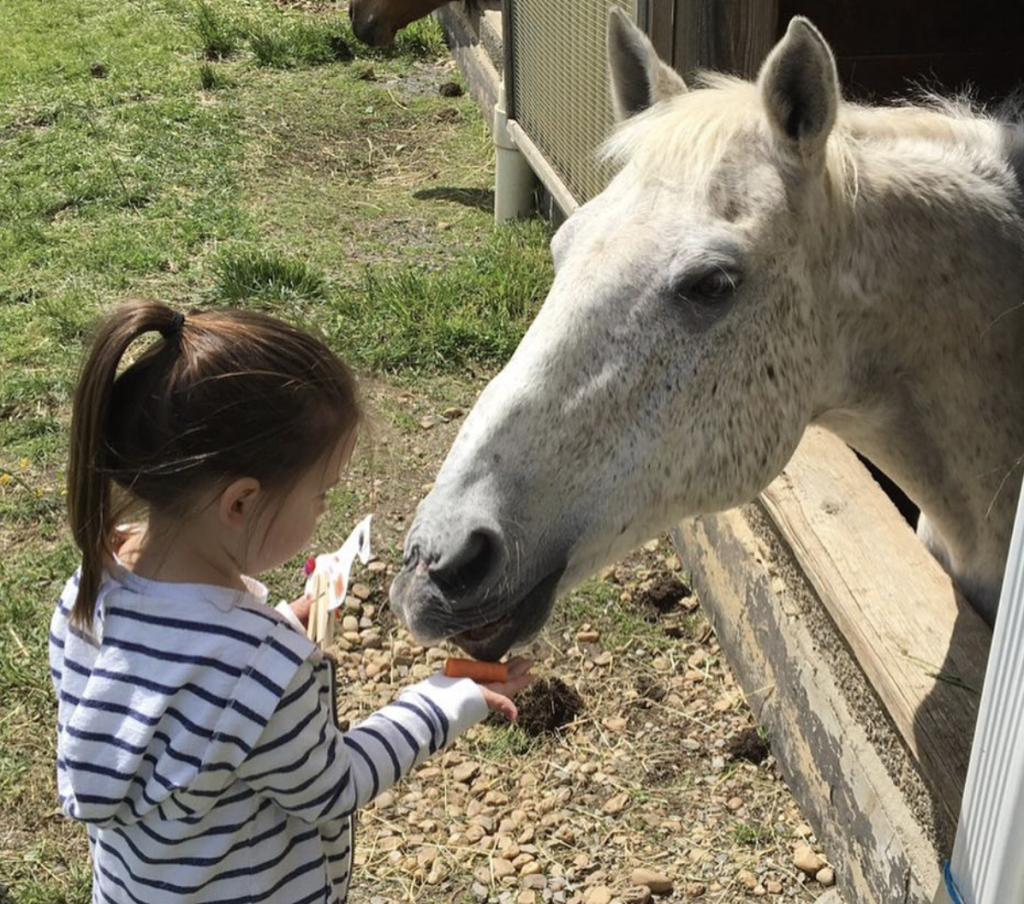
The main barn had big, open windows and most horses stuck their heads out: sunbathing, napping, gazing, greeting curious passersby like me, 5 years old, and my horse-loving dad. We walked right up to the animals.
Big horses, little ponies, stars on foreheads, snips on muzzles…I was enchanted. Ears pricked forward (“He’s saying hi!” Dad explained), ears pinned back (“He needs some space”), the snap of a carrot, the lick of a tongue. A whinny, a snort, a nicker. I patted manes and rubbed necks. I marveled and laughed. It was magic.
Dad and I came back again and again, greeting the horses, feeding them snacks, taking in their beauty. This was my welcome.
In 2025, we need to welcome more people, in more places, to horses. And soon. The future of our sport depends on it.
Accessing Horses
Before we go any further: The previous story was set in the mid-1980s. Today, accessibility looks a lot different. Before a visitor interacts with horses, even on the ground, they sign a release. Read on knowing that this is our assumption in encouraging more accessibility.
All over the country, barns are private property, marked with No Trespassing signs. Horse shows are insular little worlds. We all know the direction our sport is going. People are getting priced out in droves. Costs are too high to maintain school horses for green riders. But what happens if we don’t begin to open doors and barn gates to new people?
Our sport gets smaller. Only the very wealthy will continue to enjoy the gift of horses in their lives. The sport shrinks more. At this rate, if nothing changes, it may not even be around for our children and grandchildren.
Perhaps you had an origin story like mine, welcoming you into the world of horses. But what if we weren’t welcomed? What if horses weren’t accessible to us? What if they aren’t accessible now? Simply put: Without accessibility, people cannot discover horses or horse sport.
And where does that leave us?
The Plaid Horse encourages everyone, at every barn, everywhere, to find ways to welcome people. You don’t need a fleet of school horses or the funds to sponsor new riders to do so. Even small changes, at whatever level you can, will add up.
Some of our suggestions follow, but consider this a jumping off point for more discussion. We welcome your thoughts, experiences, and ideas. Whether you’re a junior, amateur, or a pro, everyone can welcome people into our sport.
Ways to Welcome People Now
- Bring a friend to the barn.
- Invite a child or teenager to come meet your horse, brush them, and feed them a carrot.
- Gift a child a riding lesson or, if you have the means to do so, a series of riding lessons.
- If you have a horse who is willing, take a friend or a child out for a “pony ride.”
- If a pony ride won’t work for your particular horse, invite a friend or a child in your life to sit on a kind horse or pony in your barn, even if just in their stall (signing the barn’s waiver or whatever else you need to clear with the owner/manager).
- Put up a “Visitors Welcome” sign at your barn or horse show. Specify open house days and hours as needed.
- Invite a teenager or young adult in your life who enjoys photography to come shoot at your barn.
Ways to Welcome People Later
- Seek out a lesson barn in your area and ask what you can do to help, from financial donations to tack/riding clothes donations, volunteering, or writing about what makes the program special for a blog post on ThePlaidHorse.com.
- Plan an open house at your barn for the community.
- Work with your local show organization to set up accessibility for folks new to horses. Example: A “visitors welcome” sign on local show Saturdays, visible from a main road to direct people to the show.
- Organize some young equestrians to make “Horses 101” signage for horse show visitors with simple guidelines explaining how to behave around the animals to avoid spooking them.
- Volunteer at a local therapeutic riding program and write about experience for ThePlaidHorse.com.
- Make suitable horses at your barn comfortable for walk lessons for beginners with accommodations like: Teaching the beginner to ride with a halter and two lead ropes plus a martingale/grab strap so they won’t balance on the horse’s mouth (using a ground person to lead in this case).
- Host a small birthday party at your barn where the kids get to pet ponies, do a horse craft, etc.
- Bring a local scout troop or other youth organization to spectate at a horse show in your area.
One Program Leading the Way: The Riding Academy At KMH Sport Horses
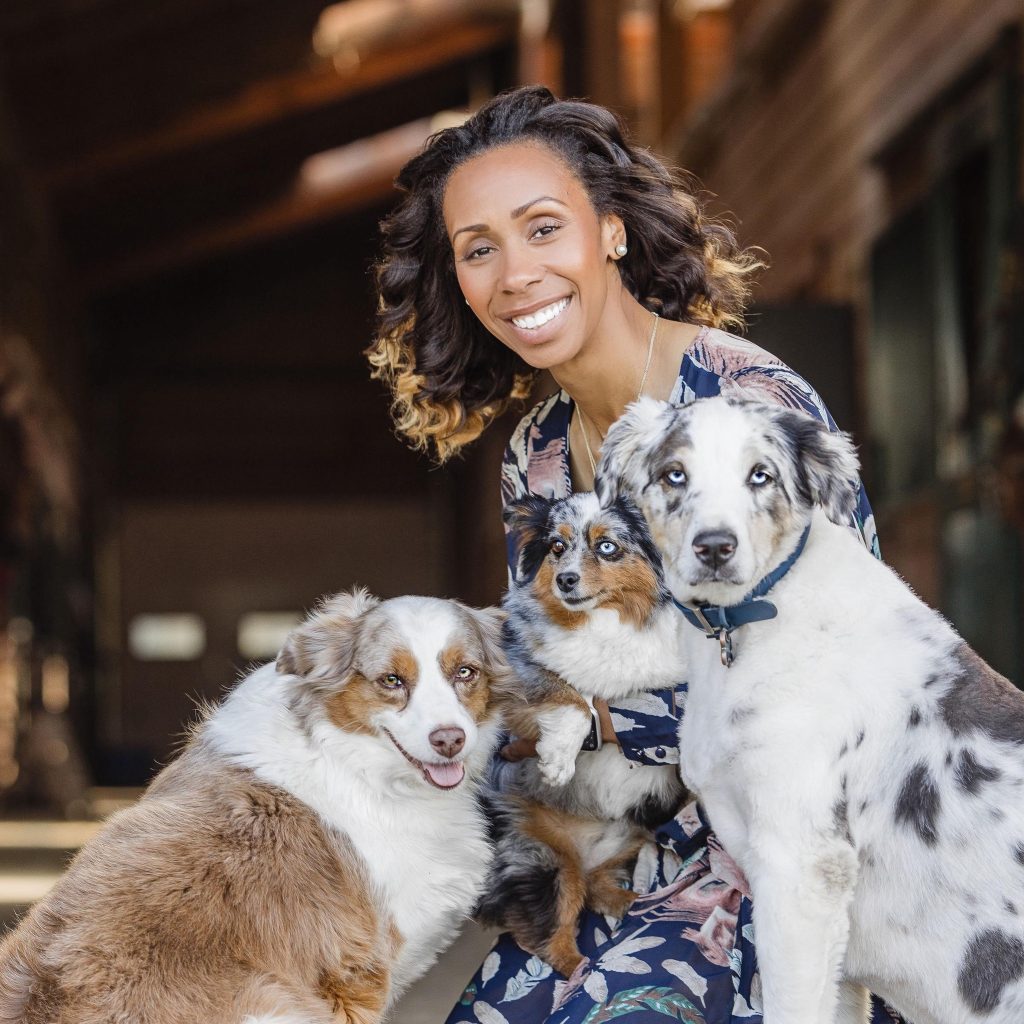
Four years ago, Poolesville, MD-based trainer Kimbreley Hill saw a need for a quality lesson program with quality school horses. Today, alongside assistant trainer Elizabeth Panvini-Webb, she runs a boutique riding academy that is positively bustling with 21 students of all ages, 10 horses, and endless opportunities.
“During COVID, I had countless people contact me about lessons and half leases. At that point, in order to ride here, you had to own or we’d bring in a horse for full annual lease,” Hill tells The Plaid Horse.
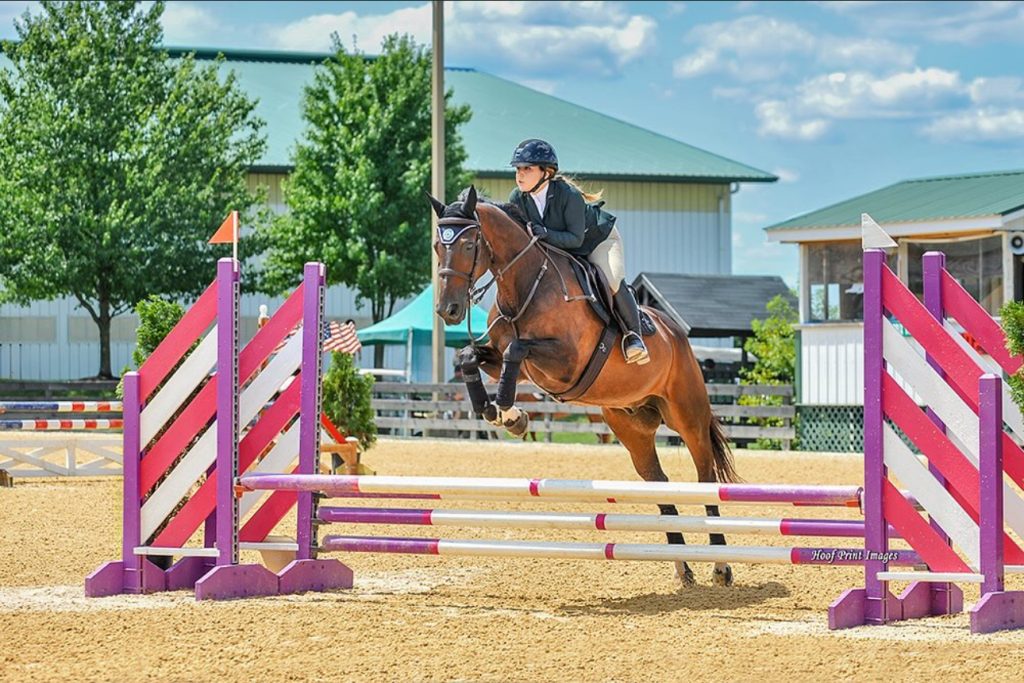
“I started the Academy in 2021 and it has changed many times over these years. It was important to me to offer a program that allows students to compete locally and on the circuit even if they don’t own a horse because, for many, owning a horse isn’t in the cards. These students still have the talent and drive to succeed at shows. Being unable to attend because you don’t own just seems silly to me.”
Within The Riding Academy—a program that runs in tandem with the training program for boarders—Hill has a mix of horses. Some are available for partial care leases, and these horses are also still used in the lesson program. Other horses used solely for lessons, and still others are part of an equi-share lease program, only available for private lease.
“One horse, Gartano, was donated to my program by my client as she lives out of state and started a family,” says Hill. “So he is in the program until he is ready to retire.”
The other horses belong to Hill, who is able to offer lessons with no pressure to show by off setting costs with leases on some of the animals. Details like a strict cancellation policy and carefully-considered lesson fees are essential on the business side, but also leave room for clients with a range of budgets to participate.
“It needs to be boutique,” adds Hill. “The days of large lesson programs are gone.”
While the big lesson barns may be places of the past, welcoming new people and making horses accessible is still possible, says Hill. It just takes a little creativity.
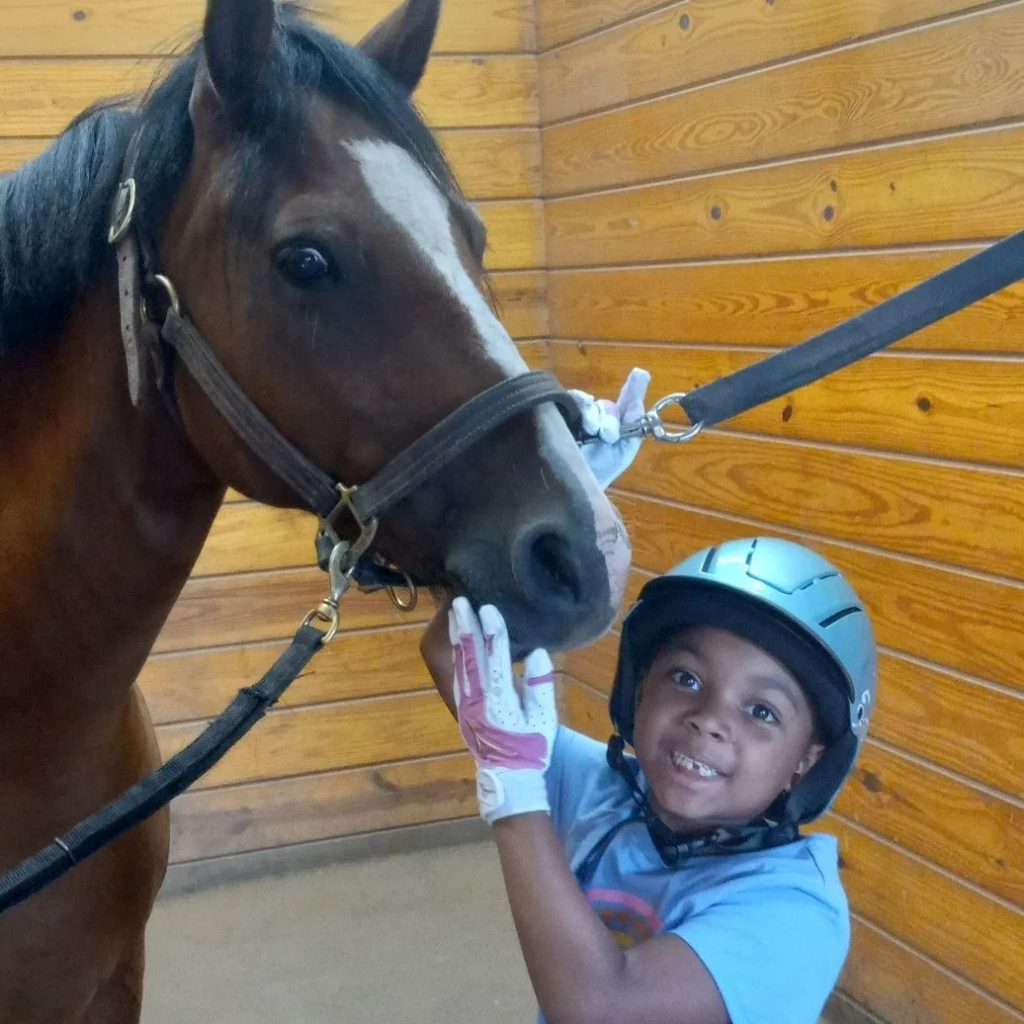
“Welcoming new people into our sport is the only way to keep this industry thriving. It’s expensive, but there are creative ways to get people into it, and offering a program like we do is a good start. Without lesson programs, lease opportunities, working student positions, and even summer camps, we’re shutting out an entire demographic of people that all have something significant to add to the horse world. And let’s not forget—we all share the common love of the horse.”
A 12.2 Hand Ambassador
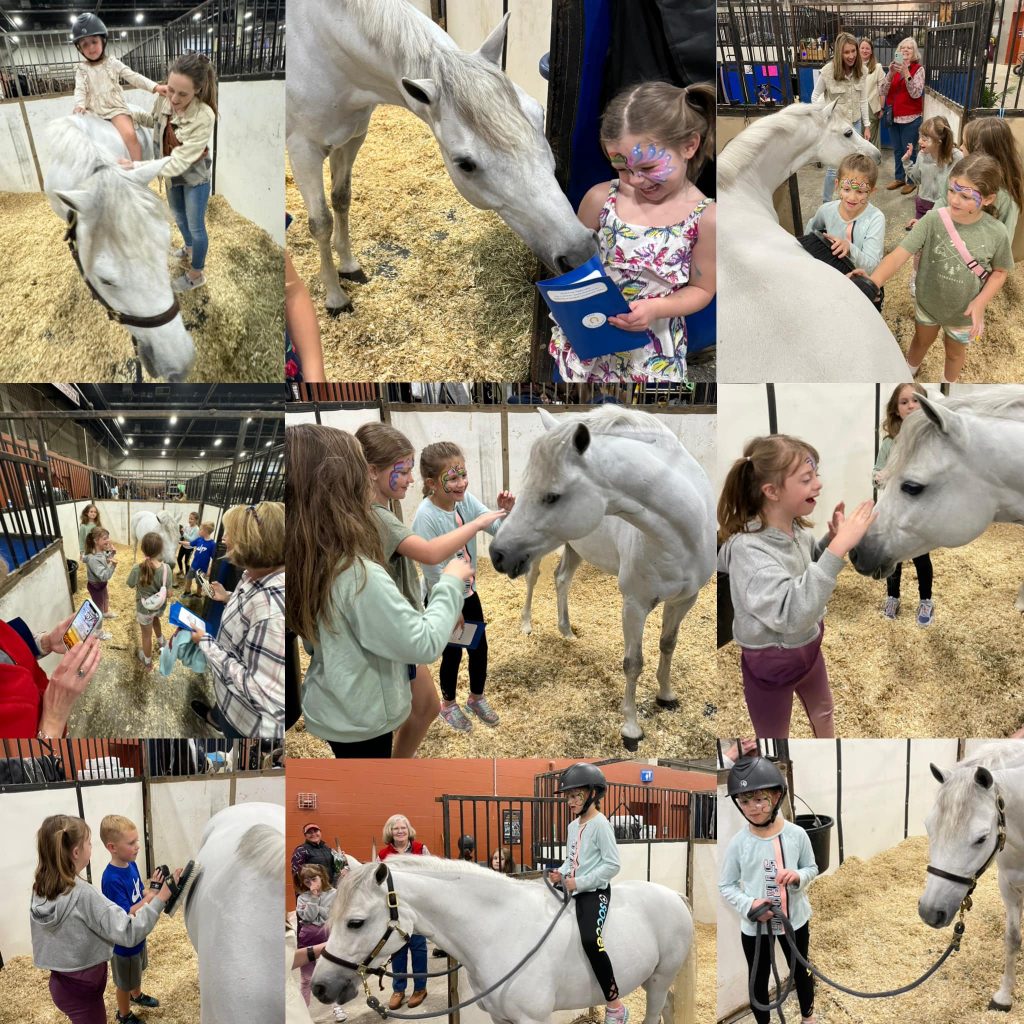
Plaid Horse publisher Piper Klemm’s Sugarbrook Positron Blue (a.k.a. Eagle) held special meet-and-greets with members of the community at Devon in May and Harrisburg in October. “As someone who grew up near Harrisburg, I never had an opportunity like the kids had at the Pennsylvania National Horse Show as spectators,” Emily Randloph tells The Plaid Horse. “It was such a special experience to connect members of the community with a top show pony. Their excitement was something I won’t soon forget.”
There is Beauty in Being a Beginner: The benefits of walk lessons and connecting newcomers with horses
By BETH SABOR, CERTIFIED EQUINE MASSAGE THERAPIST
We all know that horses have an amazing ability to change lives, to help us heal, and to open our minds and hearts. It is this magical quality that drew many of us to horses in the first place. I am often in awe at how many horses seem to recognize the need to be more gentle or careful around children or move more slowly around someone who is new to horses, uncertain or scared.
While I have witnessed this beautiful exchange, I have also witnessed the hands of an inexperienced horse person help to heal, bring peace, joy and lightness to the horses they come in contact with. Why is that? Most horses find comfort in the simplicity of sharing space, and the authenticity of being exactly who and where we are. There is congruency in authenticity.
Sometimes, the more we know, the more we hold attachments, tell stories, have agendas, and create expectations. There is a beauty to being a beginner. An openness to learning and an awe or respect for the magnificence of horses. Newcomers to this industry have so much to offer…an invitation to just be, an appreciation for the simple things.
Take, for example, a new rider taking a horse for a walk. Not asking for collection or carriage. Not asking for responsiveness to the aids. Not asking for this part to be here or that part to go there. There are so many benefits to this type of ride—for the right horse, of course.
Allowing a horse to explore their body and movement without pressure or input can help to reset the nervous system and create softness in the tissue, in part because there may be less brace, less tension. Movement without tension and brace allows for the brain and the body to have new communication and form new pathways for movement to occur.
Horses can often feel safe in that space—safe to explore without feeling that their choice to move a particular way is “wrong.” I am not saying that this type of ride is suitable for every horse and we obviously want to make safe and educated decisions for both horse and rider to be sure both are in alignment and agreement for this partnership.
There are many opportunities, beyond riding, to create positive shifts in both the body and the mind for horses. Paying attention to their ears, eyes, breathing, tension patterns and body language helps us to develop the relationship for more open communication and feelings of safety and trust.
When horses feel heard, safe to express themselves and honored, they often release these patterns of tension. You may see this as yawning or relaxing of tight muscles, their eyes may soften and they may take a deeper breath. Moving more slowly and mindfully lets the horse know that you hear them and when horses feel honored in that way, a deeper level of connection becomes possible. Sometimes, doing less leads to so much more. Sometimes, it is through the softness and innocence of a beginner’s mindset that we are able to experience the depths and magnitude of the healing power of the human/horse relationship.
Meeting a Horse for the First Time
By ELLIE TRUEMAN, PRESIDENT, OCALA HORSE ALLIANCE
In Marion County—Horse Capital of the World, as it likes to be known—the reality is that we find that nearly 70 percent of the residents have never been near or touched a real horse. For a multitude of reasons, we need to change that.
One of the goals of The Black Stallion Reading Project, our center-post project is to give every fourth grader an ‘up close and personal experience’ with a horse. There is an indescribable glow that comes over the boys and the girls when they get to interact with a horse. Many are just mesmerized. Some have to overcome some trepidation due to the horse’s size, but once in close proximity to the horse and they touch the horse, the fear subsides and joy surfaces. There is no word that adequately describes this interaction…. but the word ‘magical’ might come close. As the sole industry that has this capacity to bring joy to children, we need to work harder at sharing the magic of the horse.
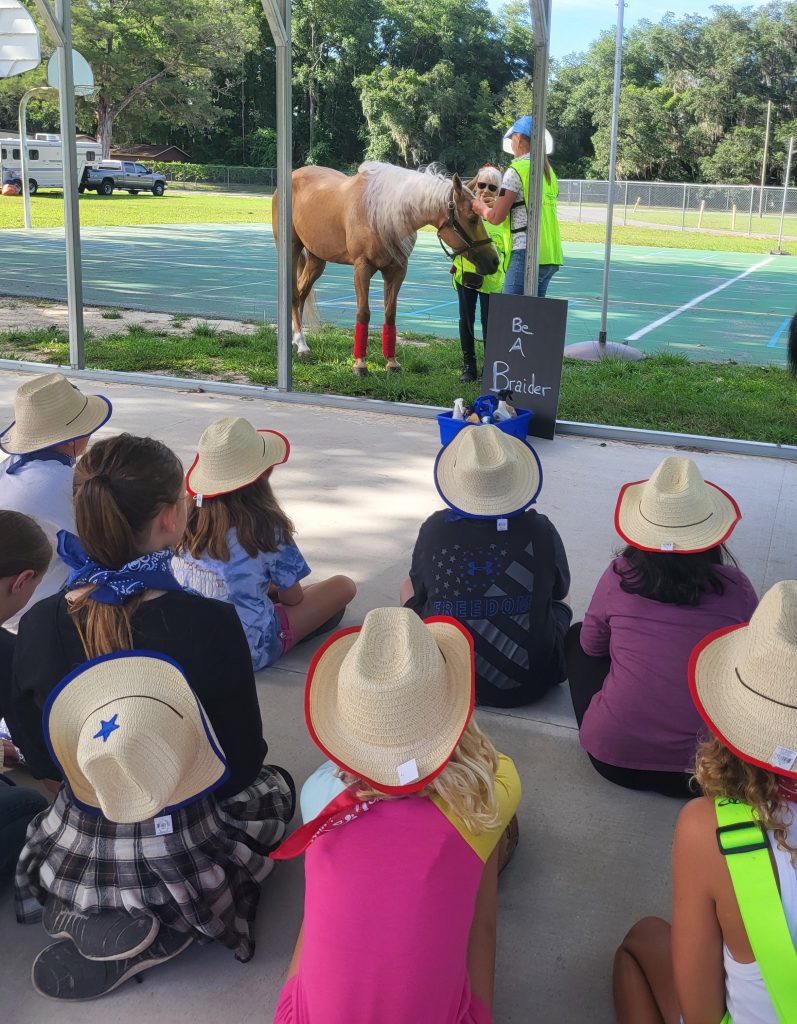
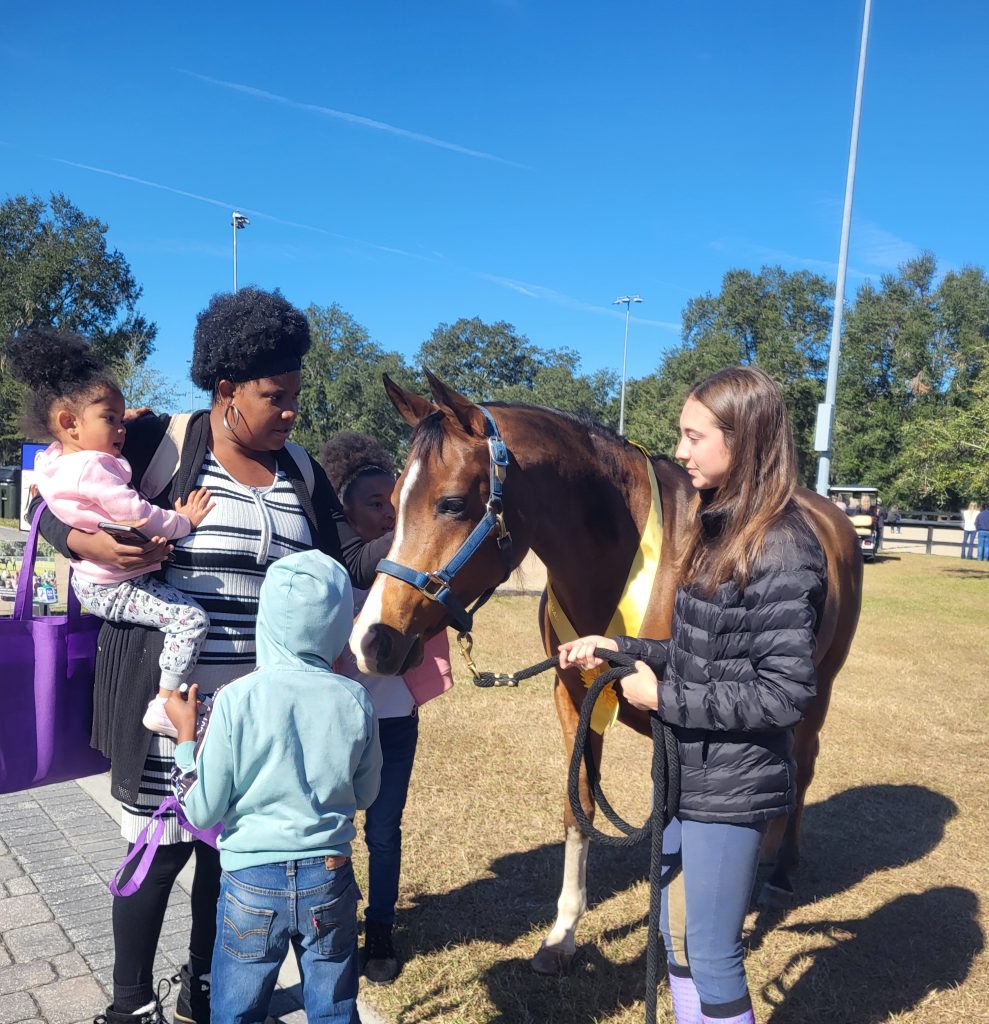
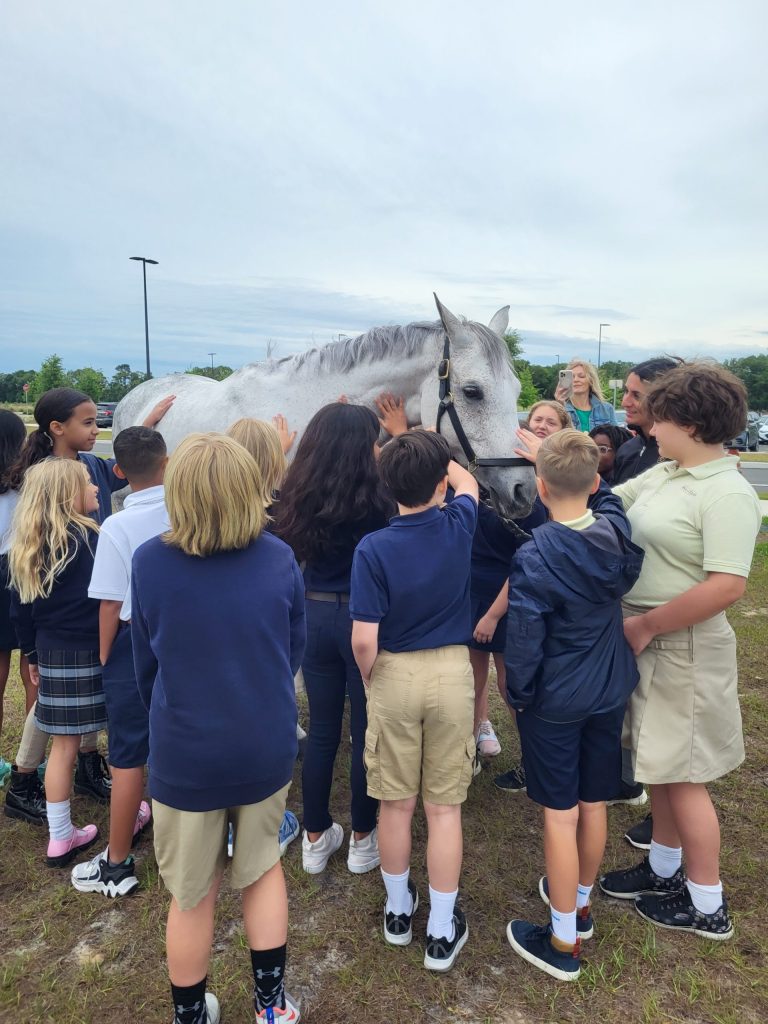
At the December event, all of the Marion County fourth graders and their parents had the chance to meet Arabian horses through the Arabian Horse Association of Florida, held at WEC. Over 300 families attended. “Our industry needs these events that welcome non-horse people and make it user-friendly and comfortable,” says Trueman
All Ages At the Barn
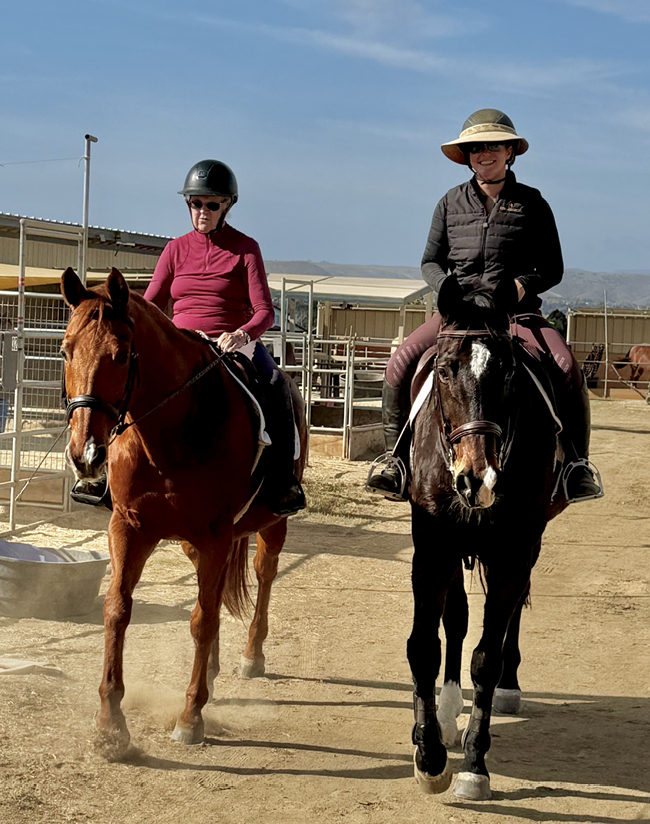
At one barn we know, the aisle is filled with ponies and horses, children and teenagers…and one retiree. A woman in her late 60s, a friend of a friend of the barn owner, was getting divorced and didn’t have much money or many skills. But she did have a love of horses and a lifetime of riding behind her.
The barn owner hired her to groom, lunge, and lightly ride the older ponies at the barn. This retiree loves the ponies beyond words, and it is healing for her to have a place to go and to have a purpose at the barn. Where many older people struggle with feeling lonely, she is thriving. The retiree gains so much joy and satisfaction from her work. The ponies benefit from light work and intense grooming and affection. The riders on staff benefit from having more time to work with the animals who need training.
In another happy example, at MZ Equestrian in California, “it’s not just about the horses—it’s about the people, too. I’ve found a wonderful group of horse-loving women at the barn, spanning all ages,” says adult amateur rider Jennifer Nolan.
Adds Donna Gunter, 75, “We all have a passion for horses whether we are young or old. Horses are amazing animals and connect all of us in some way.
Accessibility from Within: Why Many Riders Feel Disillusioned
By DARBY BONOMI, PH.D., SPORT AND PERFORMANCE PSYCHOLOGIST SPECIALIZING IN EQUESTRIANS
Accessibility is a problem in our sport—even for those of us in it.
One of the things I see in my work is there’s a certain sense of malaise in the hunter world, and even somewhat in the jumpers. It’s a sense of: How can I possibly compete against horses that are this expensive? Why even bother? Do I just give this up?
I tell my clients who come to me with these questions that I understand…and that they’re right. There’s a reality to that. But I think we do this sport because we love horses, and the pursuit of it, whether in the 2’6” or the Adult Amateurs, or beyond. We are students, and we have to own our own experience and not rely on the outcome for our satisfaction or our joy in it. But that’s hard at certain levels.
I talk to lots of young kids, and these pony riders are really focused on winning. I deal with it personally, too. I don’t find this in the dressage and eventing worlds. Horses aren’t as expensive, and in those disciplines, I find that people buy young horses and they keep them for the most part, developing, long term relationships. It’s unusual to do that in the hunter world at a certain level.
I often tell people that you have to go back to your “why.” Why are you doing this? What is it about it for you? What’s the meaning in it? You’ve got to connect with that. Inevitably, they’ll say: I love horses, I love going to the barn, I love my horse. The barn is my happy place, my sanctuary. That’s what it’s about. So first, you need to connect to that—your journey with your horse. Re-orient yourself to be in your own bubble at the horse shows and focus on the things that you and your horse are aiming to improve, today.
I once had a teenage client who had one equitation horse. Great kid, great horse, but not a ton of money. When she came to me she said, “I’m gonna win the finals,” without riding multiple horses a day or being a trainer’s kid, or having just the right horse. And it was a challenge. She felt like her life was going to end if she didn’t get a top ribbon in the finals. Ultimately, she did the work and came through stronger, but it was painful. This is a tough reality of our sport for good-riding juniors who may not have all the access to make it to that top group.
I had another kid tell me that she was so happy to go to college where her effort and her brain would produce the results she wanted. Work hard… study… get the A… get the win. It was really sobering to me when she said that. This just isn’t the path in something like the Big Eq, or the Amateur-Owners. She talked a lot about how this sport is so hard, and if you don’t have the horse, you don’t have a chance. You can put in all the work but without that top horse, the “win” may be a low ribbon or missing out on the call back, even when you put in your best.
One way to combat these feelings for junior riders is to resist the urge to get sucked into social media. It is just so easy for teens to do. The pictures on social media make it seem like everyone is winning, always. Teens spend way too much time looking at what other people are doing and what other people have won…the glamour of it all. This is something we have to keep talking about. Because it takes teens away from their own journey, and the pleasure of what horses and riding are all about.
One Young Amateur’s Experience With Accessibility
By KATIE ROSE
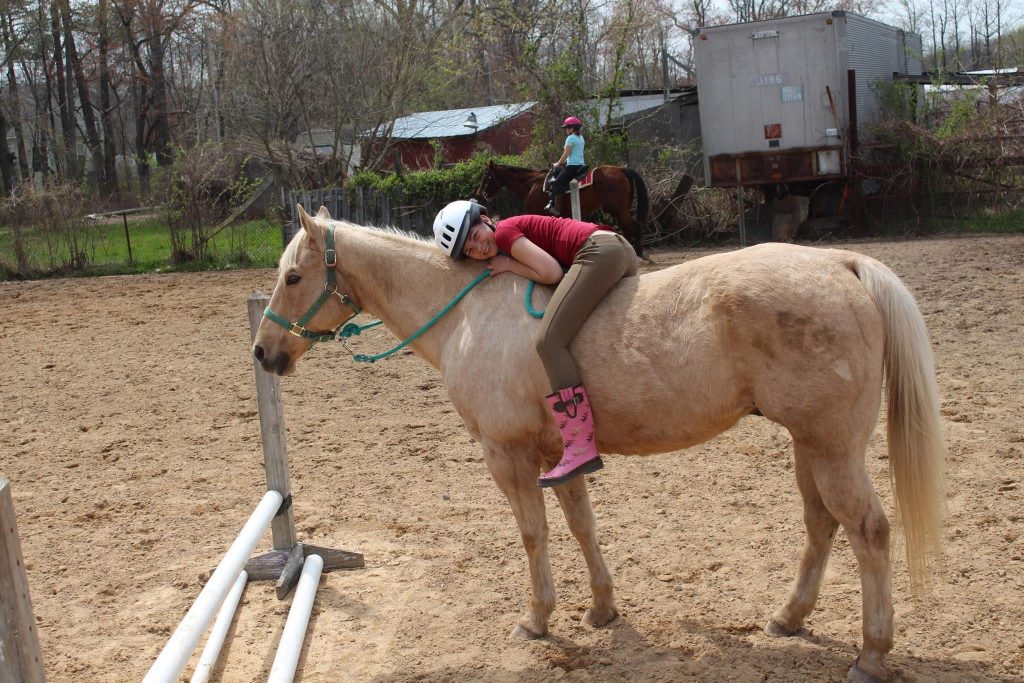
Growing up in this sport, there was nothing more that I wanted than to work with horses forever. Whether that meant going pro, being a show groom, or working as a barn manager, I knew I had to be around horses. I would have done anything. I worked in my barn and was a total barn rat.
But here’s the catch: all of my hard work and drive to be there would never make up the difference between how much money my family had…and how much I needed. “Don’t give up” or “Keep working and it will pay off eventually” are motivational sayings that don’t account for the fact that you can’t work hard in your lessons if you can’t afford them. You can’t keep your head held high after a tough horse show if you didn’t make enough money to go in the first place. Money may not buy you talent, but it definitely buys you opportunity.
As an adult, this never got easier to swallow and accept. I still have the same mindset: If I just work hard enough, it will work out. Recently, I had just moved to a new city and started my first full-time job after college. I was dying to get back into the horse world after some time off in school, but then I got hit with my first lesson bill—$150 a week, just for one lesson. I knew that after my rent and my bills there would not be enough left over. But I had that voice in the back of my head that said, “Just work harder and make the money.”
So, I started looking for side jobs. Barn work, Dover, bartending…anything I thought would make me enough to stay in a lesson program. My childhood dream of being in a derby as a kid had been swapped out for just riding at all, but it seems I still had the same problem. I felt defeated. Mostly, though, I felt guilty for betraying the little girl who I promised that horses would be in her life forever, no matter what. I had let her down.
How do I tell that little girl that I have cut every corner possible and it still isn’t enough? I work a full-time job and a part-time job. I use candles instead of turning on the lights. I keep the thermostat at the most energy-efficient setting possible. I drive a car that gets nearly 40 miles to the gallon and make every meal at home. I do all of the things on the ‘save money’ checklists for equestrians. I shop secondhand. I use my small apartment gym rather than a gym membership. I have used every budgeting method possible, and I don’t have enough money to even start an in-barn half lease.
We’ve arrived at an unfortunate time when an adult who makes the national average salary and does not have kids can’t afford to even be in a lesson program. Show fees seem to just keep getting higher and higher, and unless entry numbers dwindle, I don’t think they will get more affordable. The cost to even participate in this sport, let alone be competitive, is shutting so many riders out. Horse sport is becoming more and more exclusive to the wealthy, making it difficult—even impossible—for those little girls with big dreams to even get their foot in a stirrup.
Lack of accessibility is hurting our sport. It keeps out the general public, who are desperately trying to look in with judgemental eyes and being shut out only makes them more skeptical. Horse sports in the Olympics are at risk due to horse welfare issues. The vast majority of equestrians make their animals’ welfare the number one priority. But for those on the outside, they only see what makes the headlines, which usually only highlight those riders who use abusive training methods. People on the outside need to be able to know what is going on in order to literally save our sport from being cut out completely.
I am not blaming anyone for this problem. I understand trainers need to be able to afford their rent. Show grounds have to pay their staff, and grooms need to be compensated fairly for their time and hard work. This problem is one we created as a community, and it will take all of us to fix it. I don’t have all the answers myself, but one idea might be having trainers be more accepting of clients who have goals unrelated to horse showing. No matter how we do it, it will take the entire community coming together to see any real change.
We owe it to ourselves and to each other to make this sport more accessible in order to keep it alive. If we don’t, we may just buy our sport a one-way ticket to irrelevance.