
Welcome to Trainer Tuesday! Each week we ask trainers a question and gather their answers for you. These trainers have a range of experience, backgrounds, and focus points of their programs, so the answers have as much variation as you would expect and also probably much more similarity.
This week’s question posed is: What horse or horse type has a segunda bit worked best on in your career?
Here are their answers:
“A segunda is a bit I like to describe more as a training tool rather than a consistent piece of equipment–I might use it for a certain period of time with a horse, or work it into a horse’s program once a week. As a sharper bit, it needs to be paired with educated hands and an understanding that you must maintain the right amount of leg pressure when you add more bit.
Segundas apply concentrated pressure on a horse’s mouth and can be very effective in encouraging responsiveness and getting a horse lighter in your hand when used responsibly.
Remember, use bits to your advantage in a way that makes sense for you and your horse, and at your level.” -Katie Falzarano
“I very rarely ever use a segunda as it’s a pretty intense bit, but when I have it’s usually to help a horse get connected through the bridle if they don’t do so easily. It should only be used if the rider has a very kind hand and is not rough or overly handsy, as then it would have the opposite of the intended effect.” -Dana Hart Callanan
“I like this bit when used properly. There’s a very certain type of horse that goes very well in this bit, and is not offended by it at all. I found that horses that go well in this bit seem to really like it. In the wrong hands, it could be very harsh. In my opinion, this is only a bit for a professional as it requires soft hands.” -Eliana Brody
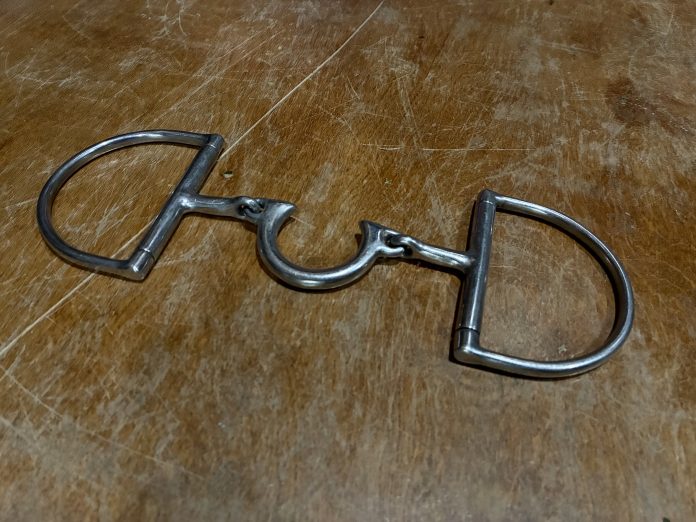
“A segunda has a U-shaped port which sits on the horse’s tongue, with two joints that press the roof of the horse’s mouth when pressure is applied. I have mainly seen it used in circumstances to discourage a horse from leaning on the bit.” -Jaden Perry