
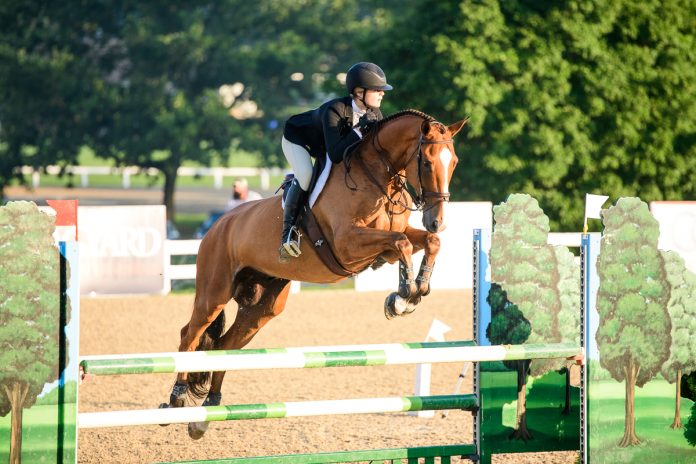
Brought to you by The Plaidcast
For many young riders, the decision to pursue higher education can feel at odds with the demands of training and competition. Yet as Auburn University senior and Grand Prix competitor Baylee McKeever explains, “The horses will always be here, but you don’t have every moment in your life to be able to go to college and get a education like that.” For equestrian athletes, college offers more than a degree—it provides life experience, new perspectives, and skills that can ultimately enhance success in the saddle.
Broadening Your Horizons
College exposes riders to a wide range of ideas and disciplines that aren’t typically part of day-to-day barn life. Baylee, a communications major, has explored a variety of courses during college and found herself particularly drawn to science, though she’s also taken several journalism classes that offered her new, in-depth perspectives she hadn’t considered before.
Learning outside the equestrian bubble not only builds mental agility but helps riders think more critically and communicate more clearly. These are valuable assets for anything from managing a barn to negotiating sponsorships. “Something that I’ve realized a lot through school is how much more there is besides the horse show world,” Baylee added. “It’s different to live an almost normal life at school. No one really knows where you come from, so it’s like you can make your own path and choose what you wanna do.”
Mental Toughness and Life Lessons
College teaches time management, discipline, and resilience—all of which are essential for competitive riders. For Baylee, moving from New York to Alabama was a major change, and that culture shock became part of her personal growth.
Even early choices, like attending public school, helped Baylee ease into the social and academic environment of college. Her parents prioritized giving her a balanced upbringing outside the horse world, which made the transition to campus life smoother. In contrast, she’s observed that some of her classmates who came from private or online school backgrounds often experience a steeper adjustment. Watching them return to a traditional classroom setting for the first time has highlighted how different each student’s educational path can be.
Time-Management Toolkit
One of the biggest challenges for collegiate equestrians is balancing schoolwork with travel and competition. During the academic year, Baylee structures her schedule around her college team’s competition calendar, finding ways to fit in additional shows when possible. To make it all work, she often travels directly to competitions. “Most of the time I’ll just fly into the show… my horse at the show, which was definitely a bit of a transition at the beginning, but I’ve kind of gotten used to it.”
Successfully managing this kind of demanding schedule requires planning, flexibility, and a strong support system. For student-athletes looking to find that balance, the following strategies can help:
- Block schedule your week around fixed commitments like class and practice.
- Coordinate with trainers and teammates to ensure your horse is well cared for when you’re on campus.
- Use digital tools like calendar apps and task managers to keep track of assignments and show logistics.
Communicate proactively with professors, especially before major competitions. - Maximize downtime by studying during travel or breaks between classes and riding.
Baylee emphasized the importance of having strong support systems on both ends. “I’m fortunate enough to have such a great team at my home more, and that helps me do that and helps me do it pretty well,” she said.
Voices from Both Worlds
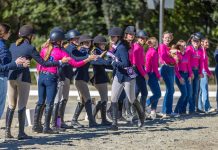
For Baylee, being part of a college team while still showing at the top level required flexibility and commitment. “It is definitely a little bit of an adjustment to ride in college and also be riding outside of school,” she said. Still, she sees huge value in being part of both.
“It’s very nice to be at school and riding with the team and kind of give you like a team feeling,” she explained. “It’s good for such an individual sport. Where sometimes we don’t really get to experience that.”
In college, riders gain not only a broader education, but a new lens on their sport—one that’s rooted in collaboration, balance, and personal growth. Choosing to pursue a degree doesn’t mean stepping away from elite competition. With intention and support, student-riders can build a strong academic foundation while continuing to achieve their goals in the ring. As Baylee puts it, “I’m very grateful that they encouraged me to go and I’m very grateful to be going to Auburn.”
To hear the full conversation with Baylee McKeever, listen to episode 439 of The Plaidcast. Subscribe and follow The Plaidcast on your favorite podcast platform to hear more inspiring stories from across the equestrian industry.